Fertilizer is not a case of the more the better; rational fertilization is more important
In a broad sense, China has a history of more than 10 years of slow and controlled release fertilizer production. However, among those currently promoted and applied with relative success are only the urease inhibitor stabilized nitrogen fertilizer from the Shenyang Institute of Applied Ecology, Chinese Academy of Sciences, the fertilizer-coated fertilizer type slow release fertilizer using a patent from the School of Engineering of Zhengzhou University, the slow release rice fertilizer from the Soil and Fertilizer Institute of the Guangdong Academy of Agricultural Sciences, and Shanghai Han...
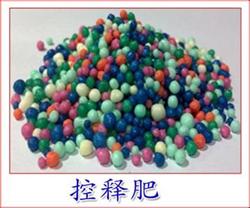 Fertilizer is not a case of the more the better. Applying too much not only wastes it, but also harms crops.
Applying too much fertilizer, especially chemical fertilizer, will make the nutrient concentration in the soil solution too high, which is unfavorable for seed germination. An excessively high nutrient concentration will burn the seeds, damage the seedlings, and inhibit crop growth, just like crops planted in salinized soil with high salt content. During the crop growing period, applying too much nitrogen fertilizer will cause crops to grow excessively, remain green and mature late, be prone to lodging, and become vulnerable to disease and insect damage, ultimately leading to an increased rate of empty grains, a decreased 1000-grain weight, and instead a reduced yield. Applying too much phosphate fertilizer is also unfavorable for crop growth; it not only shortens the vegetative period, advances the maturity period, and causes premature senescence, but also easily leads to deficiencies in nutrient elements such as zinc, iron, and magnesium, affecting crop quality. Applying too much potassium fertilizer or trace elements is likewise unfavorable for crop growth.