-

How Good Is a Dog's Reproductive Ability? A Detailed Look at Canine Reproductive Characteristics
Reproductive Ability Dogs reach sexual maturity before 1 year of age and show signs of estrus (commonly known as "heat"), but the timing of physical maturity varies depending on the breed. Generally speaking, small breeds reach physical maturity earlier than large breeds. For small dogs such as the Pekingese and the Shih Tzu, it is advisable to breed and conceive at the second estrus (around 12-14 months of age), while for the Great Dane, the German Shepherd and others, breeding after 18 months of age is better, because by then they have reached physical maturity. The time of highest conception rate is on the
-
Detailed Explanation of the Production Process for Multi-Flavor Green Apricot Plums
Multi-flavor green apricot plums are a sugar-preserved product made from green apricots as the main raw material, processed through salting, licorice compound liquid immersion, coloring, and sugar curing. The product is sour, sweet, salty, and fragrant, with a unique flavor. It is an important raw material for making assorted preserved fruits, and is also an indispensable decorative and garnishing food for fillings in mooncakes and other pastry foods. The main raw material used in processing this product - green apricots - is harvested when the apricot fruit is 5 to 6 ripe. Windfall fruit or later-stage thinning fruit can be used, greatly reducing processing costs and improving the economic benefits of fruit growers. This project is simple to process,
-
Processing Method and Production Technique for Spiced Candied Carambola
This product is made by candying fresh carambola with spices. The processing technique is as follows: 1. Raw material preparation: After washing the fresh carambola, remove the ribs and cut it lengthwise into single segments, then slice into long petal-shaped thin pieces. 2. Hardening treatment: Use alum or calcium bisulfite as the hardening agent. Soak in a 3% alum solution or 0.2% calcium bisulfite solution for 6-8 hours, remove, drain off the water, and prepare for spiced candying. 3. Spiced candying: For every 50 kg of fresh carambola slices, prepare a mixed powder made from equal amounts of clove, dried tangerine peel, and licorice ground together
-
Feeding chickens garlic-chili powder can increase egg production
Slice garlic, sun-dry and grind it, then mix it with dried chili powder at a 1:1 ratio to make garlic-chili powder. The daily ration formula for laying hens is: corn 66%, wheat bran 10%, soybean cake 10%, fish meal 6%, eggshell powder 2%, bone meal 1%, shell powder 4.6%, salt 0.4%. On this basis, add 1% garlic-chili powder to make a dry powder feed and feed it 3 times a day. It not only has antibacterial, deworming and stomach-strengthening effects and helps raise the laying rate, but can also deepen the yolk color and improve marketability.
-
What are the processing methods for minced fish products?
Minced fish products are made by removing the bones, spines, head, skin, innards and scales from a whole fish, then taking the fish meat, grinding it into a paste and using that as the raw material; in the south this is called surimi products. When processing minced fish, removing the fish head is relatively simple, while removing the scales, skin and bones is more troublesome. Therefore, for large-scale processing, a "meat-and-bone separator" must be provided. The machine squeezes out the fish meat while keeping the scales, skin and bones inside the machine, which are then discarded. This is especially true for small mixed fish, which are small in size and large in number; only by using a meat-and-bone separator can efficiency be improved. When using a meat-and-bone separator to process minced filling, you must
-
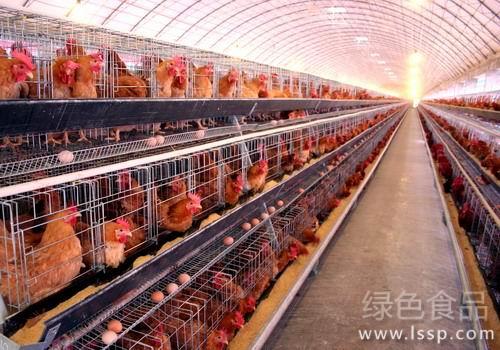
Calcium Supplementation Methods for Caged Laying Hens Producing Soft-Shelled and Thin-Shelled Eggs
Laying Hens Producing Soft and Thin Eggs Need Calcium Supplementation: Calcium Supplementation Methods for Caged Laying Hens
-
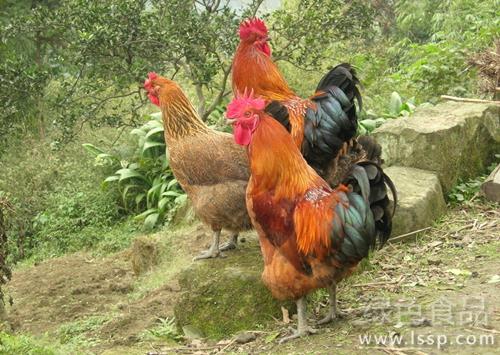
Chicken diseases affect weight gain and egg production, folk remedies to help you
Chicken diseases affect weight gain and egg production, chicken raising requires disease prevention, folk remedies to help you
-
How should high-quality cotton seed be planted to produce good seedlings?
At present, most cotton-growing regions in China use nutrient-pot seedling raising. Generally, to evaluate whether cotton seed emergence is good or poor, one looks at the emergence rate and, second, at the seedling survival rate. The reasons for a low emergence rate are: first, in some cotton seed, the proportion of autumn bolls or late-autumn bolls is too large, which lowers the germination rate. The germination rate of seed selected from summer bolls or mid-season flowers is mostly above 80%; second, during cotton seed processing, quality control was not strict, and the proportion of damaged seed exceeded the standard; third, before or after sowing cotton seed, no fungicide disinfection was carried out on the pot soil and the soil covering the pots, or the disinfectant chosen was not the right one; fourth, this year's cotton seed
-
Shiitake mushrooms may be used to produce fuel, with promising prospects
People are all too familiar with the shiitake mushroom as a delicious food, but a latest study in the United States may give this edible fungus a new mission -- one day in the future, shiitake mushrooms may gradually leave people's dining tables and kitchens and find their way into people's car fuel tanks. According to reports, the shiitake mushroom, this delicious fungus, usually grows on felled trees in forests. It breaks down the complex organic matter in wood into sugars and uses them as nutrients to sustain its own growth. At present, the Agricultural Research Service of the United States Department of Agriculture
-
Key Technical Points for Mushroom Production from Standing Logs in Shiitake Log Cultivation
After a summer and an autumn of careful management, the mycelium of the mushroom logs enters the mature stage, and around the Beginning of Winter (Lidong), the logs can be set up standing for fruiting management. The signs that the mycelium in the logs has matured are: the surface of the log shows no great difference from when it was felled, with no contaminating microorganisms and the bark tightly attached; when tapped with the back of a knife or with a finger, it gives a semi-dull or dull sound; the bark is soft and loose, and the wood beneath the bark is yellow or yellowish-brown and has the fragrance of shiitake; when pressed with a finger, the bark feels elastic and rough and uneven. There are also nodular protrusions, which are the prelude to fruiting, and sometimes there will be
条件筛选