Calcium Supplementation Methods for Caged Laying Hens Producing Soft-Shelled and Thin-Shelled Eggs
Caged laying hens often produce a certain number of soft-shelled and thin-shelled eggs, especially prominent before the peak laying period, reducing production efficiency. The main reason is that the calcium intake of laying hens does not meet the normal requirements of the laying period. Practice has proven that supplementing calcium separately for caged laying hens is both simple and easy to implement, and can prevent soft-shelled and thin-shelled eggs. The specific methods are as follows:
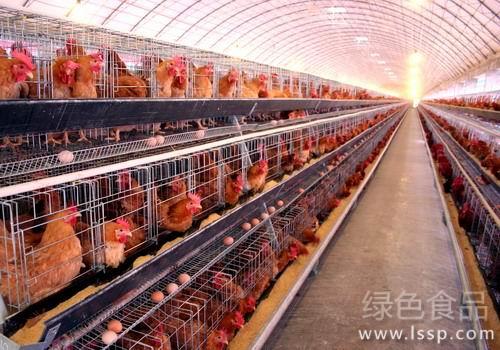
Laying Hens
1. Selection of calcium material. Eggshell powder is best, followed by oyster shell powder and bone meal. This is because eggshell powder has uniform particle size, which suits the feeding habits of laying hens; oyster shell powder, bone meal and the like vary in size, affecting the pecking effect, and other fine powdery calcium feed materials are not suitable for supplementary feeding of laying hens.
2. Amount of supplementary feeding. The amount of calcium material supplemented should be determined according to the proportion of soft-shelled and thin-shelled eggs laid by the hens. Stop feeding when soft-shelled and thin-shelled eggs have basically disappeared and the hens are unwilling to peck at the calcium material. If the eggshells are not smooth and raised calcium spots appear, it indicates that too much calcium has been supplemented. Usually, about 0.5 kg is supplemented per 100 laying hens each time.
3. Timing of supplementary feeding. Supplementary feeding can be done from the afternoon until before lights are turned off at night, but 2-4 PM is the best time. According to measurements, most of the calcium absorbed by laying hens in the morning is stored in the bones, while calcium absorbed in the afternoon or evening is directly used for the formation of that day's eggshell, and 2-4 PM is the peak feeding time of the day for laying hens, when their appetite is strongest and they eat fastest and most.
4. Supplementary feeding method. If free feeding is used, after 2 PM, let the laying hens first finish the feed in the trough, and half an hour later, when the hens have a certain appetite, evenly scatter the calcium material in the trough; if timed feeding is used, before the afternoon feeding, feed the calcium material first, then feed the complete formula feed. Regardless of which method is used, it must be ensured that all laying hens can eat the calcium material at the same time, so as to achieve the purpose of supplementary feeding.