-
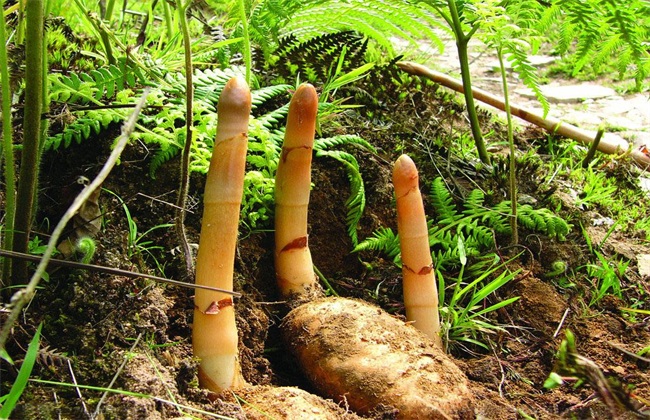
Where is the best place of origin for Gastrodia elata? A nationwide review of high-quality production areas
Where is the best place of origin for Gastrodia elata
-

How does Atractylodes lancea reproduce? A detailed explanation of common propagation methods
Propagation methods of Atractylodes lancea
-

-

Schisandra Hybrid Seed Production Method and Key Operating Points
First, select in the mountains trees with good tree shape, large fruit yield, large clusters, large berries, and abundant overall fruiting, uniform; harvest the seeds and sow them directly for seedling raising; when they enter the full fruiting stage, go into the orchard and select by the same standards. Sow directly in spring, select during the full fruiting stage, and from these select 2 trees with outstanding performance; label them respectively as the male parent and the female parent, keep them far from the production orchard, and arrange pollinator trees in a 2:1 ratio; when the fruit ripens, go into the orchard to observe whether the overall fruiting across the whole orchard is consistent, whether the cluster ratio is standard, and whether there is any phenomenon of large and small berries; the yield per plant should be more than 5 kg, meeting the above standards.
-
Detailed Explanation of the Production Methods and Techniques of Honeysuckle Tea
Honeysuckle tea is a new type of health tea. The tea liquor is fragrant, sweet and refreshing, and it sells well in domestic and international markets. Drinking this tea regularly has the effects of clearing heat and detoxifying, promoting meridian circulation and activating collaterals, and caring for the skin and beautifying the appearance. Its simple production method is introduced as follows: 1. Preparation of the tea base. Honeysuckle tea uses refined green tea base as the main material, accounting for about 90%. Fresh tea leaves picked as one bud and two leaves or one bud and three leaves are used as raw materials, and the tea base is made according to the new green tea production process of "high-temperature de-enzyming, rapid rolling, and complete roasting," requiring the tea strips to be tightly rolled, the leaves to be tender
-
How Are Xinxiang Honeysuckle Flowers? An Introduction to Their Producing Areas and Cultivation
Xinxiang honeysuckle flowers are mainly distributed in the two counties of Fengqiu and Yuanyang, and are also grown in Yanjin and Xinxiang counties. Their flower buds are thick, long and plump, soft, glutinous and pure, and their quality can rival that of "Miyinhua". They are highly valued and praised by Chinese medicinal materials companies. In 1982, Fengqiu and Yuanyang counties were designated as national production bases. In 1983, after appraisal by relevant experts, Xinxiang's introduction and cultivation technology for honeysuckle was deemed the first of its kind in the country, and it won the third prize for scientific and technological progress from the National Science Commission and the second prize from the National Pharmaceutical Administration. By 1986, the city's planting area had reached 19,500 mu, with a total
-
Detailed Explanation of Sexual Propagation and Seed Production Techniques for Wild Gastrodia elata
Guizhou is the third largest province in China for the production of Chinese medicinal materials and has been approved by the Ministry of Science and Technology as a national base province for the modern science and technology industry of Chinese medicine. Chinese medicinal materials are an important pillar industry of our province, and Yinjiang has become one of the first batch of Chinese medicinal materials base counties in our province. In order to fully and rationally utilize the advantages of Chinese medicinal material resources and convert the very abundant wild Gastrodia elata in Yinjiang into economic advantages as quickly as possible, the principle of "sexual propagation and sowing technology for Gastrodia elata seeds" successfully researched by Professor Xu Jintang of the Chinese Academy of Sciences was introduced, and indoor seed production and cultivation were carried out at the home of villager Zeng Jiyong in Luochang Township. After pollination,
-
How to observe the life history of sexual reproduction in Gastrodia elata
The seeds of Gastrodia elata are composed of an embryo and a single layer of cells, with no endosperm. The seeds are very small, averaging 0.69 mm in length and 0.14 mm in width, with the embryo averaging 187 micrometers in length. When sown in early June, half a month later the embryo cells begin to differentiate, the embryo diameter increases noticeably, the middle of the seed swells, the suspensor is dark in color, and the newly differentiated cells at the apex of the embryo are light in color; then the seed coat ruptures at this end, and the embryo breaks through the seed coat. July happens to be the rainy season in the production areas, with soil temperature around 25°C and soil moisture around 60%. The Gastrodia elata seeds germinate one after another, and 26 days after sowing they grow to a length of
-
Detailed Explanation of the Production Method for Lingzhi Health Beverage
The lingzhi (Ganoderma) used in this product includes varieties such as red lingzhi, black lingzhi, white lingzhi, yellow lingzhi, and purple lingzhi. When preparing the lingzhi extract, first dry and pulverize the lingzhi, add 5 to 30 times its volume of hot or warm water to the dried material, and carry out extraction. The cyclodextrin used is produced from starch or starch hydrolysates. Sweeteners, flavorings, natural fruit juice, and the like may also be added as needed. First, dry the lingzhi and cut it into slices 5mm thick. Then, add warm water at 60 to 80°C (1L of water per 100g of dried lingzhi),
-
What are the reasons for the low survival rate of sexual reproduction in Gastrodia elata?
Gastrodia elata is a precious Chinese medicinal herb in China, and its cultivation area has been expanding year by year. Due to the degeneration of varieties in asexual reproduction, yields are low and unstable, and quality declines, which has affected commodity exports. At present, most growers use sexual crossbreeding to propagate seed tubers to solve the problem of yield reduction caused by variety degeneration in Gastrodia elata. However, there are also problems such as lack of proficiency in the technology and uneven quality of breeding, which have restricted the rapid development of Gastrodia elata, leading to the abnormal phenomenon that the more it is developed, the fewer the products and the higher the market price. Those who fail gain very little from the huge investment they made, which has greatly dampened farmers' enthusiasm for development. In response to the above
条件筛选