-

How Do Lilies Reproduce? A Detailed Guide to Several Propagation Methods
There are many species of lilies, and when propagating them, suitable measures can be taken according to the different species. The following are the common methods: Sowing method: The seeds are sown immediately after collection, or they can be sown again in the spring of the following year. During the seedling stage, shading is necessary, and water and fertilizer management should be strengthened. By autumn, small bulbs can form. The flowering time varies depending on the lily species; for example, Lilium longiflorum (Easter lily) can bloom in one year. Dividing and planting small bulbs: The mother plant forms small bulbs on the underground stem nodes, and sometimes small bulbs can also form at the base of the mother bulb. In autumn, separate them from the mother bulb and plant them separately or
-
How can female rabbits produce more offspring? Sharing practical methods
Producing more female rabbits is an effective way to improve breeding efficiency. So how can you get more female rabbits? Relevant research shows that the mating time of the female rabbit is the key to determining the sex of the future kits. Experience shows that when a male rabbit that has already mated the previous day is mated with a female rabbit on the 2nd day of estrus, most of the kits born are female rabbits; if a male rabbit that has not mated within the 3rd day is mated with a female rabbit on the 3rd day of estrus, most of the kits born are male rabbits. Experiments show that with the former mating method, 9 litters of kits were produced, with 68 surviving, of which 57 were female rabbits
-
Detailed Explanation of the Processing Technology and Production Method of Deer Penis Wine
Deer penis wine is made with deer penis, dog kidney, donkey kidney and pure grain baijiu as the main raw materials, with the addition of Chinese medicinal herbs such as Epimedium, sea horse and goji berry. The deer penis, dog kidney and donkey kidney undergo extraction and other processing to convert large-molecule proteins into small-molecule polypeptides that can be absorbed by the human body; the Chinese medicinal herbs are processed by ultrasonic extraction and low-temperature sedimentation, making the finished wine clear and transparent in body, lustrous, brown-red, with a pure and mellow taste. Deer penis wine is based on "nourishing and strengthening, supporting the vital essence and consolidating the constitution"; the wine has the biological effect of improving sexual function and is a nutritional health wine
-
Processing Method and Production Steps for Garlic Preserves
Garlic is an indispensable condiment in people's daily lives. It is rich in nutrients and can aid digestion, dispel cold phlegm, invigorate yang qi, and neutralize water toxins, among other benefits, and has high dietary therapeutic value. The processing technique for garlic preserves is as follows: 1. Material selection: Select mature, dry garlic with no insect damage, no mold, and with intact garlic skin. 2. Separation and removal of inner skin: Process the selected garlic heads into individual cloves, removing the outer skin and the garlic column. 3. Rinsing: Pour the garlic cloves into a large vat and soak them in clean water. The rinsing time is 6
-
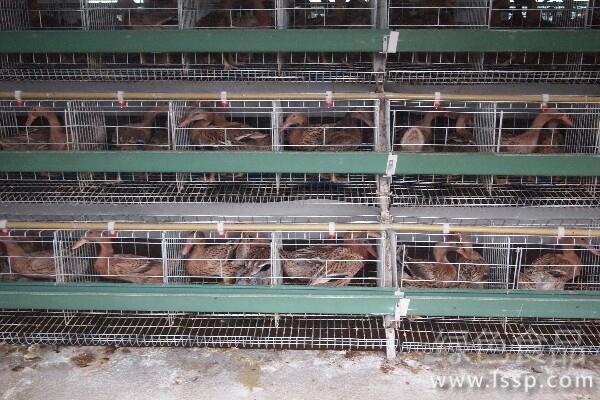
The value of laying ducks lies in egg production. How can the egg production of laying ducks be maintained?
The value of laying ducks lies in egg production. How can the egg production of laying ducks be maintained?
-
What causes premature senescence in cotton seed production fields? How should it be prevented and controlled?
As cotton seed production fields are planted year after year, premature senescence occurs from time to time, and has become an important factor restricting the increase of per-unit yield and the improvement of quality in seed production fields. 1. Causes of premature senescence 1. Continuous successive cropping of seed cotton fields In cotton-growing areas, cotton has been planted continuously on the same land for many years, resulting in a lack of organic matter in the plow layer, which cannot satisfy the soil's sustained fertilizer supply effect. At the same time, successive cropping causes the accumulation of pathogenic bacteria in the soil and a reduction in the number of insect-resistant bacteria, blocking the normal growth of the cotton root system, thereby affecting the upper growth of cotton and causing premature senescence. 2. Cotton
-
Detailed Introduction to Gastrodia Varieties and Main Producing Areas
Gastrodia belongs to the orchid family (Orchidaceae), subfamily Epidendroideae, tribe Gastrodieae, subtribe Gastrodinae. To date, about 30 species of this genus have been discovered worldwide. They are distributed in tropical, subtropical, temperate and cold-temperate mountainous regions. From New Zealand and New Caledonia in the east to Madagascar in the west. From Australia and New
-
Detailed Explanation of Key Points of New Technology for Producing Mushrooms in Oyster Mushroom Bed Cultivation
When oyster mushrooms are cultivated using indoor frame-style beds, mushrooms usually grow only on the front side of the bed, so their production capacity cannot be fully realized. If mushrooms are produced simultaneously on both the front and back sides of a frame-style mushroom bed, then without increasing the formula of the culture material per unit area or the amount of spawn inoculated, the average yield can reach 15.5 kg per sq m, of which 7.6 kg is produced on the back side. Compared with producing mushrooms only on the front side, the yield is nearly doubled, and mushroom formation can be advanced by about 7 days. The key points of the technology for producing oyster mushrooms on both the front and back sides of a mushroom bed are introduced below: Setting up the mushroom bed frame structure
-
How to cope with severe weather in winter and spring greenhouse oyster mushroom production?
In winter and spring, severe weather such as snowfall, cold waves, strong winds, prolonged overcast fog, and sustained low temperatures often arrives uninvited. In mild cases it causes reduced oyster mushroom yields and lower quality; in severe cases it causes total crop failure. Therefore, prevention of and response to severe weather should be strengthened. Main preventive measures: wipe the greenhouse film to improve light transmittance; inspect the greenhouse facilities to ensure the greenhouse's insulation performance; prepare insulating and warming items such as straw mats and old greenhouse film. Response management measures: Cold wave and strong wind cooling weather: Before a cold wave and strong winds arrive, seal the vents tightly, cover the greenhouse film securely, and add a layer of intact old plastic film over the straw mats.
-
Detailed Explanation of Key Production Techniques for Specialty Honey
Honey has always been regarded by people as a pure natural nutritional and health-promoting product. If bees collect nectar from several flower species to make separated honey, it is called mixed honey, or polyfloral honey; if it comes from a single flower species, it is called single-flower honey; if certain nutrients are artificially added and fed to bees, and the honey is made through the bees' processing, it is called biofortified honey. The so-called "specialty honey" refers to the production of single-flower honey or biofortified honey with a certain nutritional and health value. 1. Production of single-flower specialty honey. Bees collect nectar from different
条件筛选