-
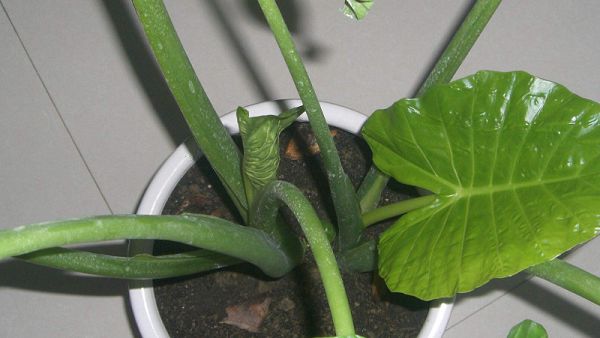
How to grow Alocasia macrorrhizos so it produces side shoots
How to make Alocasia macrorrhizos produce side shoots
-
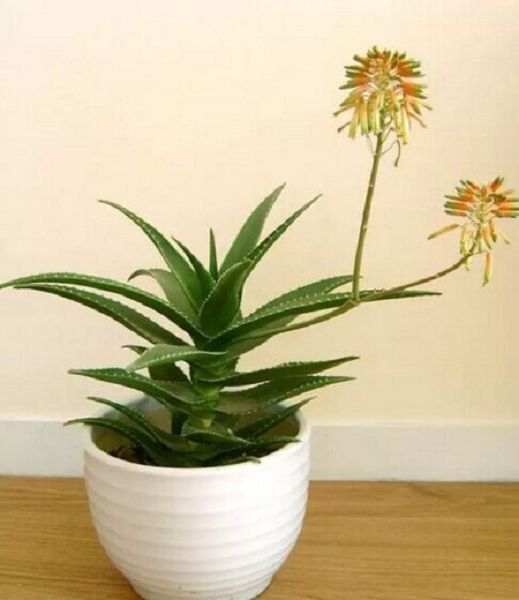
Detailed Explanation of the Production Methods and Technical Key Points of Aloe Bonsai
Aloe Bonsai Production Techniques
-
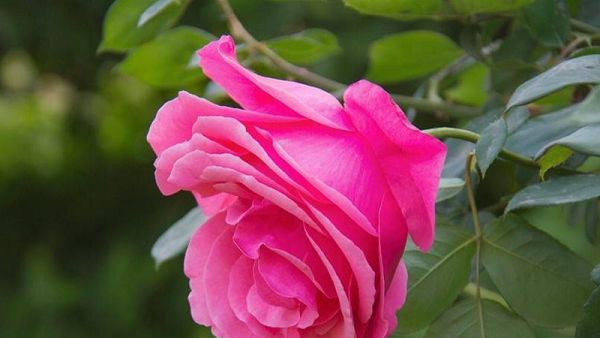
What to do when a rose plant produces fruit? The correct method is here
How to handle a rose plant producing fruit
-

How to cultivate crab claw cactus to produce a top-quality specimen
How to cultivate a top-quality crab claw cactus
-
Tulip Blindness Prevention and Cut Flower Production Techniques
Tulip (Tulipa gesneriana L.), also known as foreign lotus and grass musk, is a perennial bulbous ornamental flower of the genus Tulipa in the Liliaceae family. It is one of the most famous flower varieties in the world today and has long been known as the "king of flowers" [1,2,3]. China still lags behind in box-type cut flower production technology, the causes of blindness formation, and prevention techniques for tulips, which has restricted the development of tulip cut flower production. The flower base of the Hebei Academy of Forestry Sciences, while vigorously developing soilless cultivation of tulips, has conducted preliminary research on
-
How do cherry blossoms reproduce? A detailed explanation of common propagation methods
Grafting is the main method, though sowing and cuttings can also be used. For grafting, cherry or wild cherry (Prunus pseudocerasus) seedlings are generally used as rootstock, with superior cherry blossom varieties as scions. Cleft grafting is mainly used, while budding is rarely adopted. Cleft grafting is carried out in March. Select vigorous 1-year-old cherry blossom branches as scions, cut them into small sections about 8 cm long, each with 2-3 plump buds. Use a grafting knife to cut two symmetrical slanted surfaces of different sizes at the lower end of the scion. One slanted surface is 2 cm long, cutting away 1/3 of the xylem; the other slanted surface is 1 cm long
-
Key Production and Cultivation Techniques for Geraniums
1. Timing Schedule For the zonal geranium series, if grown under suitable conditions in northern regions, the time from potting up rooted cuttings to flowering is: Pot diameter (cm) Weeks 10 7-8 13 9-10 15 11 17 14 Under warm southern conditions, the growing period can be shortened by 1-2 weeks. Climbing series If growing rooted cuttings, pinch 2-3 weeks after potting up: Pot diameter (cm) Weeks 10 11-12 13 13-14 1
-
Introduction to Pollution-Free Production Techniques for Jasmine
I. Site Selection Pollution-free jasmine, like organic jasmine, is produced in unpolluted places. Although the requirements are not as strict as those for organic jasmine, its production environment has specific requirements for soil, water sources, atmosphere and ecology. Therefore, the site must be far away from urban areas, residential areas, factories and mines, and main highway routes, and must be a place with fresh air and clean water sources. II. Production Management For pest and disease control, the focus should be on winter protection and pruning to clean the garden. (1) Winter protection From the eleventh to the twelfth lunar month, take advantage of rising temperatures, when pests come out to activity and their resistance is relatively weak, spray 1-2 times with 500-600 times lime sulfur mixture or 300-500 times orchard cleaner to reduce the overwintering pest and disease base.
-
Detailed Guide to Blue Lily Cultivation and Cut Flower Production Techniques
Operating Procedures for Blue Lily Cultivation and Cut Flower Techniques 1. Seedling raising: Blue lilies are mainly propagated by division, but can also be grown from seed. (1) Division propagation: When blue lilies grow to a certain stage, their tiller shoots emerge from the apical buds of branches on the horizontal underground stems. The tiller shoots and the mother plant's leaf clusters grow separately, making division easy. Simply cut apart the underground rhizomes connecting the tiller shoots and transplant them. Division can be done year-round, but is generally chosen in March to April each year. For potted plants, division is done together with repotting. The method is to
-
Detailed Guide to Cut Lily Production Techniques
Lily roots prefer a substrate with good drainage, aeration and water retention. Heavy clay substrates are unsuitable for growing lilies, as such substrates easily become compacted and hardened. Increasing the organic matter content of the substrate can noticeably improve its drainage, aeration and water retention. Lilies like to grow in a substrate with a moderate organic matter content. Adding fermented, fully decomposed cow manure or rice hulls to the growing substrate is ideal; the cow manure or rice hulls mixed in must have been decomposed for more than one year. Undecomposed material or manure from other animals such as chickens, horses and pigs should be avoided as far as possible
条件筛选