What are the new sheep-raising technologies? Detailed explanation of six practical techniques
Six new sheep-raising technologies
The sheep-raising industry is gradually shifting from being mainly based in pastoral areas to agricultural areas. However, the traditional extensive management methods in agricultural areas make it difficult to achieve significant economic benefits. By combining the introduction of excellent breeds with vigorous promotion of the following six new technologies that are easy to operate and master, the economic benefits of sheep raising can be greatly improved.
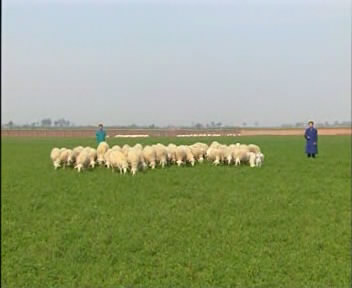
Sheep raising
I. Artificial insemination. The promotion of this technology can greatly improve the utilization rate of breeding rams, reduce the number of breeding rams kept, and save on feeding costs and the purchase cost of excellent breeding rams. Moreover, excellent breeding rams are expensive, currently costing more than 10,000 yuan each. If natural mating is used for breeding, it can easily lead to cross-infection and spread of certain diseases, causing breeding rams to lose their breeding capacity and foundation ewes to lose their breeding value.
II. Supplementary feeding and early weaning of lambs. After lambs reach several weeks of age, the ewe's milk can no longer meet their nutritional needs, so lambs need to be trained early to eat grass and feed as supplementary feeding. Generally, tempting them to eat starts at 7—10 days of age, with 50—70 grams fed per day at 15—30 days of age, reaching 100 grams at 30—60 days of age, and reaching 200 grams at 60—90 days of age, ensuring that lambs all survive and are strong, grow rapidly, and lay a good foundation for early weaning and later fattening. Early weaning is carried out at 100 days of age, and no later than 4 months of age, which can shorten the lambing interval and increase the number of litters produced within the ewe's useful years.
III. Feeding sheep with processed and prepared forage. Forage fed in traditional sheep raising often undergoes no processing or preparation at all. For example, corn stalks are mostly fed as whole dry stalks, which results in low digestion and utilization after feeding. This not only causes great waste of forage resources, but also leads to slow sheep growth, a long feeding cycle, and a low market-ready rate. Therefore, feed preparation and processing technologies such as silage, ammoniation, and fermentation should be widely promoted to improve the economic benefits of sheep raising.
IV. Facility-based raising. In the past, farming households raised sheep by tethering them to stakes and raising them in the open air, and flocks often showed a pattern of thriving in summer, fattening in autumn, thinning in winter, and weakening in spring. Therefore, if the benefits of sheep raising are to be increased, facility-based raising should be promoted, and sheep sheds or warm greenhouses with reasonable layout and structure should be built. In this way, whether in the heat of summer or the cold of winter, the flock has a comfortable living environment, promoting rapid growth and weight gain. The reasonable construction and layout of raising facilities can greatly reduce the occurrence of disease. Spending money on building sheep sheds is more economical than spending money on medicine, especially since excessive drug use can produce drug residues.
V. Comprehensive disease prevention and control technology. Disease is a major threat to sheep production, so emphasis should be placed on vaccination against infectious diseases and the principle of prevention first should be adhered to. Regularly deworm internal and external parasites of sheep, pay attention to sanitation and disinfection of pens, and frequently observe in daily management whether the sheep's spirit, diet, feces, and so on are normal, so as to prevent disease early when there is none and detect and treat disease early when it occurs.
VI. Economic crossbreeding. Use excellent meat-purpose breed rams to carry out two-way or three-way crossbreeding with local ewes to produce excellent crossbred lambs and fatten them to produce commercial mutton sheep. Crossbred sheep not only grow quickly and have a high feed conversion ratio, but also have good meat quality, are fresh and tender, sell at a high price, and bring good economic benefits. Zunhua Agricultural Information Center