How to grow mung beans for high yields? Key practical cultivation techniques
How can mung beans be grown for high yields? Please advise. Mung beans are drought-tolerant, tolerant of poor soil, widely adaptable, and have a short growth period, generally only 60-120 days; their suitable sowing period is very long, and they can be sown from early to mid-April to early August. The cultivation points are as follows: 1. Land preparation. Mung beans are deep-rooted crops, and their cotyledons are plump, so they have relatively strict land preparation requirements...
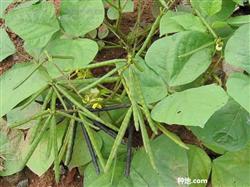
How can mung beans be grown for high yields? Please advise
Mung beans are drought-tolerant, tolerant of poor soil, widely adaptable, and have a short growth period, generally only 60-120 days; their suitable sowing period is very long, and they can be sown from early to mid-April to early August. The cultivation points are as follows:
1. Land preparation. Mung beans are deep-rooted crops, and their cotyledons are plump, so they have relatively strict land preparation requirements. Before sowing, the soil should be deeply plowed and finely harrowed, achieving a loose top and firm subsoil with uniform depth, otherwise seedling emergence will be affected.
2. Fertilization. Before sowing, apply 2500-3500 kg of farmyard manure and about 10 kg of superphosphate per mu at one time; if there is no time to fertilize at sowing, an appropriate amount of nitrogen and phosphorus fertilizer can be applied as a topdressing in the early growth stage to enhance the nitrogen-fixing effect of the root nodules.
3. Sowing. Before sowing, choose a sunny day and spread the seeds thinly on a mat to sun-dry them for 1-2 consecutive days to promote germination and seedling emergence. The main sowing method is drilling, with a row spacing of about 40 cm, a sowing rate of 1-1.5 kg per mu, and a sowing depth of 3-5 cm. After sowing, if the soil moisture is poor, press the soil once.
4. Management. 1. Thinning and final thinning. When the seedlings have two leaves and one heart, remove the clustered seedlings; when they have four true leaves, finalize the stand, leaving 10,000-12,500 plants per mu; 2. Timely intertillage. At the two-leaf-one-heart stage, carry out one shallow intertillage to break up crusting, remove weeds, and enhance the activity of the root nodules. At the four-leaf stage, combine final thinning with the second intertillage; at the five-to-six-leaf clustering stage, carry out the third intertillage; when the plants begin to stretch out and start vining, carry out another intertillage to thoroughly remove weeds around the roots; 3. During the flowering and podding stage, pay attention to watering and topdressing, and drain accumulated water promptly in the rainy season so that the soil remains loose and moist, ensuring normal plant growth; 4. Prevent and control pests and diseases. In recent years, the main pests and diseases harming mung beans include leaf spot, crickets, aphids, and pod borers. To control mung bean leaf spot, spray with 40% carbendazim suspension concentrate at 1000 times dilution in the early stage of disease; crickets can be trapped and killed with poisoned bait made from 90% trichlorfon crystals; aphids can be sprayed with 40% omethoate at 1000 times dilution; and pod borers can be sprayed with 40% isopropyl phosphorus or 50% fenitrothion at 1000 times dilution when adults are at peak occurrence, all with good results.
Click to get more mung bean cultivation techniques
Click to get more grain and oil crop cultivation techniques