How to plant garlic well? A full breakdown of practical growing techniques
How to plant garlic well? A detailed guide to the method. For growing garlic, you can refer to the following growing methods: Variety selection. China has an extremely rich resource of garlic varieties, with famous specialty production areas in both the north and the south, forming many excellent local varieties, such as Chengdu Ershuizao, Cangshan garlic, Songcheng white-skin garlic, Sichuan bolting garlic, garlic sprout garlic, and so on.
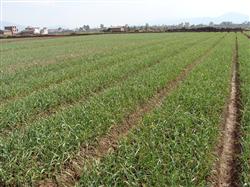
How to plant garlic well? A detailed guide to the method
For growing garlic, you can refer to the following growing methods:
Variety selection. China has an extremely rich resource of garlic varieties, with famous specialty production areas in both the north and the south, forming many excellent local varieties, such as Chengdu Ershuizao, Cangshan garlic, Songcheng white-skin garlic, Sichuan bolting garlic, garlic sprout garlic, and so on. Varieties can be selected according to local growing habits and production purposes.
Land preparation and fertilization. Prepare the land finely, making the soil fine and crumbly and the ground level. The soil should be deeply plowed to about 2 cm, and while preparing the land the soil pH should be controlled at about 5.5-0.6. If too acidic, the root tips become thick and stop extending; if too alkaline, the seed cloves rot easily and growth is poor. Garlic likes complete organic fertilizer with nitrogen, phosphorus and potassium, so the fertilization method of "controlling nitrogen, increasing phosphorus, supplementing potassium, adding microelements" is recommended. Apply 2/3 of the nitrogen fertilizer as base fertilizer, and appropriately increase phosphorus and potassium fertilizer, to ensure uniform emergence and prevent premature aging. Organic fertilizer must be decomposed and buried in the soil, especially cake fertilizer; if spread on the surface it will attract root maggots. At present, garlic production mostly uses plastic film mulching cultivation, and topdressing is not suitable during the garlic growing period. Therefore, before sowing, while preparing the land, it is best to apply enough base fertilizer all at once: per mu, apply 6000 kg of decomposed high-quality barnyard manure, 80 kg of decomposed cake fertilizer, 50 kg of urea, 80 kg of calcium magnesium phosphate fertilizer, 25 kg of potassium sulfate compound fertilizer, and 1.5 kg of zinc sulfate. Use small raised beds, with a bed height of 8 cm-12 cm, a bottom width of 100 cm, a surface width of 70 cm, and a ditch width of 20 cm-30 cm.
Sowing. The determination of the cultivation season should be based on the purpose of garlic production, the requirements of garlic at different growth stages for external conditions, and the climate conditions of each region. Generally, in northern regions, 35 degrees to 38 degrees north latitude is the dividing line between spring sowing and autumn sowing. In areas south of 35 degrees, winter is not very cold, seedlings can overwinter in the open field, and harvest is in early summer of the next year, so autumn sowing is mainly used, mainly including Henan, Shandong, the Guanzhong and southern Shaanxi areas of Shaanxi Province, southern Shanxi, and southern Hebei. In areas north of 38 degrees, winters are severe and seedlings cannot easily overwinter safely, so early spring sowing is suitable, with harvest around the summer solstice. This mainly includes the northeastern provinces, Inner Mongolia, Gansu, **, northern Shaanxi, Shanxi, and northern Hebei. In areas between 35 degrees and 38 degrees, sowing can be done in both spring and autumn, such as in northern Henan. The length of the garlic growth period varies greatly depending on sowing time and variety. Spring-sown garlic has a shorter growth cycle, generally 90 days-110 days, while autumn-sown garlic has a longer growth cycle, generally 220 days-280 days. Choosing a suitable cultivation season is the key to a good harvest. Select garlic heads that are large, with large and uniform cloves, firm cloves, no injuries, no disease spots, and white and fresh color as seed. Generally, the 100-clove weight of garlic cloves is required to be more than 400 jin. Before sowing, soak in 500 times dilution of 50% carbendazim wettable powder for 12 hours-16 hours to prevent fungal diseases. Sowing garlic from early September to early October is relatively suitable. "Green garlic" garlic is generally sown in August or earlier. In October the temperature is 16°C, and the 5 cm soil temperature is 18°C-19°C. By overwintering time, garlic seedlings can reach more than 25 cm in height, which is conducive to safe overwintering.
For sowing garlic, first open sowing furrows 10 cm deep at a row spacing of 20 cm, and spread a small amount of seed fertilizer. When sowing, place the seed cloves in the furrow at a plant spacing of 10 cm-15 cm for large cloves, 9 cm-10 cm for medium cloves, and 7 cm for small cloves, and keep them upright, with the back of the clove parallel to the sowing row (after emergence the leaves face the same direction, which is good for ventilation and light and increases yield), then cover with 3 cm of soil, water, and while the soil moisture is suitable spray the herbicide acetochlor, then cover with film. When covering with film, the plastic film is required to be flat on the bed surface without wrinkles, with no gaps under the film, so that the film fits tightly against the bed surface to avoid breeding weeds. Sowing "green garlic" should be a bit denser, keeping 40,000-50,000 plants per mu, which is convenient for management, favorable for high yield, and can also effectively suppress the occurrence of diseases, insects and weeds.
Field management. Autumn-sown garlic generally emerges 7 days-10 days after sowing. After full emergence, water a second time, and before the soil freezes (before Minor Snow) water once with antifreeze water. Several days later cover with wheat straw to prevent cold and drought. In extremely cold conditions, windbreaks can be set up to ensure the garlic seedlings overwinter safely. In early to mid-March, promptly remove the covering straw and water on a clear and warm day, applying 15 kg-20 kg of urea with the water to promote early greening and regrowth of the garlic seedlings. From early April to the end of April, water once every 5 days-7 days according to soil moisture for plant development. From early May to around May 20, water once every 4 days-6 days, and apply fertilizer once together with watering, to shorten the time of yellow leaves when garlic withdraws from the mother bulb, and at the same time prevent one round of underground pests. When the garlic scape bends, pull the scape. Stop watering 3-4 days before pulling the scape. After the garlic scape is harvested, the soil should often be kept moist to promote rapid enlargement of the garlic head, until 2 days-3 days before harvest.
Timely harvest. 1. Green garlic harvest. It can be harvested 60 days-70 days after emergence. The specific harvest time depends on market conditions. Early harvest has low yield, but the benefit is not necessarily poor. Most harvest methods involve pulling it up by the roots, shaking off the soil and bundling it for market; generally, for large-scale harvest it is not suitable to wash it. Some also cut at the base when the plant height is about 40 cm, and after cutting strengthen fertilizer and water management, then later pull up the whole plant with the regrown new leaves.
2. Garlic scape harvest. One way is to cut open the false stem with a knife, cut off and pull out the scape, then twist the garlic leaves to cover the wound. The second is to pull the garlic scape out directly by hand. The knife-cutting method gives higher garlic scape yield, but the wound is prone to rotting after rain. The hand-pulling method gives lower yield and requires a certain technique, so it is used less. The method mostly used at present is to pull the garlic scape in the afternoon, pinching the base of the garlic seedling with the hand before pulling, or piercing the base of the garlic seedling with a nail and then pulling. The scape pulled this way is long, causes a small wound to the garlic seedling, and has little effect on garlic head growth.
3. Garlic head harvest. About 20 days after harvesting the garlic scape, the garlic head can be harvested. If the garlic scape is not harvested, it instead affects the enlargement speed and yield of the garlic head. The harvest of garlic heads cannot wait until all the leaves above ground wither. In the rainy season, if not harvested in time, they rot easily, the garlic cloves separate easily, they cannot be stored, and they are also not suitable for seed.
Click to get more garlic growing techniques
Click to get more vegetable growing techniques