-
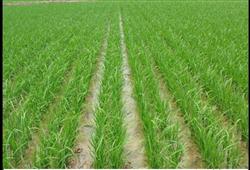
What are the correct methods for applying potassium fertilizer to rice?
How should potassium fertilizer be applied to rice? Please help explain that applying potassium fertilizer to rice can achieve significant yield increases. Sufficient potassium helps enhance photosynthesis, promote sugar synthesis and accumulation, improve plant resistance, and also strengthen the respiration of the rice root system, promote nitrogen uptake and protein synthesis, making rice grains large and plump...
-
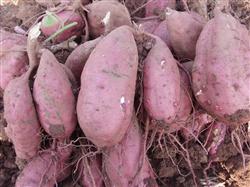
A Detailed Guide to Potassium Fertilizer Application Methods for Underground Tuber Crops
How should potassium fertilizer be applied to underground tuber crops? Why should it be applied this way? Underground tuber crops such as potato, peanut, taro, sweet potato, yam, Jerusalem artichoke, carrot and others all have a potassium-loving nature and a relatively high demand for potassium, so in cultivation even more attention should be paid to applying potassium fertilizer to achieve high yields. For every 1000 kg of potato produced...
-
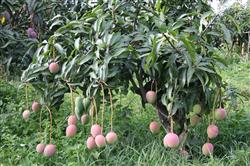
Methods and Technical Key Points for Applying Potassium Fertilizer in Orchards
How should potassium fertilizer be applied in orchards? What methods are there? Traditional orchard fertilization methods often focus only on applying nitrogen fertilizer while neglecting phosphorus and potassium fertilizers, especially potassium fertilizer. Potassium deficiency in orchards can affect flower bud differentiation, the tree's cold resistance and fruit coloring, and can also reduce yield and fruit quality. When potassium deficiency is severe, the leaf margins or entire leaves scorch, spreading from the middle and lower parts upward and downward. After the leaves dry up, they can remain hanging on the branches for a long time. The leaves that have not withered curl and shrink, flower buds are small, and fruit color is poor.
-
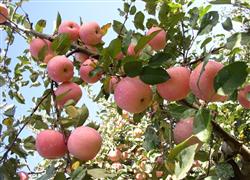
What Are the Functions of Potassium Fertilizer? A Full Analysis of Its Effects and Uses
What are the functions of potassium fertilizer? What should be noted when applying potassium fertilizer? 1. The effects of potassium fertilizer on crops: 1. It helps crops make better use of nitrogen, increases protein content, and promotes the formation of sugars and starch; 2. It enlarges kernels, seeds, fruits, tubers and root tubers, and improves their shape and color; ...
-
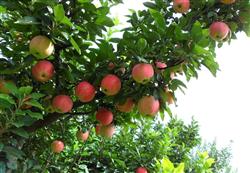
When is the best time to apply potassium fertilizer to apple trees?
When is the best time to apply potassium fertilizer to apple trees? What is the purpose of applying potassium fertilizer to apples? Applying potassium fertilizer to apple trees at the right time and in the right amount can significantly increase fruit size, raise sugar content, improve coloring, and also make the fruit color vivid, the skin smooth and clean, and improve internal qualities such as flavor and taste. The uptake of potassium by apple trees is generally from early July...
-
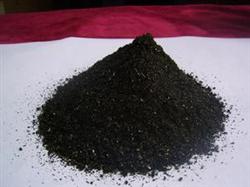
Can potassium permanganate really be used as a pesticide?
Can potassium permanganate be used as a pesticide? Please explain. Everyone knows that potassium permanganate is a strong redox agent, and in medicine it is a surgical drug commonly used for both humans and animals, commonly known as PP powder, and its solution has strong bactericidal, disinfecting and antiseptic effects. Experiments have shown that using solutions of different concentrations of it to control flower seedling damping-off disease...
-
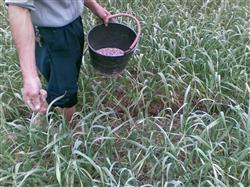
What are the precautions for applying potassium fertilizer?
What should be noted when applying potassium fertilizer? What does potassium fertilizer do? Please note the following when applying potassium fertilizer: 1. Pay attention to soil conditions. Generally, when soil available potassium is below 80mg/kg, the effect of applying potassium fertilizer is obvious; when soil available potassium is 80-120mg/kg, apply less or none. In addition, sandy soil available...
-
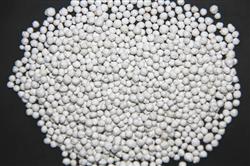
How to identify potassium sulfate? Practical identification methods you can learn
How to identify potassium sulfate? Please explain the identification methods. The identification methods for potassium sulfate can refer to the following: First, look at the appearance. Potassium sulfate is in crystalline form. Second, look at the color. Potassium sulfate is generally white, and some is grayish-yellow, grayish-green or light brown. Third, observe hygroscopicity. Potassium sulfate is basically non-hygroscopic...
-
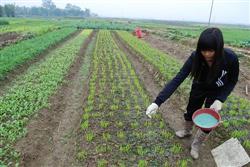
What precautions should be taken when applying potassium sulfate?
What should be noted when applying potassium sulfate? Please give guidance. Potassium sulfate is a high-quality potassium fertilizer with a relatively high potassium content. Potassium sulfate is a white crystalline substance, with a K2O content generally between 50% and 52%. It is easily soluble in water, has low hygroscopicity, and does not easily cake, giving it better physical properties than potassium chloride. Potassium sulfate is widely suitable for various...
-
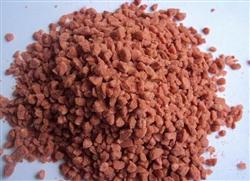
What is the difference between potassium sulfate and potassium chloride? How should they be applied?
What is the difference between potassium sulfate and potassium chloride? How should they be applied? Please explain the application techniques for potassium sulfate and potassium chloride. Potassium sulfate: readily soluble in water, with a K2O content of 50%, it forms white or pale red crystals, has better physical properties than potassium chloride, is less hygroscopic, does not easily cake during storage, and is an acidic fertilizer. Potassium chloride: ...
条件筛选