Can potassium permanganate really be used as a pesticide?
Can potassium permanganate be used as a pesticide? Please explain. Everyone knows that potassium permanganate is a strong redox agent, and in medicine it is a surgical drug commonly used for both humans and animals, commonly known as PP powder, and its solution has strong bactericidal, disinfecting and antiseptic effects. Experiments have shown that using solutions of different concentrations of it to control flower seedling damping-off disease...
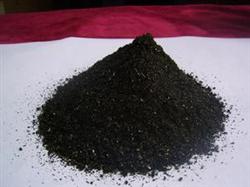
Can potassium permanganate be used as a pesticide? Please explain.
Everyone knows that potassium permanganate is a strong redox agent, and in medicine it is a surgical drug commonly used for both humans and animals, commonly known as PP powder, and its solution has strong bactericidal, disinfecting and antiseptic effects. Experiments have shown that using solutions of different concentrations of it to control flower seedling damping-off disease and rhizoctonia rot, downy mildew, soft rot, fusarium wilt, root rot, viral disease and many other diseases gives very remarkable results. At the same time, it contains 2 nutrient elements that plants must have, manganese and potassium, and can promote plant growth, so it can be described as serving both as medicine and fertilizer. According to medical experts, this drug has abundant sources and low cost, is sold in pharmacies everywhere, is easy to purchase, and when used is safe and non-toxic to humans and animals, leaves no residue and causes no phytotoxicity to crops, and does not pollute the environment. Therefore, potassium permanganate is a rare fungicide that serves both as medicine and fertilizer and is non-toxic, residue-free and pollution-free for vegetables and flowers. Its main uses in plant disease control are:
1. Controlling damping-off disease and rhizoctonia rot. After petunias, scarlet sage and marigolds emerge, spray every 7-10 days with an 800-1000 times dilution (dilute first, then stronger). According to experiments, potassium permanganate has a control effect on seedling damping-off disease as high as 97%, significantly better than pesticides such as carbendazim, zineb, quintozene and dexon.
2. Controlling downy mildew. Practice has proved that using potassium permanganate to control plant downy mildew has good results, clearly better than pesticides such as chlorothalonil and zineb. For example, for cineraria, after emergence, from the 2-leaf 1-heart stage to before flowering, spray with an 800-600 times potassium permanganate solution, once every 5-7 days, spraying 4 times in succession, which can effectively prevent the occurrence of downy mildew. If central diseased plants appear, spray 3 times in succession with a 600 times potassium permanganate solution, with an interval of 5 days, which has a good control effect on downy mildew.
3. Controlling soft rot. Potassium permanganate can effectively control soft rot of scarlet sage, snapdragon and marigold. For example, before sowing, pre-soak in high-temperature clean water for 1 hour, then remove and place in a 1000 times potassium permanganate solution to soak the seeds for 2 hours, and during the seedling stage spray 3-4 times with an 800-600 times solution, which can effectively control soft rot and also control downy mildew.
4. Controlling viral disease. The effect of using potassium permanganate to control plant viral disease is significantly better than pesticides such as Virus A and Junduqing. In the early stage of disease onset, use a 600-800 times solution to spray the whole plant, once every 5-7 days, spraying 3-4 times in succession. If potassium permanganate is mixed in equal amounts with double-effect growth regulator Virus K in an 800-1000 times solution, the effect of controlling viral disease is even better; it can not only control the spread of viral disease, but also make the diseased symptoms of the plant disappear and restore its vitality, having a life-restoring effect. However, note that before controlling viral disease, piercing-sucking pests on the plants should first be controlled to prevent insects from transmitting the virus.
5. Sterilization and disinfection of greenhouses and rooms. Adding potassium permanganate to formalin solution produces formaldehyde vapor, which is used to disinfect edible mushroom inoculation boxes and rooms and has a very good sterilizing effect. When fumigating, put 10 ml of formalin in a cup for each cubic meter of space, quickly add 5 g of potassium permanganate granules, and fumigate the closed box or room for 4-6 hours. When using potassium permanganate spray, note that when mixing the solution it should be stirred continuously so that all the granules dissolve, and it should be used as soon as it is mixed to prevent oxidation and loss of effectiveness from long storage. In addition, spraying should be chosen at around 9 a.m. or after 4 p.m. For seedlings before the 7-leaf stage, rinse promptly with clean water 5 minutes after spraying; use low concentrations during the seedling stage and high concentrations during the adult plant stage.
6. Disinfection of sowing soil. Mix potassium permanganate into an 800-1000 times solution, spray it carefully with a sprayer, cover with plastic film for 7 days after spraying, and use this treated soil for sowing to effectively prevent rhizoctonia rot, stem rot, damping-off disease and other diseases during the plant seedling stage.
Well water, river water, tap water and the like can all be used to prepare the potassium permanganate solution, but stagnant water, sewage water, hot water and the like should be avoided, otherwise its sterilizing effect will be reduced, because potassium permanganate undergoes a reduction reaction with organic matter and generates manganese dioxide, thereby losing its sterilizing power. Therefore it can only be used externally, and can only be used as soon as it is mixed.
Click to get more pesticide application techniques
Click to get more pesticide application techniques