-
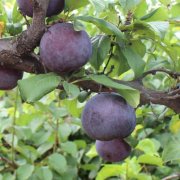
What is the difference between black plums and red plums, and which is sweeter and tastier?
Red plums and black plums are two fairly common fruits, sweet and sour and tasty, and they are rich in antioxidants, which can promote the body's production of collagen, thereby achieving the effect of promoting body balance. The nutritional value of the two, red plums and black plums, is
-
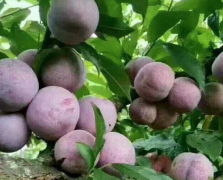
When do red-heart plums ripen and hit the market? A full breakdown of their benefits and taste characteristics
The red-fleshed plum variety is one of the more widely grown types of plum, so do you know what kind of effects this fruit has? Let's find out together! The plum planting area in Tai'an Township is about 200 hectares, mainly red-fleshed plums, with an annual output of about 1.5 million kg. "Tai
-

When Do Furong Plums Ripen? Benefits, Uses and Cultivation Techniques
Furong plum is a type of plum, rich in sugar, protein, vitamin C and various mineral elements such as calcium, phosphorus and iron. It has a sweet-and-sour taste and can be eaten fresh or processed into dried fruit. So, when do Furong plums ripen? What are their benefits and uses? Cultivation techniques included
-
What is the difference between fresh dark plums and grapes? A quick guide to tell them apart
Some people may mix up dark plums and grapes and cannot tell them apart, but in fact there is a big difference between dark plums and grapes; the fruit is much more sour than grapes, and its nutritional value is higher than that of grapes. Appearance: this difference is very intuitive; fresh dark plums are purplish-red
-
How many years does it take for a plum tree to bloom and bear fruit?
Friends who have eaten plums should be no strangers to their taste, sweet and sour. Growers are also very familiar with them, so for beginners, how many years does it take for a plum tree to bloom and bear fruit? 1. How many years does it take for a plum tree to bloom and bear fruit? A plum tree generally needs 3-5 years
-
How to keep plums fresh when you can't eat them all? Store them this way and they'll last a long time
Every year during plum harvest season, it is a race against time for fruit growers. Because plum yields are high, if a large volume hits the market without being controlled, there is a risk of a market glut, and the losses can be considerable. But plums are also a fruit that ripens and rots extremely easily,
-
What are the altitude requirements for growing Fengtang plums?
Summary: Fengtang plums need to be grown in areas below 1200 m in altitude. Reasonable close planting should be carried out according to the topography and landforms. In mountainous areas, hills, and relatively barren areas, it is recommended to plant at a density of 3-4 m between plants and 2-3 m between rows, while in plots with better soil and fertilizer, planting can be appropriately thinner. ⟦4 <p class="cintro"><span>Summary</span>Fengtang plums need to be grown in areas below 1200 m in altitude. Reasonable close planting should be carried out according to the topography and landforms. In mountainous areas, hills, and relatively barren areas, it is recommended to plant at a density of 3-4 m between plants and 2-3 m between rows, while in plots with better soil and fertilizer, planting can be appropriately thinner.</p> <p></p> <p><strong>I. Reasonable Close Planting</strong></p><p>1. Fengtang plums grow relatively fast and the trees are fairly vigorous, and they are generally planted in areas below 1200 m in altitude. The planting density can be reasonably determined according to the specific topography and landforms, soil fertility, and the requirements for early yield.</p><p>2. In mountainous areas, hills, and relatively barren areas, it is recommended to use 4 m between plants and 3 m between rows, and prune into a natural open-center shape. They can also be closely planted at 2 m between rows and 3 m between plants, pruning into a central-leader shape, so as to achieve early yield increases.</p><p>3. In areas with relatively good soil fertility, planting can be appropriately thinner, using 3 m between plants and 5 m between rows, and pruning into an open-center shape.</p><p></p><p><strong>II. Strengthen Water and Fertilizer Management</strong></p><p>1. Fengtang plum fruits are relatively large and have relatively high nutrient requirements. Generally, in autumn in October, sufficient base fertilizer needs to be applied, about 4000 kg of organic fertilizer per mu.</p><p>2. For weak trees, before flowering, one topdressing of decomposed human feces and urine or potassium sulfate type nitrogen-phosphorus compound fertilizer can be applied.</p><p>3. After the pit-hardening stage, about every half month, together with pest and disease control, foliar fertilizers such as potassium dihydrogen phosphate can be sprayed.</p><p>4. After harvest, one topdressing of phosphorus and potassium fertilizer needs to be applied in time, which helps restore tree vigor. At the same time, water according to soil moisture conditions. Especially during the bud break stage, fruit pit-hardening stage, and rapid expansion stage, sufficient water all needs to be provided.</p><p></p><p><strong>III. Flower and Fruit Management</strong></p><p>1. Improve fruit set rate: “Siyue plum” can be planted at a ratio of 8:1, with a flowering period similar to that of Fengtang plum and relatively strong pollen compatibility, and cross-pollination can be used to improve the fruit set rate.</p><p>2. Strict fruit thinning: After Fengtang plum enters the full bearing period and fruit set is good, strict fruit thinning can begin, with a reasonable load, as this is conducive to improving fruit quality and size.</p><p>3. Fruit thinning time: Generally, fruit thinning can be carried out in late April, when the distinction between large and small fruits is relatively obvious. Diseased and insect-damaged fruits, excess fruits, and deformed fruits should be removed. Flower cluster-type fruit branches and short fruit branches can retain 1 fruit, and middle and long fruit branches can retain 1 fruit every 4-5 cm.</p><p></p><p><strong>IV. Shoot Management</strong></p><p>Measures such as bending branches, pulling branches, girdling, pinching, twisting shoots, and using plant growth regulators such as paclobutrazol can effectively weaken tree vigor, prevent excessive growth of new shoots, balance vegetative and reproductive growth, and thereby promote flower bud differentiation.</p><p></p><p><strong>V. Later Stage Management</strong></p><p>1. Fengtang plum is relatively resistant to gummosis and bacterial shot hole disease. The occurrence of disease is relatively mild. After leaf fall and before bud break, 5-degree lime sulfur mixture can be sprayed to clean the orchard.</p><p>2. Aphids need to be controlled before and after flowering. Other pests and diseases can be treated reasonably with pesticides according to specific conditions.</p><p>3. Harvest is generally better at the firm-ripe stage, when the base color of the fruit skin changes from green to yellow and the taste is crisp and sweet.</p>
-
Detailed Explanation of Key Scientific Planting Techniques for Plums
The plum is a temperate fruit with a very wide distribution range. Because of its strong vitality, it is cultivated in most regions of our country. Because its yield is very high, every year when the plum ripening season arrives, it can be seen everywhere on the market, and its edible
-
What are the latest deep-processing methods for plums?
Plums have a very high yield per unit area and are nutritious, containing carbohydrates, protein, pectin, and a large amount of vitamin C. The price per kilogram of plums also exceeds that of apples. Under these circumstances, more and more new plum orchards are being established, and the area keeps growing larger. Besides
-
Practical experience sharing on growing plums in greenhouses
In order to explore the early fruiting and early high-yield techniques of cultivating plums in greenhouses, our station conducted experimental research from 1997 to 2000. The greenhouse was covered in the winter of the second year after planting, and in 2000 a 4-fen plot greenhouse produced 1000 kg of plums. The output value was more than 10,000 yuan, and the maturity period was about 60 days earlier than open-field cultivation. Through the experiment
条件筛选