-
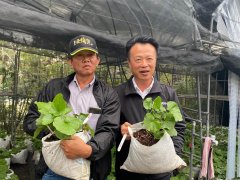
Where in China is suitable for growing wasabi? Mid-altitude wasabi in Alishan may make a comeback
The distinctive crop "wasabi" of Alishan Township in Chiayi County gradually disappeared after the Forestry Bureau banned its cultivation on national forest land 20 years ago for national land conservation. Jiang Jinpin, a wasabi farmer who is also a wasabi merchant, introduced 12 Japanese varieties 3 years ago and cultivated them under net houses in the Shizhao area at an altitude of about 1200 m, successfully domesticating 2 wasabi varieties suitable for cultivation at mid-altitude, and is expected to be able to give healthy seedlings to farmers for planting next year.
-
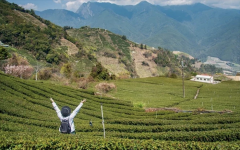
At an altitude of 2000 meters, a forest tea garden: the ultimate satisfaction of a high-mountain tea ceremony
Driving up to Lishan is an ordeal; starting from the foot of the mountains in Yilan, the endlessly winding hairpin turns, 3 hours in a state of dizziness and discomfort, and even after reaching Lishan's town center you still have to drive on again to reach the Xinsi Guangyang tribe, and all this wooziness
-

Pingko Tea Breaks the Low-Altitude, No-Good-Tea Impression, Showcasing the Terroir of the Southernmost Border
The special geographical and environmental conditions make Pingko Tea's flavor particularly unique. The "famous saying" from tea industry textbooks, "No good tea from low mountains," has long influenced the judgment of consumers in Taiwan, China. However, can a low-altitude geographical location really not produce delicious tea?
-
What breeds of sheep are suitable for raising at an altitude of 1100 m?
In our country, many regions make money by raising poultry, but due to climate-related issues, many people think poultry cannot be kept alive. In fact, they can be raised; you just need to pay attention to good breeding management depending on whether you choose free-range or group raising. So is
-
How Many Years Until a Jujube Tree Bears Fruit? The Latest Answer Is Here
Red jujube grows in mountainous areas, hills or plains below 1700 m in altitude. It is a warmth-loving fruit tree with strong drought tolerance and waterlogging tolerance, but it requires relatively high air humidity during the flowering period, otherwise pollination and fruit setting are unfavorable. It has strong light requirements and is relatively sensitive to light response, and it has strong adaptability to soil.
-
What fruit trees can be grown at an altitude of 2200? How much were these fruit trees per jin in 2019?
This kind of high-altitude area has a cool climate, suitable for growing some northern fruit trees. Fruit grown in high-altitude places definitely has high nutritional value. But there are very few fruit trees suitable for growing in this high-altitude environment. So, let's take a look below at what fruit trees can be grown at an altitude of 2200.
-
Detailed Explanation of Jujube Cutting Propagation Methods and Techniques
Jujube trees grow in mountainous areas, hills or plains below 1700 m in altitude. If you want to propagate jujube trees by cuttings, what is the propagation method? 1. Jujube cutting propagation method First moisten the sand bed; the moisture standard is that after holes are punched in the sand bed, the holes do not collapse. Cut
-
How are hawthorn trees cultivated and managed in high-altitude cold regions?
1 Selection of hawthorn varieties suitable for cultivation in high-altitude cold regions Choosing varieties suited to local natural conditions is the key to successful hawthorn cultivation in high-altitude cold regions. When selecting varieties, strong cold resistance and adaptability must be given top priority, while also paying attention to excellent quality and so on. In a hawthorn orchard
-
What are the altitude requirements for growing Fengtang plums?
Summary: Fengtang plums need to be grown in areas below 1200 m in altitude. Reasonable close planting should be carried out according to the topography and landforms. In mountainous areas, hills, and relatively barren areas, it is recommended to plant at a density of 3-4 m between plants and 2-3 m between rows, while in plots with better soil and fertilizer, planting can be appropriately thinner. ⟦4 <p class="cintro"><span>Summary</span>Fengtang plums need to be grown in areas below 1200 m in altitude. Reasonable close planting should be carried out according to the topography and landforms. In mountainous areas, hills, and relatively barren areas, it is recommended to plant at a density of 3-4 m between plants and 2-3 m between rows, while in plots with better soil and fertilizer, planting can be appropriately thinner.</p> <p></p> <p><strong>I. Reasonable Close Planting</strong></p><p>1. Fengtang plums grow relatively fast and the trees are fairly vigorous, and they are generally planted in areas below 1200 m in altitude. The planting density can be reasonably determined according to the specific topography and landforms, soil fertility, and the requirements for early yield.</p><p>2. In mountainous areas, hills, and relatively barren areas, it is recommended to use 4 m between plants and 3 m between rows, and prune into a natural open-center shape. They can also be closely planted at 2 m between rows and 3 m between plants, pruning into a central-leader shape, so as to achieve early yield increases.</p><p>3. In areas with relatively good soil fertility, planting can be appropriately thinner, using 3 m between plants and 5 m between rows, and pruning into an open-center shape.</p><p></p><p><strong>II. Strengthen Water and Fertilizer Management</strong></p><p>1. Fengtang plum fruits are relatively large and have relatively high nutrient requirements. Generally, in autumn in October, sufficient base fertilizer needs to be applied, about 4000 kg of organic fertilizer per mu.</p><p>2. For weak trees, before flowering, one topdressing of decomposed human feces and urine or potassium sulfate type nitrogen-phosphorus compound fertilizer can be applied.</p><p>3. After the pit-hardening stage, about every half month, together with pest and disease control, foliar fertilizers such as potassium dihydrogen phosphate can be sprayed.</p><p>4. After harvest, one topdressing of phosphorus and potassium fertilizer needs to be applied in time, which helps restore tree vigor. At the same time, water according to soil moisture conditions. Especially during the bud break stage, fruit pit-hardening stage, and rapid expansion stage, sufficient water all needs to be provided.</p><p></p><p><strong>III. Flower and Fruit Management</strong></p><p>1. Improve fruit set rate: “Siyue plum” can be planted at a ratio of 8:1, with a flowering period similar to that of Fengtang plum and relatively strong pollen compatibility, and cross-pollination can be used to improve the fruit set rate.</p><p>2. Strict fruit thinning: After Fengtang plum enters the full bearing period and fruit set is good, strict fruit thinning can begin, with a reasonable load, as this is conducive to improving fruit quality and size.</p><p>3. Fruit thinning time: Generally, fruit thinning can be carried out in late April, when the distinction between large and small fruits is relatively obvious. Diseased and insect-damaged fruits, excess fruits, and deformed fruits should be removed. Flower cluster-type fruit branches and short fruit branches can retain 1 fruit, and middle and long fruit branches can retain 1 fruit every 4-5 cm.</p><p></p><p><strong>IV. Shoot Management</strong></p><p>Measures such as bending branches, pulling branches, girdling, pinching, twisting shoots, and using plant growth regulators such as paclobutrazol can effectively weaken tree vigor, prevent excessive growth of new shoots, balance vegetative and reproductive growth, and thereby promote flower bud differentiation.</p><p></p><p><strong>V. Later Stage Management</strong></p><p>1. Fengtang plum is relatively resistant to gummosis and bacterial shot hole disease. The occurrence of disease is relatively mild. After leaf fall and before bud break, 5-degree lime sulfur mixture can be sprayed to clean the orchard.</p><p>2. Aphids need to be controlled before and after flowering. Other pests and diseases can be treated reasonably with pesticides according to specific conditions.</p><p>3. Harvest is generally better at the firm-ripe stage, when the base color of the fruit skin changes from green to yellow and the taste is crisp and sweet.</p>
-
What fruits are suitable for growing at an altitude of 1500 m?
The growth of fruit also has a certain relationship with altitude. Places at higher altitudes generally have colder climates, and not all fruits can be grown there, so what fruits can be grown at an altitude of 1500? An altitude of 1500 m is generally a temperate region, and most fruits can be grown.
条件筛选