-

How to grow Shanlihong (Crataegus pinnatifida, Chinese hawthorn) so it blooms and bears fruit? Cultivation methods and points to note
First love is unforgettable because of the sincere feeling it holds at the very beginning. If a plant were to express it, it would have to be "Shanlihong", also called wild hawthorn in the market, a plant of the genus Crataegus in the rose family. Its flower language is the sweetness of love and pure love. Shanlihong's color is autumn-colored
-
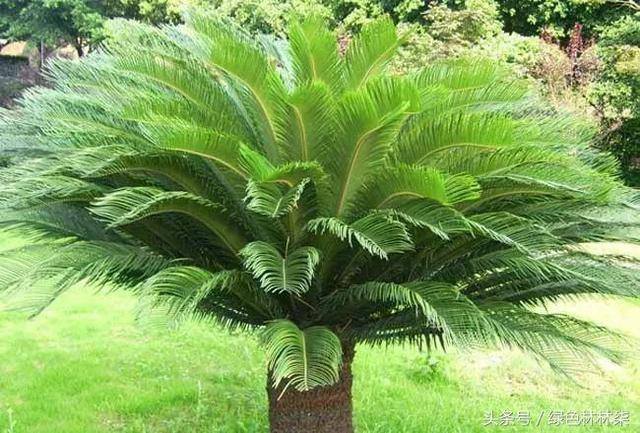
Cycad Blooms and Bears Fruit, Only to Be Picked: Wuhan Hospital Gardener Alarmed
Cycad blooms, what's the next line? A mute speaks. ▽As the saying goes: "Cycad blooms, a mute speaks" - meaning it is truly rare for a cycad to bloom. Cycad blooming often follows no pattern, and the blooms are hard to see, hence there is also the saying...
-

When does the yew bloom and bear fruit? The latest answer is here
The yew is a shallow-rooted plant, with an inconspicuous taproot and well-developed lateral roots. It is recognized worldwide as a rare natural anti-cancer plant on the verge of extinction, an ancient relict tree species left over from the Quaternary glaciation, with a history of 2.5 million years on Earth. Below we will
-
Pine trees are monoecious plants. Do they bloom and bear fruit in spring?
Pine trees are monoecious plants, and their most obvious feature is that the leaves are needle-shaped, usually in bundles of 2, 3 or 5 needles, and in people's general impression, pine trees have no flowers. So do pine trees bloom and bear fruit in spring? According to Master Xiao, a pine tree grower in Loudi City, pine trees not only
-
How many varieties of willow are there in the world, and when do they sprout, bloom and bear fruit?
When people mention willow catkins drifting in the air, everyone thinks of a picture of a summer pond. So how many varieties of willow are there in the world? Generally when do they sprout, bloom and bear fruit? According to relevant information, willow is the general name for Salix plants such as Salix matsudana, Salix chaenomeloides, Salix babylonica, Salix alba, Salix globosa and Salix purpurea. There are about 520 or more species in the world, mainly produced in the temperate regions of the Northern Hemisphere, fewer in the frigid zone, very few in the tropics and the Southern Hemisphere, and no wild species in Oceania. China has 257 species, 122 varieties and 33 forms. They are produced in all provinces and regions. In addition, willows generally sprout in spring, blooming at the same time, with flowers before leaves; the flowers are generally white (some are red), and the flowering period is generally in March-April on the solar calendar, or the 2nd-3rd lunar month (who knows where the slender leaves are cut out? The February spring breeze is like scissors, which speaks of willow sprouting). One month later, that is, in April-May, the fruit ripens, willow catkins drift all over the sky, and then in autumn the leaves wither. <p style="text-align: center;"></p> <p style="text-indent:2em;">There are many kinds of willow, and they cross easily. Hybrids have strong growth vigor and adaptability and are easy to propagate vegetatively. Excellent clonal varieties can be obtained by selecting from natural or artificial hybrid populations and propagating vegetatively; in addition, plant tissue culture methods can also be used to quickly obtain large numbers of high-quality saplings. For breeding focused on garden ornamental use, emphasis should be placed on improving their branches, leaves and tree form, and enhancing their ability to resist pollution and tolerate pruning and shaping.</p> <p style="text-indent:2em;">Willows have graceful tree forms and leaf out and bloom early. In early spring the whole tree is tender green, and it is one of the main tree species in parks of the northern temperate zone. For example, Salix babylonica and Salix koreensis have slender, drooping branches and willow leaves like eyebrows. Many shrub willows tolerate pruning and can be trained into various shapes of thickets or used as hedges. For waterside greening in garden landscapes, willow is most suitable, such as the “Orioles Singing in the Willows” at West Lake in Hangzhou, and the “Peach Stream and Willow Bank” at Huaxi in Guiyang. There are also many beautiful willows yet to be developed, such as Salix magnifica, with large leaves like magnolia, purplish-red branches, and long reddish-yellow flower spikes; the female plants have red styles and stigmas and are also very attractive. In addition, there are more than 20 species of small alpine willows, with plants only 5-30 cm tall, and branches creeping or upright, twisted, and varied in form; they have a long lifespan, are easy to keep alive, and are good material for making garden bonsai. They are often used for garden ornament, <p style="text-indent:2em;">residential compounds, gardens, schools, factories, hillsides, courtyards, roadsides and in front of buildings. When in full bloom, the branches spread out in all directions, making the courtyard full of green strips, with high ornamental value; it is truly an ideal tree species for beautifying courtyards. It has strong resistance to air pollution and dust, and is suitable for growing in urban gardens, especially beside ponds or streams.</p> <p style="text-align: center;"></p> <p style="text-indent:2em;">Appendix: The willow that blooms red flowers: Callistemon viminalis</p> <p style="text-indent:2em;">Callistemon viminalis, also known as weeping bottlebrush, bottlebrush tree, nhiều hoa red bottlebrush and red bottlebrush. It is native to Australia, and its branches are soft and drooping, like a weeping willow; its flower shape is similar to a red baby bottle brush, hence it is also called red bottlebrush. After being introduced to Taiwan, China, some people called it Western willow based on its tree form.</p> <p style="text-indent:2em;">Callistemon viminalis is an evergreen small tree in the family Myrtaceae and the genus Callistemon. Its flowers are red, with very long red filaments forming rings of long flower clusters. Callistemon viminalis enters its flowering period every March, when each tree blooms with dozens of red flowers, like red baby bottle brushes hanging on the tree; the soft branches sway in the wind, graceful and charming, and the bright red petals set off the green leaves, striking and eye-catching.</p> <p style="text-indent:2em;">In any case, this Australian willow from the Southern Hemisphere is never as deeply affectionate and meaningful as the willow of Baqiao!</p> <p style="text-indent:2em;"> </p>
-
How long does a ginkgo tree take to bloom and bear fruit? How long can it live? When do the fruits ripen?
Ginkgo fruit is the fruit produced by the ginkgo tree, also known as white fruit (baiguo). It is rich in crude protein, crude fiber and a variety of vitamins, and regular consumption has the effects of enhancing memory and inhibiting and killing tumor cells, so many people like to eat it as a nut. So
-
When Does the Tea-Oil Camellia Bloom and Bear Fruit? Lifespan and Income Period Explained in One Article
The tea-oil camellia, also known as the tea-oil tree or tea-seed tree, is a fairly common economic crop in our country. Its seeds can be pressed for oil for human consumption, and the seed cake can be used as a pesticide to control pests and diseases, so it is planted in many regions. So when does the tea-oil camellia bloom and bear fruit? How
-
How many years does it take for a red-fruited hawthorn tree to bloom and bear fruit? Suitable planting regions and sapling prices
The hawthorn tree is a deciduous tree with leaves that are nearly ovate and have deep pinnate lobes, and white flowers. The fruit is spherical, dark red, with small spots, sour in taste, and can be eaten or used as medicine. So how many years does a hawthorn tree generally take to bloom and bear fruit? Where is it suitable to plant? How much do the saplings
-
When Does Black Locust (Robinia pseudoacacia) Bloom and Bear Fruit, How Many Years Until It Flowers After Planting, and How Does It Differ from Chinese Scholar Tree?
Black locust, also known as false acacia. Black locust flowers are edible. The honey produced from black locust flowers is very sweet, and honey yields are also high. Cultivated varieties include Hongsen locust, red-flowered black locust, golden-leaf black locust, and others. So when does black locust bloom and bear fruit? How many years after planting will it flower? And how does it differ from Chinese scholar tree
-
When Does the Plum Tree of the Rose Family Bloom and Bear Fruit, How to Prune It, and What Treatments to Use After Flowering to Protect Blooms and Fruit
The plum tree, also known as the cherry plum, is a common fruit tree and a deciduous small tree that can reach a height of 8 m; it is mostly propagated by grafting onto wild peach rootstock, and can also be propagated from cuttings. When does the plum tree usually bloom and bear fruit? When should it be pruned? What treatments should be sprayed after flowering to protect blooms and fruit?
条件筛选