-

Distribution, growing environment characteristics and flowering period of fireweed
Today we introduce a plant whose name sounds poetic: its leaves are as slender as willow leaves, and its flowers are as elegant as orchids when they open. It is called "fireweed" (Chamaenerion angustifolium). Fireweed has a very special ability: it can grow rapidly on land after a fire, and before long it is covered with bright flowers, which is why it is also called "fire grass."
-
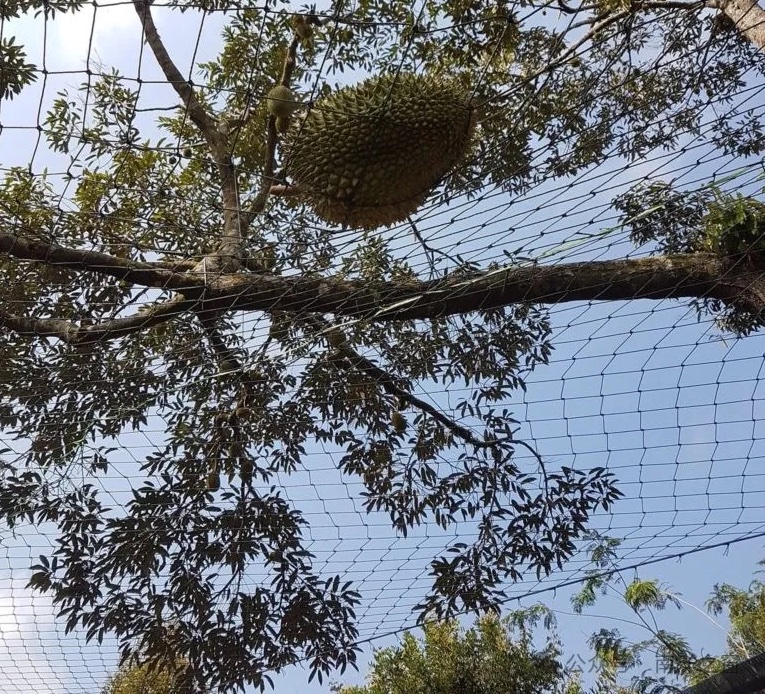
Distribution of durian varieties in Malaysia, Musang King/SULIAN/BLACK THORN/ UDANG MERAH
The king of fruits, durian, in Malaysia, also holds an unshakable position in Southeast Asia, such as Malaysia, Thailand, Singapore, and even in China. As the
-

Where are the main onion-producing areas in China?
Onions are a long-day crop, and without sufficient sunlight, onion yields will be greatly reduced. Onions have moderate requirements for water and air humidity, and the ideal soil for cultivation should be loose, fertile, neutral soil with good aeration. The growth of onions
-
A Detailed Guide to Walnut Cultivation History and Production Area Distribution
The Origin of the Walnut The walnut is a large deciduous tree native to the ancient Persia (present-day Iran) region in the heart of Asia. In recent years, archaeologists discovered carbonized walnuts among the artifacts unearthed at a primitive society site (Neolithic Age) in Cishan Village, Wu'an, Hebei, and also found abundant walnut and hickory pollen in the lacustrine sediments of Nyainqentanglha in Tibet, proving that China is one of the native centers of the walnut in the world.
-
Where is the origin of cacti? A comprehensive analysis of distribution factors
Most people are familiar with the cactus species, but know little about its place of origin. In fact, most plants in the cactus family are native to the Americas. In North America and South America, they are widely distributed from Canada to the Patagonia region of Argentina. They have gradually
-
What Are the Symptoms of Walnut Anthracnose? A Detailed Guide to Prevention and Control Methods
1. Distribution and occurrence characteristics Walnut anthracnose generally occurs mostly from June to August, with slight variations from place to place. In Jiangsu, Henan and Shandong it occurs from late June to early July, and in Hebei and Liaoning in August. The pathogen overwinters as mycelium and conidia in diseased fruits, diseased leaves or bud scales, and the following
-
Symptom Identification and Control Methods of Walnut Bacterial Blight
1. Distribution and Occurrence Characteristics Widely distributed in walnut-producing areas such as Hebei, Shandong, Shanxi, Liaoning, Henan, Jiangsu, Zhejiang, Sichuan, Yunnan, Shanxi, and Gansu, with severe incidence in some areas. Infection generally begins in mid-to-late May. The pathogenic bacteria overwinter in the lesions of diseased branch tips or in diseased buds. In the spring of the following year, the bacteria spread by wind and rain splashing onto leaves, fruits, and young branches, causing damage. The pathogen can infect floral organs, so pollen can also carry the bacteria, and insects are also vectors. The bacteria invade through stomata, lenticels, nectaries, and various wounds. Under conditions of sufficient humidity, temperatures within the range of 4-30°C can cause infection of leaves, and 5-27°C can cause infection of fruits. The incubation period varies in different parts: 5-34 days on fruits and 8-18 days on leaves.
-
Symptom Identification and Control Methods of Walnut Rot Disease
1. Distribution and occurrence characteristics. Also known as black water disease, it occurs in Henan, Shanxi, Shandong, Sichuan and other places. The pathogen overwinters in the diseased parts as mycelium or stroma and pycnidia. After the sap of the walnut tree begins to flow the following spring, when suitable conditions for disease development occur, conidia are produced,
-
How to Control Walnut Slug Moth Pests and Diseases
1. Distribution and damage symptoms. They are a group of omnivorous pests, commonly including the yellow slug moth, the brown slug moth, the green slug moth, and the flat slug moth, all distributed throughout the country. The larvae feed on leaves, affecting tree vigor and yield, and they are important pests of walnut leaves. Young larvae feed on the lower epidermis and mesophyll of the leaf surface
-
Occurrence Characteristics and Control Methods of Walnut Canker
1. Distribution and occurrence characteristics. It is distributed in most walnut-producing areas. The pathogen mainly overwinters as mycelium within the diseased tissue of the current year. In April of the following year, when the temperature rises to 11.4-15.3°C, it begins to become active. In late May, conidia are formed in large numbers and spread by wind, rain, and other means, mostly invading through wounds
条件筛选