-
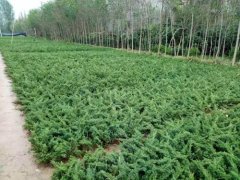
Is a creeping juniper bonsai suitable to keep at home? Value and premium price analysis
The creeping juniper is an evergreen small shrub and also belongs to the cypress family, but this kind of cypress does not grow tall, generally around 70-80cm, so it is called creeping juniper. Its economic value is generally as a bonsai. Is a creeping juniper bonsai valuable? Yes, it is valuable. So is a creeping juniper bonsai
-
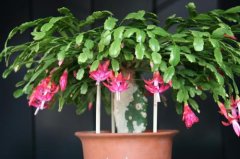
What to Do When Christmas Cactus Drops Its Flower Buds? Causes and the Best Fertilizer Choices
If you grow a Christmas cactus, this potted plant is not the easiest to care for. Would you like to know some tips for growing a Christmas cactus, such as what causes it to drop its flower buds and what to do about it? What fertilizer is best for a Christmas cactus? When a Christmas cactus drops its flower buds,
-
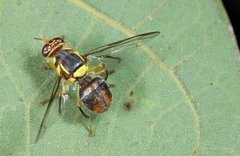
Three-Pronged Approach to Fruit Fly Control: Trapping and Orchard Cleanup Combined with Biological Control to Reduce Damage
As summer approaches, temperatures rise, and the Oriental fruit fly (Bactrocera dorsalis) begins to stir into action. Not only are the public's favorite mango and guava easily affected, but the red date (jujube), often used for warming tonics, is also a favorite food of fruit fly larvae. The Miaoli District Agricultural Research and Extension Station reminds that red dates, unlike general
-
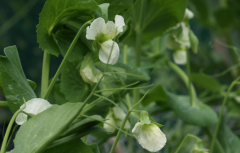
Garden Pea Planting Plan with Intercropping, Succession Planting, and Pruning Methods
Garden peas, including shelling peas, snow peas, and snap peas, have two characteristics that make them strong candidates for a super-productive planting plan. First, peas vine upward, and their vertical habit makes it possible to grow low-growing crops at their base. Second
-
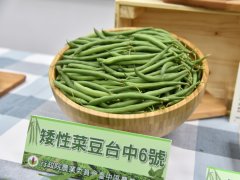
Taiwan dwarf bean Taichung No. 6 trial-planted in Kaohsiung-Pingtung, export potential viewed favorably
The Taichung District Agricultural Research and Extension Station of the Council of Agriculture spent 6 years breeding the new dwarf bean variety "Taichung No. 6," which has obtained plant variety rights. It is currently being trial-planted in the Kaohsiung-Pingtung area and is expected to follow in the footsteps of frozen edamame exports to become another flagship product! The promising export
-
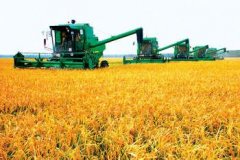
In 2019, wet paddy prices in Kaohsiung and Pingtung fell sharply, to less than 9 yuan per Taiwanese catty
Recently, rice harvesting has begun in parts of Kaohsiung and Pingtung, but it has been reported that because of last year's bumper rice harvest, the harvest volume hit a record high and has still not been absorbed, so the price offered by grain dealers for wet paddy is less than 9 yuan per Taiwanese catty. Many farmers have already reported to local elected representatives that growing rice
-
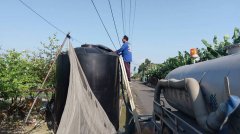
Livestock and poultry manure wastewater becomes odorless fertilizer, helping plants grow and increasing the sweetness of fruits and vegetables
To effectively utilize livestock wastewater, the Pingtung County Environmental Protection Bureau began promoting the use of biogas residue and biogas slurry, produced after anaerobic fermentation of livestock wastewater, as fertilizer starting in 105. Wang Yixuan, section chief of the Water Pollution Control Section of the Pingtung County Environmental Protection Bureau, explained that after nearly 3 years of field use, many farmers reported
-
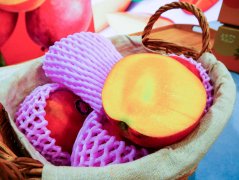
Taiwan Pingtung mangoes enter their season: what about the yield and export prices?
Mango season is here! These days mark the mango production period in Pingtung County. Besides continuing to use trading companies' export channels so that people overseas can buy mangoes at various outlets, the Pingtung County Government has also teamed up with distributors: while overseas consumers are visiting Taiwan, or by asking someone in Taiwan to go to outlets such as the domestic Dinghao and JASONS supermarkets, or by going online to the UDN online shopping platform, they can pre-order mangoes. In as little as 5 days after harvest, consumers far overseas can receive them and get a fresh taste.
-
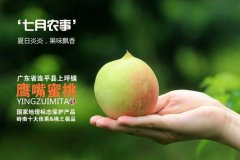
Lianping Shangping eagle-beak honey peach opens for picking and goes on the market in July, 10 yuan per jin, reachable by navigation
If you look for the Lianping eagle-beak honey peach base on your phone's map and navigation apps, you will find three results, but in fact the results are not accurate; two of the places, when you get there, have only a few mu of peach trees past their season. If you search for Lianping Shangping eagle-beak honey peach on your phone, you will find that it is still 12 km after getting off the expressway. In fact, as soon as you exit the expressway, you get the feeling of having entered the eagle-beak honey peach production area. Right away the roadside is lined with eagle-beak peaches, and you do not really need to enter the base itself; just find one or two orchards right by the roadside, 10 yuan per jin, while the price on the Guangzhou market at the same time is 11.8, but in the market you will find that in fact many are not from Lianping eagle-beak honey peaches and are replaced with those from other places.<br /> <img alt="Lianping Shangping eagle-beak peach" src="/uploads/allimg/190730/1-1ZI0142GLY.jpg" style="width: 730px; height: 487px;" /><br /> <br /> <div> The soil in Lianping County, Heyuan City is acidic, and winter is not very cold and not long, an environment relatively suitable for honey peach growth. Each town, based on this natural resource advantage and combined with the local farmers' traditional habit of growing honey peaches, put forward the rural economic development idea of “hope lies in the mountains, wealth lies in the mountains”. Among the many fruits of Lianping, the eagle-beak honey peach is famous both inside and outside the county for its large fruit, clear sweetness, crispness and honey flavor, and is favored by consumers. Through extensive market surveys and research by agricultural experts from the province, it was confirmed that the honey peaches of Shangping Town and Beitou Town are rare fine varieties in the whole province. Therefore, honey peach planting was vigorously promoted, and honey peach production was designated as the characteristic economy of Lianping County's “one town, one product”.</div> <div> </div> <div> Before 2002, Shangping Town, Lianping County, Heyuan City had 4,000 mu of honey peach base. In 2003, Shangping Town completed the land preparation and planting task for 6,000 mu of eagle-beak peaches and began preparing to build the 10,000-mu honey peach base in the Jiulian Mountains. In order to give full play to the brand effect and realize industrialized operation, Shangping Town, with strong support from the county party committee, county government and relevant departments, set off a boom in honey peach planting throughout the town. Starting in September 2003, in less than three months, Shangping Town completed 4,350 mu of land preparation and hole digging, and base construction was unprecedentedly fast. The masses' enthusiasm for planting honey peaches ran high; in Zhongcun and Gukeng of Shangping, nearly 1,000 people went up the hills every day to prepare land and dig holes. From 2003 to 2005, Shangping Town mobilized the masses to expand planting by more than 10,000 mu. The honey peach planting project in Shangping Town implemented the policy of unified planning, contiguous development and household operation, which fully mobilized the enthusiasm of farmers. With the Jiulian Mountain eagle-beak honey peach base as the center, it spread to surrounding villages, forming a pattern of “every village has a base, every household has an orchard”, reaching more than 1 mu of peach orchard per person, making Shangping Town a veritable honey peach specialized town.<br /> </div> <div> At the same time, at the end of 2002, Beitou Town, Lianping County, Heyuan City also began planting eagle-beak peaches, and by 2005 several hundred mu of fields or hillside land had also been planted with eagle-beak peach trees. To this day, planting in Beitou Town has also reached over a thousand mu. This completed the goal of the eagle-beak peach base radiating toward the northwest of the Jiulian Mountains.</div> <div> In 2005, Shangping Town was rated by the relevant national departments as “China's Hometown of Eagle-Beak Honey Peach”. In October 2011, at the “Top Ten Excellent Fruits of Lingnan” award ceremony held in Deqing, Zhaoqing, the Lianping eagle-beak honey peach received this honor. The “Lianping eagle-beak honey peach” is currently the best peach variety in Guangdong and even southern China, and has been praised by agricultural experts as the “best of peaches”.</div> <br /> <br />
-
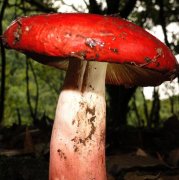
What are the effects and functions of Wuyishan, Nanping and Yunnan red mushrooms?
Red mushrooms cannot be cultivated artificially, so there are no artificially grown red mushrooms. Judging from the places they pass through, the areas that produce more red mushrooms are the Nanping area of Fujian, as well as the central and southern parts of Yunnan. There are slight differences between the two places. Fujian has four distinct seasons, and red mushrooms begin to appear before spring and summer, while Yunnan is divided into a rainy season and a dry season, and once the rainy season begins, mushrooms are produced. Mountain villagers generally take them to small markets to sell, at about 200 per kilogram (Yunnan uses kilograms), and when dried they become about 400-600. This thing still needs to be bought from mountain villagers you know well. Many bought online are the ones others have picked over, and the quality is a bit poor.<br /> <img alt="red mushroom" src="/uploads/allimg/190730/1-1ZI0163Q4946.jpg" style="height: 501px; width: 500px;" /><br /> <br /> Wuyishan is a world natural and cultural heritage site, with a pleasant climate, fertile soil, and sweet water quality. It is the place with the best-preserved biodiversity in the world, rich in all kinds of wild mushrooms, and one of the best edible mushroom producing areas in the world. <div> Red mushrooms are a rare mountain delicacy and a natural nutritious fine product, and have the reputation of “king of mushrooms”. They selectively grow in primitive hardwood broad-leaved forests in special places, are collected purely wild, and the yield is extremely low, so “things are precious when they are rare”, and their nutritional value and dietary therapy value are especially high. Nutritional value: pure natural wild red mushrooms contain rich vitamin B, D, E, and also contain niacin, which is rare in other foods, as well as trace elements such as iron, zinc, selenium, and manganese. Red mushrooms are known for being mellow and delicious, fresh and refreshing, and for their clear red soup color.</div> <div> </div> <div> Recommended ways to eat: 1. For “postpartum confinement” use: 1 liang of camellia oil, 2 liang of minced old ginger, 2 local eggs, stir-fry over high heat for a few minutes, add 1 liang of brown sugar, 2 liang of dried red mushrooms, and stew in soup with 1 silkie chicken (or 0 chicken from the countryside) and eat. 2. For tonifying deficiency and kidney deficiency with waist pain: 5 local eggs, 4 liang of dried red mushrooms, 2 liang of longan, 1 liang of brown sugar, cook in soup and eat. 3. For removing water: cook 2 liang of dried red mushrooms with other foods and eat, without adding salt.</div> <div> </div> <div> Because the yield of red mushrooms is scarce, all major supermarkets sell only small amounts.</div>
条件筛选