What are the effects and functions of Wuyishan, Nanping and Yunnan red mushrooms?
Red mushrooms cannot be cultivated artificially, so there are no artificially grown red mushrooms. Judging from the places they pass through, the areas that produce more red mushrooms are the Nanping area of Fujian, as well as the central and southern parts of Yunnan. There are slight differences between the two places. Fujian has four distinct seasons, and red mushrooms begin to appear before spring and summer, while Yunnan is divided into a rainy season and a dry season, and once the rainy season begins, mushrooms are produced. Mountain villagers generally take them to small markets to sell, at about 200 per kilogram (Yunnan uses kilograms), and when dried they become about 400-600. This thing still needs to be bought from mountain villagers you know well. Many bought online are the ones others have picked over, and the quality is a bit poor.<br />
<img alt="red mushroom" src="/uploads/allimg/190730/1-1ZI0163Q4946.jpg" style="height: 501px; width: 500px;" /><br />
<br />
Wuyishan is a world natural and cultural heritage site, with a pleasant climate, fertile soil, and sweet water quality. It is the place with the best-preserved biodiversity in the world, rich in all kinds of wild mushrooms, and one of the best edible mushroom producing areas in the world.
<div>
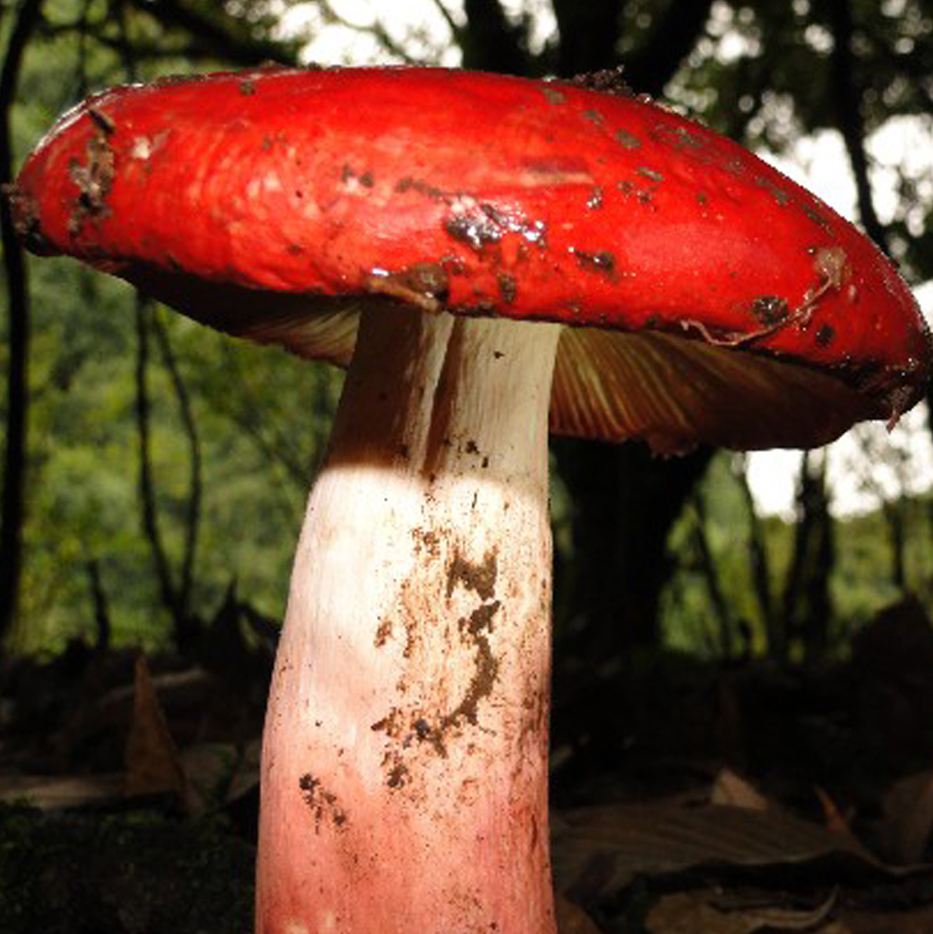
Red mushrooms are a rare mountain delicacy and a natural nutritious fine product, and have the reputation of “king of mushrooms”. They selectively grow in primitive hardwood broad-leaved forests in special places, are collected purely wild, and the yield is extremely low, so “things are precious when they are rare”, and their nutritional value and dietary therapy value are especially high. Nutritional value: pure natural wild red mushrooms contain rich vitamin B, D, E, and also contain niacin, which is rare in other foods, as well as trace elements such as iron, zinc, selenium, and manganese. Red mushrooms are known for being mellow and delicious, fresh and refreshing, and for their clear red soup color.</div>
<div>
</div>
<div>
Recommended ways to eat: 1. For “postpartum confinement” use: 1 liang of camellia oil, 2 liang of minced old ginger, 2 local eggs, stir-fry over high heat for a few minutes, add 1 liang of brown sugar, 2 liang of dried red mushrooms, and stew in soup with 1 silkie chicken (or 0 chicken from the countryside) and eat. 2. For tonifying deficiency and kidney deficiency with waist pain: 5 local eggs, 4 liang of dried red mushrooms, 2 liang of longan, 1 liang of brown sugar, cook in soup and eat. 3. For removing water: cook 2 liang of dried red mushrooms with other foods and eat, without adding salt.</div>
<div>
</div>
<div>
Because the yield of red mushrooms is scarce, all major supermarkets sell only small amounts.</div>
Red mushrooms cannot be cultivated artificially, so there are no artificially grown red mushrooms. Judging from the places they pass through, the areas that produce relatively more red mushrooms are the Nanping area of Fujian, and the south-central part of Yunnan. There are slight differences between the two places. Fujian has four distinct seasons, and red mushrooms begin to appear before spring and summer, while Yunnan is divided into a rainy season and a dry season, and once the rainy season begins, mushrooms appear. Mountain villagers generally take them to small markets to sell, at about 200 per kilogram (Yunnan sells by the kilogram), and once dried they become about 400-600. This thing still requires finding mountain villagers you know well; much of what is bought online is what others have picked over, and the quality is a bit poor.
Wuyishan is a World Natural and Cultural Heritage site, with a pleasant climate, fertile soil, and sweet, mellow water quality. It is the place in the world with the best-preserved biodiversity, is rich in various wild mushrooms, and is one of the world's best edible mushroom producing areas.
Wuyishan is a World Natural and Cultural Heritage site, with a pleasant climate, fertile soil, and sweet, mellow water quality. It is the place in the world with the best-preserved biodiversity, is rich in various wild mushrooms, and is one of the world's best edible mushroom producing areas.
Red mushrooms are a rare mountain delicacy and a natural nutritious excellent product, with the fine reputation of “king of mushrooms”. They selectively grow in primeval hardwood broad-leaved forests in special places, are purely wild-harvested, and their yield is extremely low, so “things are precious when they are rare”, and their nutritional value and dietary therapeutic value are both especially high. Nutritional value: purely natural wild red mushrooms contain rich vitamins B, D, and E, and also contain nicotinic acid, which is rare in other foods, as well as trace elements such as iron, zinc, selenium, and manganese. Red mushrooms are known for being mellow and delicious, fragrant and refreshing, and for their clear red soup color.
Recommended ways to eat: 1. For “postpartum confinement” use: 1 liang of camellia oil, 2 liang of minced old ginger, 2 local eggs, stir-fry over high heat for a few minutes, add 1 liang of brown sugar and 2 liang of dried red mushrooms, and stew in soup together with 1 black-boned chicken (or a rural 0 chicken) before eating. 2. For replenishing deficiency and kidney-deficiency lower back pain: 5 local eggs, 4 liang of dried red mushrooms, 2 liang of longan, and 1 liang of brown sugar, boiled into soup and eaten. 3. For removing water: 2 liang of dried red mushrooms cooked and eaten with other foods, without adding salt.
⟦NL>
Because red mushrooms have a scarce yield, all major supermarkets sell only small quantities.