Three-Pronged Approach to Fruit Fly Control: Trapping and Orchard Cleanup Combined with Biological Control to Reduce Damage
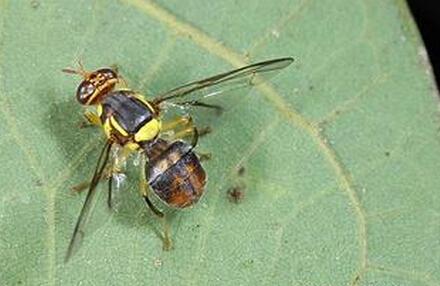
As summer approaches, temperatures rise, and the Oriental fruit fly (Bactrocera dorsalis) begins to stir into action. Not only are the public's favorite mango and guava easily affected, but the red date (jujube), often used for warming tonics, is also a favorite food of fruit fly larvae. The Miaoli District Agricultural Research and Extension Station reminds that red dates, unlike general fruits, cannot be bagged to prevent pest damage. Control measures should be carried out starting in mid-April during the flowering period of red date trees: fruit fly trapping, fallen fruit orchard cleanup, and biological control, to reduce the fruit fly population and thereby lessen the damage during the red date fruiting period.
Lu Meijun, Branch Director of the Biological Control Branch of the Miaoli District Agricultural Research and Extension Station, stated that the Oriental fruit fly lays eggs in fruits, causing fruit drop and fruit rot. At this point, the fruit fly larvae residing in the red dates, once mature, jump from the fallen fruit into the soil to pupate, and after emerging from the pupae continue to reproduce. Farmers are advised to avoid discarding fruit in the orchard. The fruit fly has strong mobility and egg-laying capacity, so implementing orchard cleanup management is not just the responsibility of a single farmer; regional control is needed to reduce the damage caused by fruit flies.
In addition to orchard cleanup management of fallen fruit, the Miaoli Station points out that farmers can hang yellow sticky traps, spray insect glue, and hang long-lasting methyl eugenol trap boxes and protein yeast tablets and other trapping materials to reduce the number of adult flies. In addition, the Biological Control Branch of the Miaoli Station has also mastered the breeding technology for the Oriental fruit fly's natural enemy, Fopius arisanus. Fopius arisanus can parasitize the pupae of the Oriental fruit fly, preventing the fruit fly from pupating, and through biological control methods reduce the number of adult flies. However, Lu Meijun stated that currently, because the breeding technology for Fopius arisanus has not yet been transferred, the number of wasps at the Biological Control Branch is limited. Farmers are advised to start with the trapping method and orchard management, for which materials are easily obtained.