-
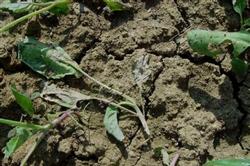
What is Pinellia ternata damping-off disease? A detailed guide to Pinellia ternata cultivation techniques
What is Pinellia ternata damping-off disease? What harm does damping-off disease cause to Pinellia ternata? How do you prevent and control Pinellia ternata damping-off disease? I hope a reader can help explain. Pinellia ternata damping-off disease is also called leaf scald disease. The harm caused by Pinellia ternata damping-off disease and its prevention and control methods are listed in detail below (for reference). Harm caused by Pinellia ternata damping-off disease: damping-off disease in artificial...
-
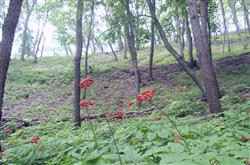
How should ginseng damping-off disease be prevented and controlled?
How is ginseng damping-off disease prevented and controlled? Ginseng damping-off disease occurs at the base of the stems of seedlings, mostly underground at the transition zone between dry and moist soil 3-5 cm below the surface. Control methods: 1. Disinfection of "transplanting stock": use 25% fludioxonil suspension seed coating at 5-20 times dilution to mix with seeds, or 50-100 times dilution to dip the "transplanting stock" to kill the pathogens carried by the seeds...
-

How to prevent and control damping-off of codonopsis (Codonopsis pilosula) seedlings?
The disease mostly affects the base of the stem below the epidermis, at the boundary between dry and moist soil. It begins as yellow-brown sunken lesions; as the lesions enlarge they girdle the stem and gradually penetrate into the stem, causing rot and death. Once infection occurs it spreads rapidly, killing plants in patches. Control methods: choose well-drained sandy soil with good ventilation, and increase phosphorus and potassium fertilizer. Treat seeds with 50% carbendazim wettable powder or 65% zineb wettable powder at 0.2%-0.3% of the seed quantity; alternatively, use 50% carbendazim wettable powder or 65% zineb wettable powder
-
Detailed Explanation of the Key Points of Shaping and Pruning Techniques for Young Goji Berry Trees
Goji berry trees generally enter the young tree stage 4-5 years after planting. At this time, the tree body grows vigorously and has a strong branching ability. If the branches are pinched back, they can sprout branches three or four times within a year. The shaping and pruning of young trees is mainly focused on shaping, selecting and retaining strong branches to cultivate the tree crown framework, gradually expanding the tree crown, cultivating branch groups, and increasing fruiting branches. In the selection and cultivation of tree shape, flexible adoption should be made according to cultivation conditions, with the principle of favoring high yield, laying the foundation for future high yields. Although there are many tree shapes for goji berry trees, the principles of shaping and pruning are basically the same; only the
-
Growth regulation and craft-shaping induction techniques for lingzhi (Ganoderma)
1. Characteristics of induced craft shaping. Unlike traditional handcrafted shaping, induced craft shaping relies on artificial regulation of the materials used so that they grow as naturally as possible. For example: fish require smooth, flat lingzhi pieces bearing wing-shaped fins; birds require feather-like, elongated lingzhi caps as the main body. To make lingzhi grow into such a myriad of forms, one must master the environmental conditions that affect lingzhi morphology. 2. Lingzhi morphology and environmental conditions. The environmental conditions that affect lingzhi morphology are mainly meteorological factors such as light, air, humidity and temperature. (1) Light. Lingzhi is sensitive to light,
-
Detailed Explanation of Key Techniques for Intercropping Pinellia ternata (Ban Xia) in Fruit Orchards
Encouraged by the national preferential policy of returning farmland to forest, the production area of fruit tree orchards in rural areas has increased noticeably over the past two to three years. At present, most orchards have grown into shady groves, and because of insufficient light between tree rows, intercropping conventional crops such as peanuts, soybeans, rapeseed, wheat, and corn results in poor growth, low yields, and poor returns. How to use the open spaces between orchard rows to increase intercropping returns is the issue of greatest concern to many farmers today. In practice, it has been found that intercropping the medicinal herb Pinellia ternata (Ban Xia) in fruit orchards can significantly increase economic income
-
Schisandra intercropping pattern offers good returns
Northern Schisandra is derived from the mature dried fruit of Schisandra chinensis of the genus Schisandra in the family Magnoliaceae. The plant is a perennial deciduous woody climbing vine, with woody stems reaching 8-10 m long. It grows wild in forests and forest margins, climbing trees. It flowers from May to July each year, and the fruit ripens from August to early October. The ripe red spike-like berries are picked for medicinal use. Schisandra cultivation techniques (1) Suitable growing environment for Schisandra. Schisandra prefers a cool, moist living environment and is shade-tolerant, with a suitable shading level of about 20%. The first
-
Detailed Explanation of the Key Points of Honeysuckle Pruning and Shaping Techniques
For honeysuckle plants that have grown for 1-2 years, the vine stems grow irregularly and chaotically, so pruning and shaping are needed, which is beneficial to the growth of the crown and flowering. Specific shaping and pruning method: within 1-2 years after planting, mainly cultivate an upright and thick main trunk. When the main trunk height is 30-40 cm, cut off the top shoot to promote lateral buds to sprout into branches. After sprouting in the spring of the second year, select and keep 4-5 thick branches on the upper part of the main trunk as main branches, arranged in two layers, and among the first-level branches growing from the main branches, retain 5-6 pairs of buds and cut off the upper terminal buds. Later, from the second-level branches growing from the first-level branches,
-
Detailed Explanation of the Intercropping Model of Honeysuckle and Medicinal Herbs
Intercropping Model of Honeysuckle and Medicinal Herbs Honeysuckle is a commonly used bulk medicinal herb with wide uses and high value. It can be cultivated throughout the country. However, due to its long growth cycle and inconspicuous short-term benefits, people are deterred despite knowing that planting honeysuckle is profitable and can lead to prosperity. Now, based on the growth characteristics of honeysuckle, an efficient intercropping model of expanding rows, reducing plant spacing, rational close planting, intercropping medicinal herbs, and using "medicinal herbs" to nourish "flowers" has been adopted, achieving the goal of "planting flowers in the same year, seeing results in the same year," providing an effective path for the large-scale and modern development of honeysuckle.
-
Intercropping honeysuckle yields well, with high returns from multiple harvests on one plot
Honeysuckle is a commonly used bulk Chinese medicinal herb, with wide uses and high value. It is currently in short supply on the market, and there is even a phenomenon of a price with no goods available. According to the growth characteristics of honeysuckle, adopting a high-efficiency intercropping model of widening rows and reducing plant spacing, rational close planting, intercropping medicinal herbs, and using "medicinal herbs" to support "flowers" can achieve the effect of "planting flowers in the current year, seeing results in the current year." Scientific close planting increases yield and income 1. Field cultivation. In autumn, winter or early spring, on the selected plot, apply 5000 kg of organic fertilizer, 100 kg of superphosphate, and 30 kg of sulfur
条件筛选