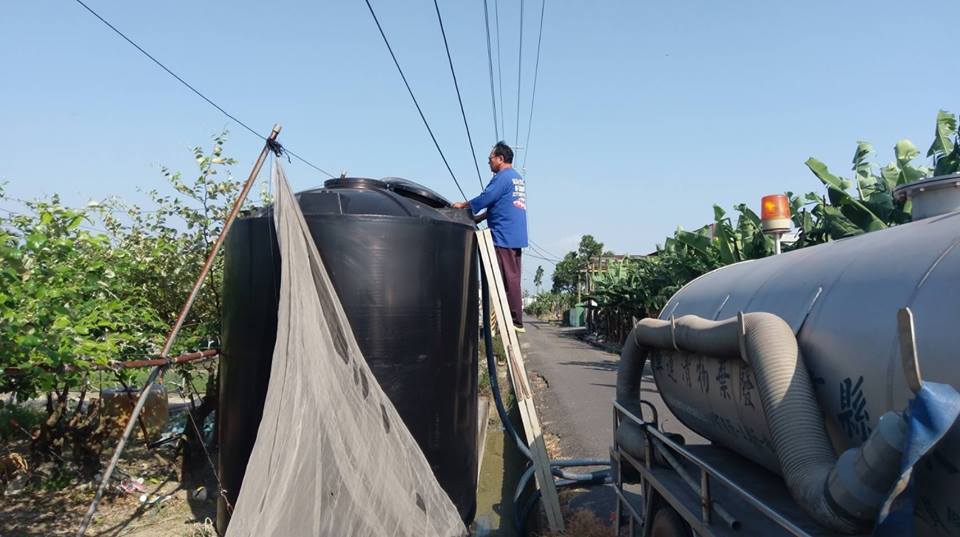
Livestock and poultry manure wastewater becomes odorless fertilizer, helping plants grow and increasing the sweetness of fruits and vegetables
To effectively utilize livestock wastewater, the Pingtung County Environmental Protection Bureau began promoting the use of biogas residue and biogas slurry, produced after anaerobic fermentation of livestock wastewater, as fertilizer starting in 105. Wang Yixuan, section chief of the Water Pollution Control Section of the Pingtung County Environmental Protection Bureau, explained that after nearly 3 years of field use, many farmers reported better crop growth, but because the county's 4 tanker trucks were insufficient, farmers were advised to use biogas residue and biogas slurry from nearby livestock farms after fermentation treatment.
Wang Yixuan explained that after livestock wastewater undergoes anaerobic fermentation for 10 days, organic matter becomes biogas and volatilizes, the odor is greatly reduced, and the remaining biogas residue and biogas slurry retain large amounts of nitrogen-containing substances, making them suitable as nitrogen fertilizer for irrigation on farmland. However, because biogas slurry contains relatively little potassium, farmers need to pay attention to supplementing potassium when using it.
Regarding concerns among some farmers about odor, heavy metals and salt damage, farmer Yang Shengxiong, who has 2 years of experience using biogas slurry and biogas residue, said that fermented livestock and poultry wastewater has no odor, so there is no need to worry about affecting nearby residents, and no problems with heavy metals or salt damage have been found. Even nearby rice farmers discovered the benefits of using biogas slurry as fertilizer and came to ask about how to apply for irrigation.
Yang Shengxiong said that after his own jujube orchard began using biogas slurry mixed with chemical fertilizer for irrigation, compared with previously using only chemical fertilizer and organic fertilizer, he saved about 2 thirds of the fertilizer cost, and the jujubes looked much better. As long as potassium fertilizer is supplemented more during the flowering and fruiting period, the sweetness of the jujubes will increase.
Wang Yixuan pointed out that to promote the reuse of livestock wastewater, last year he applied to the Environmental Protection Administration for about 7 million yuan in funding to purchase 2 brand-new tanker trucks. Together with the 2 tanker trucks borrowed from Linluo Township Office in 105, there were 4 in total, responsible for transporting biogas residue and biogas slurry for farmers to use. However, relying only on the county's 4 tanker trucks made it difficult to effectively deliver them to every piece of farmland. Farmers were advised to use treated biogas residue and biogas slurry nearby. The Environmental Protection Bureau would assist in applying to agricultural authorities for use and help install pipelines for irrigation.