-
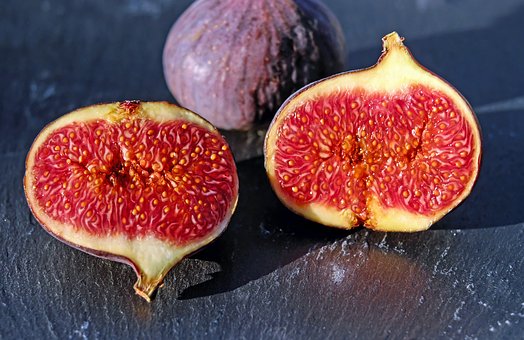
How do you grow potted figs so they bear fruit? Pick the right varieties and master a few key points for easy growth
The fig, also known as the milk fig, honey fig, and Wenxian fig, is a fruit with anti-cancer properties, very suitable for growing in courtyards and on balconies, and once it blooms it will bear fruit all over its branches. So which varieties are good for potted figs? How do you grow them so they bear fruit? Which varieties are good for potted figs?
-
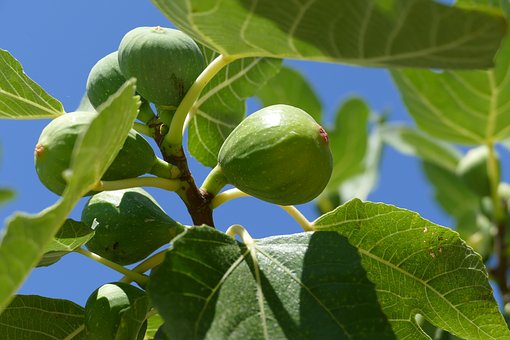
10 potted plant cutting methods for fig, Chinese rose, osmanthus and more - pick up a branch and grow a pot
When out for a walk or having fun, seeing the brightly blooming flowers and lush grass beside you, you can't help but want to take them all home and decorate your house into a world of flowers and plants. Actually, you can "move" the flowers and grass you usually see by the roadside back home through cutting propagation. How do you do it?
-
Planting begins at the pick-your-own strawberry farm: a firsthand look at the whole greenhouse planting process
In September 2017, the grower's dozens of greenhouses began to be planted with strawberries. According to the introduction, these strawberry seedlings were transported from Sichuan, thousands of li away, and the fruit is large...
-
Okra cultivation is very easy, and even beginners can pick it up without trouble.
It is hard to say when okra became popular, but it has become a premium health vegetable sought after by people around the world, mainly because okra is rich in vitamin C, soluble fi...
-
Growing bok choy on the balcony: pick and eat anytime, convenient and fresh
When it comes to bok choy, everyone is probably familiar with it; it is grown in both the north and south of our country. Bok choy is the vegetable richest in minerals and vitamins, and it is also a...
-

Cotton Harvesting Techniques: Careful Picking Brings Higher Returns
I. Cotton should be harvested at the right time. Cotton harvesting is the last step in cotton production and the key to ensuring a high-yield, high-efficiency harvest. Because cotton is an indeterminate inflorescence crop, it successively forms buds, flowers, bolls and maturity, and requires multiple harvests. Therefore, after the cotton boll matures, the third stage of fiber development still has to be completed during the cracking process, namely the fiber dehydration and convolution period, about 7 days or so. The moisture content of the cotton boll shell drops from 80% to 30%, and the moisture content of the cotton pulp drops from 57% to 18%. The fiber further dehydrates and matures, forming convolutions, and at the same time, due to cellulose deposition, fiber strength continues to increase.
-
Detailed Explanation of Key Technical Points for Picking and Processing Famous Autumn Tea
(1) Tea leaf picking. Pick lightly and handle lightly. For tea bushes with good growth and a thick layer of green leaves, you may leave fish leaves or pick without leaving leaves. For those with poor growth and a thin layer of green leaves, especially tea bushes that suffered severe early drought, with many fallen leaves and exposed bare branches, the main approach should be to retain and nurture them, and in the later stage adopt the method of tipping and picking while leaving leaves. This allows the tree vigor to recover quickly and benefits a bumper spring tea harvest the following year. (2) Fresh leaf storage. In early autumn, temperatures are high and the climate is dry; fresh leaves have lower moisture content than spring tea. During transport and storage, it is necessary to prevent too-rapid moisture loss and excessive dehydration of fresh leaves. The containers holding fresh leaves must be well
-
After spring tea is picked, the tea plant branches and stems need even more protection
Whether or not tea plants are managed after the spring tea harvest makes a big difference, because after the spring tea harvest the plant body has already consumed a large amount of nutrients. If management cannot keep up at this time, it will not only affect the yield and quality of summer and autumn tea, but also affect the yield and quality of next year's spring tea. Based on our farm's practical experience, the following key points should be carried out after the spring tea harvest: 1. Reasonable topdressing. According to measurements, producing every 50 kg of dry tea requires absorbing about 2.5-3 kg of nitrogen, 0.9-1.2 kg of phosphorus, and 1.1-1.5 kg of potassium from the soil. Between the tea plants, 30 cm
-
A Detailed Explanation of the Picking and Processing Techniques of Keemun Black Tea
The picking and processing craft of Keemun black tea is fine and meticulous. The buds and leaves of one bud with two or three leaves are picked as raw material. After withering, rolling and fermentation, the buds and leaves change from green to purplish copper red, and the aroma is released, after which they are baked over a gentle fire until dry. After the rough black tea is made, it must still undergo refining. The refining process is complex and labor-intensive, and the finished tea is made through rough sifting, shaking sifting, grading sifting, tight-gate sifting, brushing sifting, cutting, air selection, picking and sorting, supplementary firing, clean wind selection, blending and packing. The high-grade Keemun black tea has a tight, fine and slender appearance, a dark glossy color, and after brewing the tea liquor is red and thick, with a fresh, fragrant and richly aromatic scent.
-
A Detailed Explanation of the Picking and Processing Technique of Haoming Tea
Haoming Tea was developed jointly by the Haoming Tea Company of Yizheng City, Jiangsu Province, and Nanjing University, and is produced in the western part of the ancient city of Yangzhou in the Jiangbei tea region. Influenced by the unique regional environment, its quality is deeply favored by consumers for its emerald green color, flat and straight shape, high and lasting aroma, clear and bright liquor, fresh, mellow and refreshing taste, tender and even brewed leaves, and its resistance to many infusions. In 1990, this tea was designated as the special tea for the rostrum of the main venue of the 11th Asian Games, and in 2000 it won China
条件筛选