-

What other management measures are there for macadamia orchards
1. Beekeeping in the orchard. Macadamia is an insect-pollinated flower; the main pollinating insects are honeybees, ground wasps, flies, thrips, etc. Keeping honeybees in the orchard greatly increases the chances of pollination between plants and between cultivars, which is of great benefit to raising yields. 2. Frost protection
-
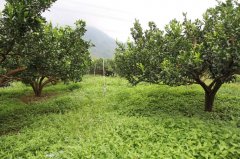
Orchard Sod Culture Techniques: Planting and Management Essentials
At present, many fruit growers engaged in organic and conventional cultivation have implemented sod culture, and their orchards present a scene of lush green, full of ecological beauty. However, implementing sod culture in orchards may bring quite a few troubles, such as possibly harboring disease vectors, competing with fruit trees for soil
-
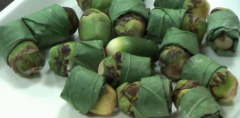
Taiwan betel nut prices have fallen; what are the current prices and how large is the growing area?
Taiwan's betel nut orchard abandonment and crop conversion policy restarts this year, but the deadline is only until December 31; eligible betel nut farmers can apply at the township office where the land is located. The abandonment subsidy is 150,000 yuan per hectare, while for conversion, seedling costs of 5 to 10 thousand yuan are given depending on whether the land is flat or mountainous.
-
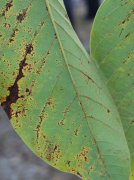
Symptoms and Control Methods of Rust Disease in Atemoya Orchards
Because orchards in mountainous areas and river valleys have high humidity, they are prone to triggering the spread and expansion of "annona rust." The Taitung District Agricultural Research and Extension Station of the Council of Agriculture (hereinafter referred to as the Taitung Station) recently monitored Beinan, Luye, and Donghe, among other areas, and found that some atemoya orchards
-
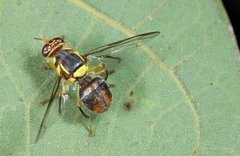
Three-Pronged Approach to Fruit Fly Control: Trapping and Orchard Cleanup Combined with Biological Control to Reduce Damage
As summer approaches, temperatures rise, and the Oriental fruit fly (Bactrocera dorsalis) begins to stir into action. Not only are the public's favorite mango and guava easily affected, but the red date (jujube), often used for warming tonics, is also a favorite food of fruit fly larvae. The Miaoli District Agricultural Research and Extension Station reminds that red dates, unlike general
-
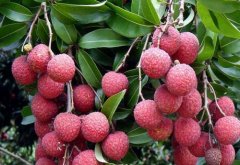
Rational Fertilization Methods for Lychee Orchards and Factors to Consider
Lychee cultivation is fairly widespread, and many regions have lychee orchards. So how should rational fertilization in lychee orchards be carried out, and what issues need to be considered? Let's take a look together! Rational fertilization in lychee orchards must take the following factors into consideration.
-
Apple Tree Year-Round Pesticide Formula Chart: A Practical Guide to Orchard Spraying for Fruit Growers
Abstract March: use tebuconazole, chlorpyrifos, zinc sulfate, etc. for control. April: use tebuconazole, propineb, abamectin, etc. for control. May: use propineb, carbendazim, beta-cypermethrin + chlorpyrifos, etc. for control. June: use mancozeb,
-
What are the cultivation methods and techniques for golden passion fruit?
Summary Site selection and orchard establishment: It is suitable for planting in fertile, loose and deep plots with convenient drainage and irrigation. Timely planting: Plant in humid and cool weather, water the soil thoroughly, then cover with grass to preserve fertilizer and moisture. Pruning and shaping: After the seedlings recover their growth, the
-
What conditions are needed to grow almond trees?
Summary Orchard establishment requirements: A wind-sheltered flat area should be chosen; it is not advisable to choose a windward area. The soil should be deep and well drained. Planting requirements: It should be done after temperatures rise in spring, or after leaf fall in autumn. The planting rate is about 35-50 trees per mu. Water and fertilizer requirements
-
What to Do About Yellow Leaves on Fruit Trees? Cause Analysis and Treatment Methods
Abstract Improving soil: In the orchard, leguminous crops can be intercropped and a suitable amount of organic fertilizer can be added to improve the soil, which can effectively control yellow leaf disease in fruit trees. Choose disease-resistant rootstocks: Choose rootstocks with strong adaptability, resistance to yellowing, and tolerance to saline-alkali conditions. Reasonable irrigation: Saline-alkali plots and sandy
条件筛选