Taiwan betel nut prices have fallen; what are the current prices and how large is the growing area?
Taiwan's betel nut orchard abandonment and crop conversion policy restarts this year, but the deadline is only until December 31; eligible betel nut farmers can apply at the township office where the land is located. The abandonment subsidy is 150,000 yuan per hectare, while for conversion, seedling costs of 5 to 10 thousand yuan are given depending on whether the land is flat or mountainous. The Council of Agriculture expects the abandoned orchard area to increase by 600 hectares.
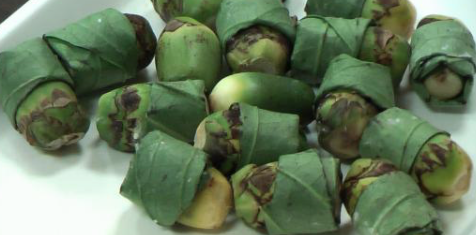
Chen Liyi, section chief of the Fruit Tree Section of the Agriculture and Food Agency, explained that from 2014 to 2017 the total abandoned betel nut orchard area across Taiwan was about 720 hectares. In response to farmers' needs, the subsidy policy for abandoned orchard conversion was restarted this year. Betel nut farmers whose orchards are located in "agricultural zones" under urban planning plans and "agricultural and pastoral land" under non-urban land can apply to the township office where the land is located; the only crop excluded from conversion is the soapberry, the habitat of the litchi stink bug; the rest is the same as the 2017 plan.
Betel nut prices are far lower than before, increasing the incentive to convert; Yao Chih-wang, branch chief of the Southern Branch of the Agriculture and Food Agency, said that currently the largest betel nut production area in Taiwan is Pingtung County, reaching 12,000 hectares, accounting for about one quarter of Taiwan's output, but in 2017 the converted area in the south was less than 300 hectares. Yao Chih-wang explained that this was because betel nut prices were high in 2017, reaching 1,000 yuan per Taiwanese catty, so the incentive for betel nut farmers to convert was not high; however, based on current harvest prices, it is only 180 to 280 yuan per Taiwanese catty, and he judged that the converted area in the south this year is expected to increase.
Yao Chih-wang added that betel nut was once called a "green gold crop" and brought enormous economic benefits to central and southern Taiwan, but as the number of people in the country eating betel nut declined and concerns about disease arose, the government began encouraging farmers to transition to growing cash crops such as camphor, lemon, and Taiwan tangerine. Yao Chih-wang further stated that because the Pingtung production area has fertile land and a large area, contract farming there has high commercial value for enterprises, so he also encourages betel nut farmers to apply quickly while this policy subsidy is available; the Southern Branch will assist farmers in contacting enterprises for contract farming to reduce losses during the conversion period.