Orchard Sod Culture Techniques: Planting and Management Essentials
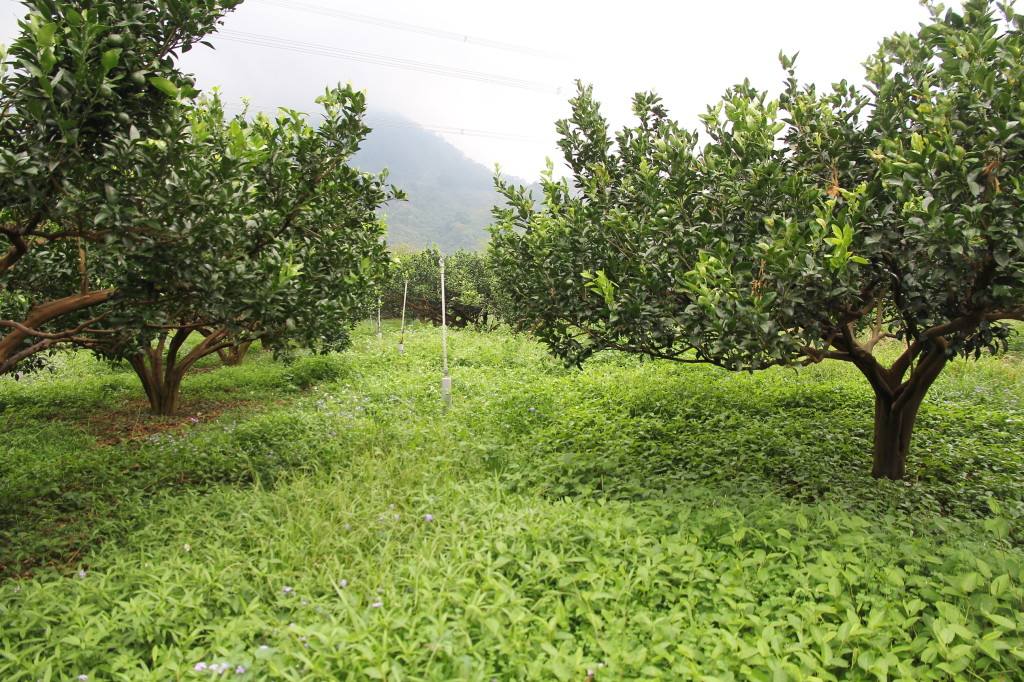
At present, many fruit growers engaged in organic and conventional cultivation have implemented sod culture, and their orchards present a scene of lush green, full of ecological beauty. However, implementing sod culture in orchards may bring quite a few troubles, such as possibly harboring disease vectors, competing with fruit trees for soil nutrients and water, affecting soil properties, reducing agricultural product yield and quality, and causing inconvenience in cultivation, and so on. As a result, many fruit growers hesitate, creating an obstacle to the promotion of orchard sod culture. This is intended to resolve fruit growers' concerns in this regard and encourage them to adopt sod culture.
Sod culture and soil moisture
Orchard irrigation generally falls into three types: flood irrigation, sprinkler irrigation and drip irrigation. Apart from drip irrigation, the water use efficiency of the others is not ideal. Among them, flood irrigation is widely adopted because its equipment is relatively simple, but its water use efficiency is the poorest; therefore, reducing the number of flood irrigations can save irrigation water. Experimental results show that in the same orchard, the soil moisture content where Bermuda grass (Cynodon dactylon) was grown was higher than that of bare ground. In short, the soil water-holding capacity under sod culture is better, so sod culture can extend the irrigation interval and reduce the number of irrigations, achieving the goals of saving water and reducing irrigation labor.
The better water retention of sod-cultured soil after irrigation may be because grasses help conserve water, grasses can regulate their own transpiration, and grass cover can reduce evaporation from the ground surface. As for the fact that orchards most dread waterlogging after heavy rain, to avoid soil moisture saturation lasting too long and affecting root respiration, implementing sod culture in orchards means sod-cultured soil dries more easily than bare soil and can reduce the duration of waterlogging. The reasons should be related to factors such as grasses reducing infiltration and increasing runoff, the large pores left after root death increasing the percolation rate, and the adjustment of transpiration by the grasses themselves. Therefore, implementing sod culture in orchards has positive effects both on maintaining soil moisture after ordinary irrigation and on draining water after heavy rain.
Sod culture and plant nutrients in the soil
After sod culture is implemented in an orchard, there will be the problem of grasses competing with fruit trees for soil nutrients. Fruit growers worry that nutrient competition between the two will reduce fruit yield and quality. However, by estimating the amount of nutrients removed from the soil by the grasses in the orchard and supplementing them, the fruit trees will not lack nutrients. Therefore, from the perspective of nutrient management, the grasses in the orchard can coexist and prosper together with the fruit trees.
Taking Bermuda grass newly planted for two years in a wax apple (Syzygium samarangense) orchard as an example, in early October, creeping Bermuda grass about 40 cm long was cut, yielding about 5.5 metric tons of fresh grass per fen. After drying, samples were analyzed for nutrient content, and conversion showed that about 17 kg of nitrogen, 32 kg of phosphorus and 41 kg of potassium oxide were absorbed by the grass per fen. If 20 wax apple trees are planted per fen, then on average each tree has about 0.4, 0.8 and 1.0 kg of nitrogen, phosphorus and potassium oxide respectively competed away by the grasses each year. Compared with the recommended chemical fertilizer rates for trees five to six years old, namely nitrogen 1.0, phosphorus 1.0 and potassium oxide 1.0 kg/year/tree, it is evident that the amount of nutrients competed for by the grasses is not small, so it should be supplemented.
Although grasses compete with fruit trees for nutrients, from another perspective, grasses are an excellent tool for intercepting nutrients that might otherwise be lost. Research indicates that the dense root systems of cover crops can take up large amounts of available nitrogen in the soil, thereby reducing NO3 leaching loss, and after the grasses die and decompose, the nutrients they contain will still be released for the fruit trees to use. This process also brings nutrients that would leach downward back to the soil surface, increasing fertilizer use efficiency. In fruit tree cultivation, a great deal of nitrogen fertilizer is applied, and it is easily lost through leaching. Adopting sod culture can reduce NO3 leaching loss, and groundwater pollution can also be lowered. This is quite beneficial compared with the considerable loss that is difficult to recover after applying chemical fertilizers on bare ground.
Sod culture and soil properties
Soil properties, whether physical, chemical or biological, are all related to fruit tree growth, yield and quality. Soil pH affects the availability of soil nutrients and soil microbial activity. Bare soil is often eroded by rainfall, and the nutrients it contains are lost or leached downward. Among them, if basic cations such as calcium and magnesium are lost, the soil will become acidified, and in severe cases this is unfavorable for the growth of most crops.
Conversely, sod culture can reduce nutrient loss from the soil. Among other things, reduced loss of basic cations such as calcium and magnesium can slow the rate of soil acidification. Soil organic matter is an indicator of soil fertility status; a high organic matter content means the soil is fertile. After grasses die and decay, they are converted into soil organic matter. Generally speaking, in the same environment, grassland soils tend to produce large amounts of organic matter because of their dense root systems, whereas forest soils have fewer dense plant roots, and fallen leaves and branches on the ground are easily decomposed, so the organic matter content left in the soil is low. From this it can be seen that sod culture has a direct effect on increasing orchard soil organic matter.
The direct functions of soil organic matter for soil properties, for the growth of higher plants and for soil organisms have long been well known. For example, soil organic matter is an important storehouse of nutrients; through mineralization it can release or dissolve soil nutrients for absorption by fruit trees, and it can also serve as a source of carbon, nitrogen and other elements needed for the activity of beneficial soil microorganisms, thereby activating soil microorganisms. Also, because soil organic matter can reduce the cohesion, plasticity and stickiness of soil, it makes the soil easier to plow. In addition, organic matter can promote and stabilize soil aggregates, making soil aeration and water permeability good and suitable for plant growth, and so on. Thus it is evident that increasing orchard soil organic matter through sod culture in fruit tree cultivation can also indirectly improve many soil properties.
Because bare soil is directly struck by rainfall, soil particles are easily dispersed and suspended, and tiny soil particles then clog pores, causing soil compaction, which in turn inhibits the extension of crop roots and reduces the ability and range of fruit trees to absorb nutrients. Adopting sod culture not only prevents rainfall from directly striking the soil, but after grass roots extend into the soil layer, the metabolism of grass roots and the death and decay of old roots leave pores, so sod-cultured soil naturally has more pores than bare soil. This can reduce soil compaction obstacles. Among these, the large pores produced are even more helpful for improving soil hydraulic conductivity, because when pore diameter doubles, hydraulic conductivity increases by as much as sixteen times. This is of great help in reducing asphyxiation of crop roots caused by overly long waterlogging and in reducing the harm of runoff or erosion.
Sod culture and its relationship with pests and diseases
However, the effects of sod culture on fruit tree pests and diseases are both positive and negative. Foreign research indicates that planting winter green manure as a cover crop in citrus or grape orchards can reduce pest populations. Yet the winter rapeseed green manure promoted in Taiwan, China, seems to attract white butterflies during the flowering period; if used for orchard sod culture, it is hard to guarantee it is harmless to fruit trees. He Kunyao (1992) showed in experiments that in apple and cherry orchards, dicotyledonous grasses as sod culture vegetation were superior to monocotyledonous grasses, because more natural enemies existed in the dicotyledonous grass areas, while more spider mites were found in the monocotyledonous grass areas. Therefore, although under ordinary circumstances the cover crops used for fruit tree sod culture have strong resistance to pests and diseases, sometimes pests and diseases still occur. Whether fruit trees are simultaneously attacked or infected by them, and whether the grasses become host plants for pest vectors harmful to fruit trees, or can reduce the occurrence of fruit tree pests and diseases, are all worth studying, in the hope of finding which vegetation is most beneficial for cultivation in which orchard.
Orchard sod culture can conserve soil moisture better than bare-ground cultivation, can reduce the number of irrigations, and achieves the goals of saving water and labor. When sod culture is implemented, the grasses between fruit trees will compete with the fruit trees for soil nutrients, but applying in a timely manner the fertilizer that may be absorbed should not affect fruit tree growth; and the nutrients absorbed by the grasses will ultimately be returned to the soil, which is quite helpful for increasing soil organic matter content and promoting beneficial soil microbial activity. In addition, sod culture can improve many soil properties closely related to crop growth. Therefore, from the perspective of soil and fertilizer management, orchard sod culture has multiple positive effects and its negative effects can also be overcome. As for the impact of orchard sod culture on fruit tree pests and diseases, an assessment can also be made before selecting suitable vegetation for implementing orchard sod culture.
Orchard sod culture means allowing weeds to grow between the rows and plants of the orchard, or planting non-native grasses, green manure crops, etc., and managing them, with the aim of not using herbicides to control weeds. Organic agriculture emphasizes not using chemically synthesized pesticides to control weeds, pests and diseases, so adopting sod culture in organic orchards is one option.