-

Beijing watermelon and muskmelon industry plant protection specialist completes work tasks
On January 11, 2016, Researcher Guo Xihong of the Beijing Plant Protection Station, as the plant protection specialist of the Beijing watermelon and muskmelon industry innovation team, attended the 2016 work deployment meeting organized by the watermelon and muskmelon industry innovation team. At the meeting, 9 specialists, based on their own job responsibilities and assigned
-

Musk Deer Farming Techniques: Rearing Methods and Nutritional Requirements for Young Musk Deer
The goal in rearing young musk deer is to ensure that all newborn fawns survive without disease and to develop in them excellent production performance. So how should they be reared? Let us take a look together. During growth and development, young musk deer steadily gain body weight and body measurements, and their metabolism is very vigorous.
-
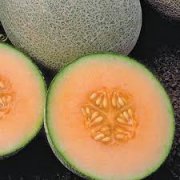
Ambrosia Muskmelon Variety Introduction, Nutritional Value and Uses
The Ambrosia melon is a small melon, similar to a small cantaloupe. Its exterior is covered with a sandy skin and coarse netting, which becomes increasingly pronounced as the melon reaches peak ripeness. The skin of the Ambrosia melon is thin, enclosing light orange flesh
-
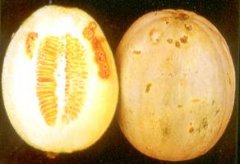
What harm do bacterial fruit blotch of melons and watermelons cause? Prevention and control of bacterial fruit blotch of watermelon
In Taiwan, China, between 1992 and 1993, in the coastal areas of Yunlin County and the Shanhua area of Tainan County, sporadic findings were made of large watermelons showing irregular water-soaked, slightly cracked lesions on the fruit surface, occurring mainly during the rainy season. The lesions spread over the rind and did not harm the flesh in the early stage. In May 1997, in Yilan, Taiwan, China
-
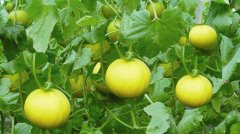
Key Technical Points for Vertical Cultivation of Muskmelon: Fertilizer Rates and Water Management
The management techniques for vertical cultivation of muskmelon are not difficult, but because the facilities used are relatively expensive, far higher than the cost of tunnel-style cultivation, ordinary farmers cannot afford them, which has become an obstacle to large-scale promotion, and for this reason its cultivation techniques and muskmelon field
-
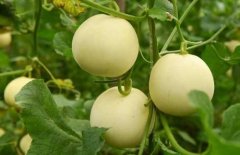
What Are the Growing Regions of Muskmelons? A Full Guide to Variety Classification and Selection Tips
Muskmelons can be roughly divided into three types: the netted muskmelon, which of course has a netted rind, with flesh that can be green, white or orange; the Hami melon, oval in shape, improved from the original Hami melon of Xinjiang, elongated oval in appearance with orange flesh, and its biggest difference from the muskmelon
-
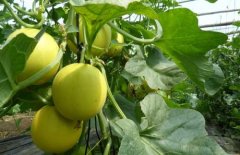
Introduction to the Excellent Muskmelon Varieties Xuegu and Ligu: Taste and Sowing Times
Muskmelon, which we also call sweet melon. We can often see it in supermarkets. There are many varieties, such as Kaohsiung No. 2 Orange Queen muskmelon. Below, two melon varieties are introduced for you. Xuegu, a muskmelon, has good enlargement under low temperatures, and good stem and leaf coverage.
-
How to Plant the Seeds Inside a Muskmelon? A Detailed Guide to the Planting Method
Muskmelon is a common fruit. It tastes sweet, and when you eat it you will find seeds inside. Some people eat them, some people throw them away, and some people want to plant them. So, how do you plant the seeds inside a muskmelon? 1. How to plant the seeds inside a muskmelon
-
What to Do About Herbicide Damage in Muskmelons? Detailed Remedial Methods
The muskmelon is a type of cantaloupe, named for its emerald-green rind marked with gray or yellow stripes that closely resemble a net; its taste is sweet like a fragrant pear, making it very popular. So what should be done about herbicide damage in muskmelons? 1. What to do about herbicide damage in muskmelons? If the herbicide damage to muskmelons is mild, no timely treatment is needed, and they will recover on their own.
-
How to grow muskmelon in open fields? Detailed explanation of key cultivation techniques
Summary Time: South of the Huai River, the sowing period is from early to mid-February to early March, while in Guangdong, Guangxi, Hainan, Yunnan and Guizhou the sowing period is from early July to July 25. Soil: fertile, loose, high-lying plots. Varieties: Xialong, Ruoren, Xuefengmi No. 2, etc. can be selected. Planting
条件筛选