What Are the Growing Regions of Muskmelons? A Full Guide to Variety Classification and Selection Tips
Muskmelons can be roughly divided into three types
The netted muskmelon, which of course has a netted rind, with flesh that can be green, white or orange;
The Hami melon, oval in shape, improved from the original Hami melon of Xinjiang, elongated oval in appearance with orange flesh, and its biggest difference from the muskmelon is that the flesh is crisper;
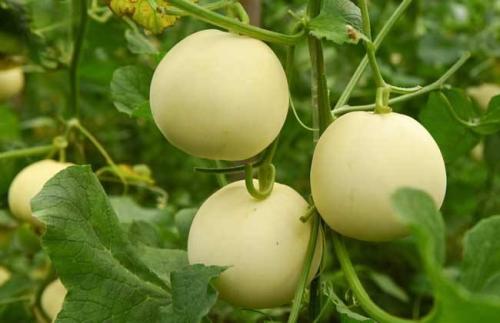
The smooth-skinned muskmelon, with a smooth rind surface, including white-skinned varieties with green flesh and yellow-skinned varieties with white flesh. It also has a close relative called the Meinong melon.
Muskmelon growing regions are found all across Taiwan, China
Taiwan, China introduced muskmelons from the United States and Japan in 1957, and by 1970 new varieties were gradually promoted for cultivation. They have gradually become a fruit available in all four seasons, with the best quality in spring, but the cheapest prices in summer, making it the best time to eat melon in big mouthfuls.
Because there are so many types, muskmelon growing regions are widely distributed across Taiwan, China, with fairly large planting areas in Qigu and Dongshan in Tainan, Chiayi, Pingtung, Yunlin and other places. Because Qigu is close to the coastal area, its soil and salinity are suitable for muskmelon growth, and in recent years Lunbei in Yunlin has also become a famous production area.
As for Hami melons, which are not produced in large quantities in Taiwan, China, Zhuangwei in Yilan is the most representative, located right next to the lower reaches of the Lanyang River, with sandy soil and large day-night temperature differences in spring and summer that make the fruit fuller, so it is even called the "hometown of Hami melons."
Melons are mostly rich in water, and muskmelons are especially rich in vitamin C and A, and can quench thirst and relieve heat. Their sugar content accumulates mainly in the week before ripening, so harvesting too early gives poor sweetness and texture, while fully ripe fruit does not keep well in storage or transport, so timely harvesting requires a great deal of experience and judgment.
They have the characteristic of ripening after harvest. After picking, leave them at room temperature for 2 to 3 days, and they are best to eat once the blossom end softens slightly and the aroma is released.
When selecting muskmelons, look for dense, tight netting, especially netting that appears near the stem end, and the best quality is when the netting cracks higher and higher up along the stem. If it is a smooth-skinned muskmelon, then of course choose one with a smooth, intact exterior, which indicates more stable quality. While melons are sweet and cheap, hurry and taste the fresh, fragrant, beautiful, sweet but not cloying, refreshing and juicy muskmelons, each with its own different flavor and texture!