-
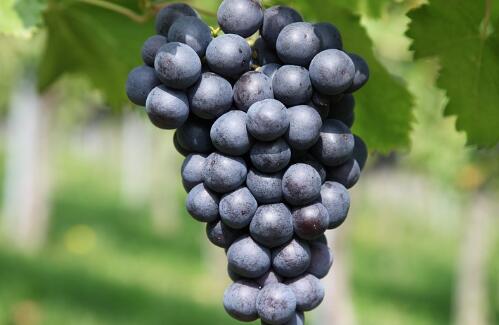
What fungicide should be used when grapes get gray mold, downy mildew, or powdery mildew?
Although greenhouses and rain shelters can reduce disease occurrence to a certain extent, when environmental humidity is too high, grapes will still get sick, and it is easy for them to catch gray mold, downy mildew, white rot, black pox, white rot, and powdery mildew
-
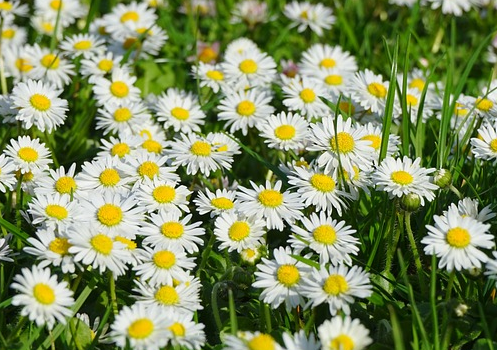
Detailed Explanation of the Morphological Characteristics and Control Methods of Chrysanthemum Downy Mildew
Chrysanthemum downy mildew mostly occurs in mountainous areas with an average temperature of 16.4°C-19.0°C, annual rainfall of about 1500mm, and low-temperature, rainy springs. It is one of the major diseases of chrysanthemums. So what morphological characteristics and control methods does chrysanthemum downy mildew have? Let us follow forestry experts to understand these issues.
-

How to prevent and control downy mildew in loofah? Farmers share their growing experience
Click to follow us, we update agricultural planting techniques every day, helping you achieve high yields and get rich. Symptoms: Loofah downy mildew mainly damages the leaves. In the early stage of the disease, on the leaves...
-
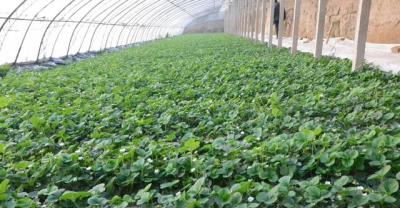
Cucumber Powdery Mildew Symptom Guide for Rural Planting
Whether it is large-scale commercial farming or smallholder growing, cucumber powdery mildew is a disease we often encounter in rural planting. How can we treat it with the right remedy? Please...
-
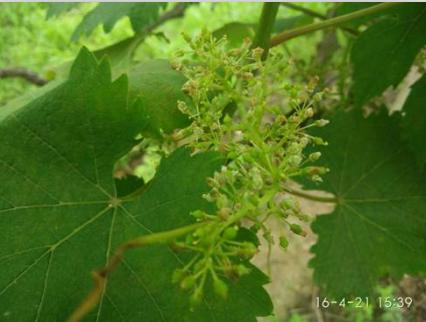
Control Plan for Downy Mildew of Grape at the Young Berry Stage
Control Plan for Grape Downy Mildew at the Young Berry Stage
-

How to Grow Chestnut Pumpkin: Do Pumpkins Need Pollination? Controlling Pumpkin Powdery Mildew
To grow chestnut pumpkin, the seeds must first be sterilized, then kept warm to promote sprouting, then placed in a seedling pot filled with potting soil. Once the cotyledons and two true leaves have grown, they can be transplanted. They sprout in one week; plant them into a seedling pot, and after another week or so, transplant them into
-
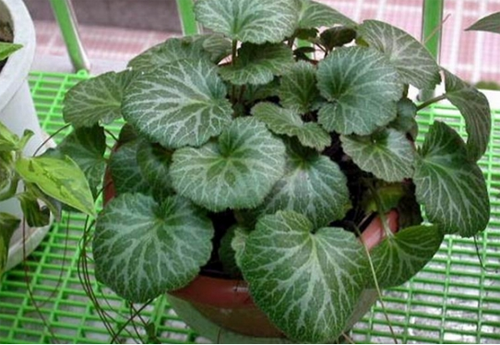
Saxifraga stolonifera Care Methods and Powdery Mildew Prevention Tips
Saxifraga stolonifera is incredibly beautiful and very charming. Saxifraga stolonifera can be planted not only in soil but also in water. How do you care for Saxifraga stolonifera? If powdery mildew appears during cultivation, how should it be treated? How do you care for Saxifraga stolonifera? Suitable temperature: it likes warmth, and is generally most comfortable above 15 degrees
-
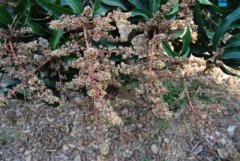
Symptoms and Control Methods of Mango Powdery Mildew
What do the symptoms of mango powdery mildew look like? What are the ecological causes of its occurrence? How should it be controlled, and what are the control methods? Symptoms: This disease can occur on mango inflorescences, young leaves, young fruit and young stems. Generally, a powdery fungal growth can be seen on the affected parts. On young stems and leaves, small lesions in the early stage are surrounded by a brown ring; later the lesions merge into large white patches, which then gradually turn blue-purple. Severely affected young stems and leaves often become deformed; when the lesions continue to develop and encircle the flower stalk, the small fruit on it will begin to turn yellow and drop, so a severely affected mango tree will bear no fruit at all. In the later stage of the disease, the fungal growth at the lesions turns grayish-black. After fruit that has previously been affected develops and grows, a purple network pattern appears on the surface, affecting the commercial value of the fruit.
-
Key Points for Integrated Control of Powdery Mildew on Schisandra chinensis
1. Field symptoms Powdery mildew mainly damages the leaves of Schisandra chinensis, and in severe cases the fruit, petioles and stems are also affected. In the early stage of leaf infection, small white powdery mildew spots appear, gradually expanding and merging into patches, and the mildew layer thickens, like a layer of flour scattered on the leaf surface. On the underside of the mildew spots, small chlorotic spots initially form, expanding into irregular patches as the disease develops. In the late stage of the disease, black particles are produced in the mildew layer, causing moldy staining and fruit drop, reducing yield while also lowering quality. 2. Disease occurrence The powdery mildew pathogen of Schisandra chinensis belongs to the genus Erysiphe in the Ascomycota, and the conidia are mostly cylindrical, with a few being cylindrical-columnar, elliptical or long-oval. In the Fengcheng area, the pathogen overwinters as cleistothecia on diseased plant residues, and in May to June of the second year produces ascospores and conidia for infection, with July to August being the peak period of disease occurrence. The disease can occur at temperatures of 20-28°C, with 25-26°C being the most suitable. The disease is severe in mountainous areas above 1000 m in altitude; it is severe where management is poor, nitrogen fertilizer is applied excessively, and planting is too dense; 1-2 year old Schisandra chinensis plants are lightly affected, while those over 3 years old are severely affected.
-
How to control powdery mildew on the medicinal plant honeysuckle (Japanese honeysuckle)?
Honeysuckle, scientific name Lonicera japonica Thunb., also known as mountain honeysuckle. It belongs to the Caprifoliaceae family and is a perennial vine-like shrub. The buds or nearly opened flowers are used as medicine. The leaves and branches can also be used as medicine. It has the effect of clearing heat and detoxifying. Starting in the 1960s, it was converted from wild to cultivated, and now from south to north, many cities and counties grow it, and at one time the area was quite large. The symptoms mainly damage the leaves, and sometimes also damage the stems and flowers. The lesions on the leaves are initially small white spots, then expand into white powdery patches, and in the later stage the entire leaf is covered with a powdery layer, and in severe cases
条件筛选