Symptoms and Control Methods of Mango Powdery Mildew
What do the symptoms of mango powdery mildew look like? What are the ecological causes of its occurrence? How should it be controlled, and what are the control methods?
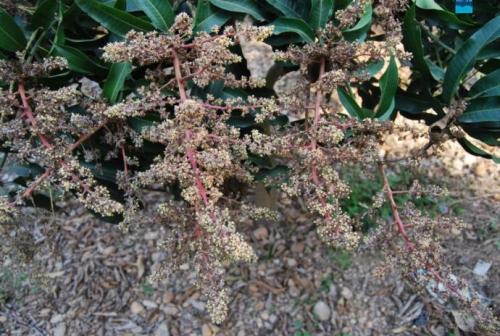
Symptoms: This disease can occur on mango inflorescences, young leaves, young fruit and young stems. Generally, a powdery fungal growth can be seen on the affected parts. On young stems and leaves, small lesions in the early stage are surrounded by a brown ring; later the lesions merge into large white patches, which then gradually turn blue-purple. Severely affected young stems and leaves often become deformed; when the lesions continue to develop and encircle the flower stalk, the small fruit on it will begin to turn yellow and drop, so a severely affected mango tree will bear no fruit at all. In the later stage of the disease, the fungal growth at the lesions turns grayish-black. After fruit that has previously been affected develops and grows, a purple network pattern appears on the surface, affecting the commercial value of the fruit.
Ecology: The host of the mango powdery mildew pathogen is limited to mango; it does not infect other crops. All cultivated varieties are susceptible, and the disease is more severe in the southern region of this province. The primary infection source comes from the pathogen surviving in diseased tissue on the ground. Each spring, when mango trees flower, the pathogen forms ascocarps, which after maturing release ascospores that infect mango flower panicles and young tender branches and leaves. After the ascospores germinate, they form hyphae that grow on the surface of the host tissue and invade through stomata or lenticels, forming haustoria to absorb nutrients from the host. The hyphae form conidia on the host surface, which are the main organ of spread. The spores spread through the air and land on other healthy flower panicles, becoming a secondary infection source, and spread very rapidly. After the tissue at the infected site dies from necrosis and falls to the ground, the pathogen survives within it, and by the following spring forms the sexual generation, producing ascocarps and ascospores that then infect mango trees that are flowering.
Control methods:Mango powdery mildew is one of the easier mango diseases to prevent and manage; as long as control is carried out properly, the disease can be kept in check. When controlling it, be sure to mind the timing: starting from the early flowering stage, once powdery mildew occurs, immediately apply fungicide every ten days, about two to four times, until young fruit has formed. The pesticides applied include the following several types.