What fungicide should be used when grapes get gray mold, downy mildew, or powdery mildew?
Although greenhouses and rain shelters can reduce disease occurrence to a certain extent, when environmental humidity is too high, grapes will still get sick, and it is easy for them to catch gray mold, downy mildew, white rot, black pox, white rot, and powdery mildew. The most serious and hardest to treat are gray mold, downy mildew, and powdery mildew. So what fungicide should be used when grapes get gray mold, downy mildew, or powdery mildew?
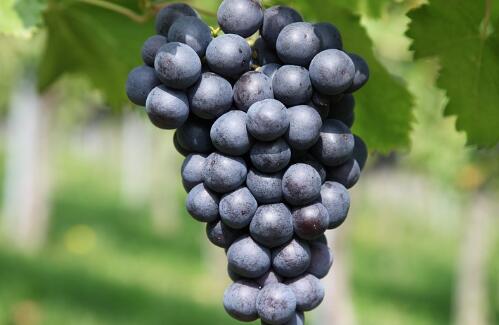
1. Damage caused by gray mold
During the seedling-raising process, even if all are covered with plastic film and then covered with shade netting, seedlings inserted into nutrient cups are rarely infected by gray mold. With the same measures in Hunan, Chongqing, Sichuan, and other places, however, large outbreaks of gray mold have been found.
Yunnan is an area with strong sunlight, and intense ultraviolet rays kill gray mold spores, thereby reducing the number of gray mold spores floating in the air and making the damage lighter. In Hunan, Chongqing, and Sichuan in the middle and lower reaches of the Yangtze River, and even in low-sunlight areas such as Jiangsu, Shanghai, Zhejiang, and Jiangxi, gray mold damage is not so easy to deal with.
In places with good ventilation, gray mold can still be controlled. In places with poor ventilation, especially Kyoho grape family grapes that are covered with heavy dew at night, a little carelessness can lead to infection by gray mold or grape inflorescence blight. This is especially true for Summer Black; if flower thinning, fruit setting, and berry enlargement treatments are not timely with fungicide applications, they can all lead to a large amount of gray mold infection and berry drop.
Therefore, when growing grapes in the middle and lower reaches of the Yangtze River, from before flowering until after flowering, gray mold prevention must be done regularly and on schedule, while also controlling black pox and white rot. In other areas, as long as they are not dry areas, and as long as heavy dew can be seen on grape leaves in the vineyard in the morning, measures to control gray mold or grape inflorescence blight must be fully implemented.
Of course, vineyard owners who cannot see dew in the morning can easily avoid gray mold damage, but pests such as green plant bugs, aphids, and thrips still need to be controlled appropriately. Gray mold damage occurs before flowering, at the young fruit stage, and at maturity. If it is not controlled well before flowering and at the young fruit stage, gray mold on fruit at maturity becomes uncontrollable.
The most effective means of dealing with gray mold is ventilation to reduce humidity. The most effective drugs are procymidone and boscalid. Pyrimethanil or iprodione are not considered the best in effectiveness. Too high a concentration of procymidone can burn leaves, so procymidone should be used carefully during the flowering period.
2. Damage caused by downy mildew
Downy mildew is the number one killer harming grapes, and it is also not very controllable. From the flower cluster extension stage all the way to leaf fall, it can harm the vineyard.
Downy mildew harms not only leaves but also flower clusters and fruit. Moreover, many drugs claimed to control downy mildew are not very effective against it.
Conditions for downy mildew outbreak: high temperature and abundant rain are the primary conditions for downy mildew outbreak. If it is sunny and hot during the day and rains at night, then downy mildew is very likely to break out. A downy mildew outbreak cannot occur without a humid environment.
Therefore, in the dry areas of the northwest, there will be no gray mold or downy mildew damage throughout the year. In dry-hot valley areas such as Yunnan, in years with abundant rain, downy mildew and powdery mildew often break out together.
The most effective means against downy mildew is ventilation to reduce humidity. The most effective drug is dimethomorph, but dimethomorph cannot be used more than three times throughout the year, otherwise it will cause resistance. At other times, protective agents such as lime sulfur mixture, Bordeaux mixture, and mancozeb must be used well.
Too high a concentration of lime sulfur mixture can burn leaves, and Summer Black is very sensitive even to low concentrations of lime sulfur mixture, so it needs to be tested before use. Of course, if you are willing to spend money, azoxystrobin can also be used as a protective agent.
3. Damage caused by powdery mildew
This is the third major killer harming grapes. It infects leaves, making the grape surface appear covered with a layer of white ash, and it also infects fruit. Fruit harmed by powdery mildew may drop berries in severe cases, or crack in mild cases.
In the Yangtze River basin, powdery mildew generally causes damage after autumn, and a dry environmental climate is most suitable for the growth of this pathogen. This includes the arid areas of the northwest, where powdery mildew damage will break out.
In dry-hot valley areas with alternating humidity and dryness, powdery mildew and downy mildew cause damage at the same time. Vitis vinifera varieties are heavily infected; among Euro-American hybrids, Golden Finger is especially susceptible to powdery mildew, and Shine Muscat is also not resistant to powdery mildew. Kyoho grape family grapes have better resistance to this variety.
The most effective drugs against powdery mildew are kresoxim-methyl, cyproconazole, ethirimol, trifloxystrobin · tebuconazole, and other drugs. The cheapest drug is sulfur powder or sulfur suspension concentrate. Lime sulfur mixture and Bordeaux mixture are all very effective; the key is knowing how to use them.