Control Plan for Downy Mildew of Grape at the Young Berry Stage
Grape downy mildew is one of the common diseases on grapes. Especially this year, with heavy and prolonged rainfall, grape downy mildew has been particularly severe. In recent years, besides damaging leaves and new shoots, grape downy mildew has shown an increasing trend of damage to young berries. This article mainly introduces the control plan for grape downy mildew at the young berry stage.
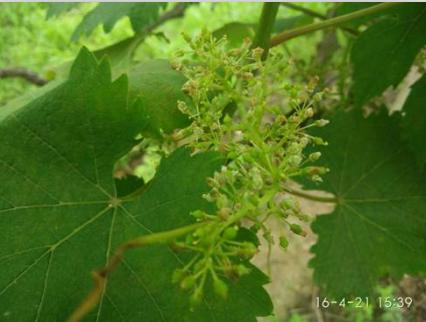 After Summer Black (Xiahei) finished blooming and set fruit, downy mildew damaged the young berries
After the physiological fruit drop stage of Kyoho (Jufeng), downy mildew damaged the young berries
After the physiological fruit drop of Wink (Wenke), downy mildew damaged the young berries
At the bunch closure stage of Summer Black (Xiahei), downy mildew damaged the berries
When grape downy mildew damages berries, after the hard pit stage, there is no obvious mold layer at the affected site, and the symptoms are fairly similar to grape diseases and pests caused by sunburn, so attention must be paid to distinguishing them.
When grape downy mildew damages berries severely, the symptoms are similar to boron deficiency. The difference is: when grape downy mildew damages berries, especially after the berries swell, symptoms generally start at the pedicel position and then appear, and the lesions become sunken and dark brown; whereas boron deficiency shows symptoms on the whole bunch of berries, the berries do not become sunken, and the flesh becomes lignified. See the comparison photos:
Grape downy mildew; grape diseases and pests caused by boron deficiency
Now look at the cross-section comparison photos:
Grape downy mildew; grape diseases and pests caused by boron deficiency
Resistance of different grape varieties to grape downy mildew: Wink (Wenke) is susceptible to grape downy mildew, Summer Black (Xiahei) is next, and Kyoho (Jufeng) is more resistant to grape downy mildew than Wink and Summer Black. Conditions for the occurrence of grape downy mildew: high humidity and high temperature; the disease is most likely to occur under rainy, dewy, foggy and other humid weather conditions. The following explains the control of grape downy mildew at the young berry stage. Control nodes: before flowering; after flowering and fruit set; before or after rain; when there is fog, dew or relatively high humidity, before bagging, especially for open-field cultivation. Control plan: before flowering: Anxi 1500 times; after flowering and fruit set: Tebiete 1500 times. Emergency plan for grape downy mildew infecting berries: wash the berries with Gaofushuai 750 times, and 2-3 days later spray the whole plant with Tebiete 1000 times, focusing on spraying the clusters; 5-7 days later, apply Anxi 750 times + Amida 1500 times for control. If grape downy mildew is found infecting berries, remove the diseased berries as soon as possible after the first application, take them out of the orchard for disposal, and thereafter rotate and alternate with other grape downy mildew fungicides to avoid the development of resistance. When grape downy mildew is especially severe, spray with Tebiete 750 times + Anxi 750 times for control. Why choose Anxi, Gaofushuai and Tebiete for controlling grape downy mildew at the young berry stage? Anxi, Gaofushuai and Tebiete are all suspension concentrates, safe and highly effective; when used to wash the berries, they do not harm the young berries and do not pollute the berry surface; moreover, they have good quick-acting performance and a long residual effect period. Attached below are test photos of Gaofushuai 50 times + Amida 1500 times for controlling grape downy mildew on Wink (Wenke) grapes
May 13 before the test; May 16, 3 days after the test
May 13 before the test; May 16, 3 days after the test
Suggestion: in addition to chemical control, areas with the conditions should build rain shelters and strengthen the management of the grape vines to reduce the occurrence and damage of grape downy mildew.