How to prevent and control downy mildew in loofah? Farmers share their growing experience

Click to follow us, we update agricultural planting techniques every day, helping you achieve high yields and get rich
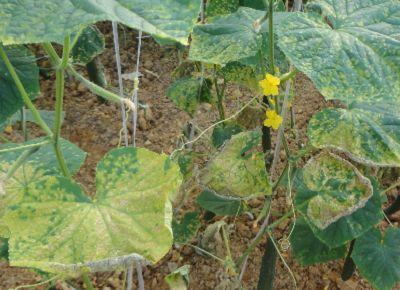
Symptoms:
Loofah downy mildew mainly damages the leaves. In the early stage of the disease, irregular water-soaked small spots appear on the leaves, which later expand into angular yellow to yellow-brown spots restricted by the leaf veins; when humidity is high, a grayish-black to purplish-black mold layer forms on the underside of the leaves, and in severe cases the entire leaf withers and dies.
Control methods:
1. After harvest, promptly remove diseased plant debris from the field and carry it out of the field in a centralized manner for destruction.
2. In the early stage of the disease, choose 66.8% iprovalicarb + benthiavalicarb-isopropyl wettable powder 600 to 800 times dilution, or 69% mancozeb + dimethomorph wettable powder 1000 to 1500 times dilution, or 50% fluopimomide + fosetyl-aluminium wettable powder 600 to 800 times dilution + 70% mancozeb wettable powder 600 to 800 times dilution, or 25% fenaminstrobin emulsifiable concentrate 2000 to 3000 times dilution + 75% chlorothalonil wettable powder 600 to 800 times dilution, or 25% metalaxyl + propamocarb wettable powder 1500 to 2000 times dilution, or 84.51% propamocarb + fosetyl-aluminium soluble liquid 600 to 1000 times dilution, or 70% furcarbanil + mancozeb wettable powder 600 to 1000 times dilution, or 52.5% famoxadone + cymoxanil water-dispersible granules 1500 to 2000 times dilution, or 76% cymoxanil + mancozeb + fosetyl-aluminium wettable powder 800 to 1000 times dilution, spray once every 7-10 days, for 2-3 consecutive times.