Saxifraga stolonifera Care Methods and Powdery Mildew Prevention Tips
Saxifraga stolonifera is incredibly beautiful and very charming. Saxifraga stolonifera can be planted not only in soil but also in water. How do you care for Saxifraga stolonifera? If powdery mildew appears during cultivation, how should it be treated?
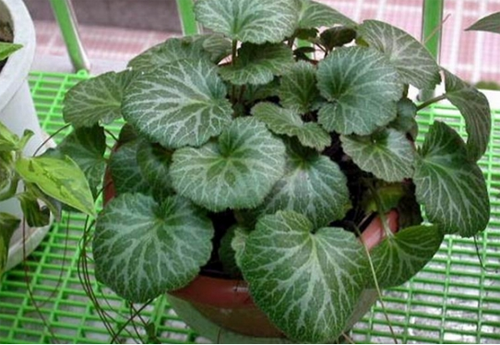
How do you care for Saxifraga stolonifera?
1. Suitable temperature
It likes warmth, and is generally most comfortable above 15 degrees. In winter, it can safely overwinter above 0 degrees. In summer, the temperature just should not exceed 30 degrees. In summer, it must be placed in a cool, shady spot; keeping it outside easily causes sunburn!
2. Appropriate light
Just give it appropriate bright light; it does not need to be put in the sun! If you feel it is too dark, you can give it a little scattered light in the morning and evening. It must not be exposed to direct sun, and even less to blazing sun!
3. Appropriate watering
It likes warm and humid environments, so naturally it cannot grow in dry places. You should frequently water the surrounding area to increase air humidity, which also shows that it is very suitable for growing in a glass bottle! Especially in winter, it must not be too dry
4. Suitable soil
It likes humus soil, which of course must be loose and well-draining. Leaf mold plus a little river sand is enough! You can add a little liquid fertilizer to the soil every month, in a small amount, and do not pour it on the leaves!
Propagation methods for Saxifraga stolonifera:
Propagation is actually just cuttings and division. Cuttings are the most suitable. Generally in early summer, cut a healthy stem segment and wait a little for the wound to heal! Then soak it in water and wait for roots to form. After rooting, transplant it!
Division is even simpler. When you see a healthy stem with young plantlets growing beside it, you can pull them up and replant them!
Pest and disease control for Saxifraga stolonifera:
Generally, disease only occurs in hot, stuffy, or dry conditions! For example, gray mold causes the leaves to become moldy and runny. This happens when humidity is too high, and also with waterlogging. Just spray with Huimeike!
Powdery mildew can be sprayed with carbendazim. Pests may include mealybugs and whiteflies. Once discovered, promptly spray with Huhuashen!
The care methods for Saxifraga stolonifera are introduced here. Come quickly and see whether these care methods are right!
How to care for Saxifraga stolonifera
Care methods for Saxifraga stolonifera
Soil selection for potted Saxifraga stolonifera
For potted Saxifraga stolonifera, the best soil choice is sandy soil rich in organic matter, and it must also have good drainage. You can make your own potting soil mixed with river sand.
Temperature and light
Temperature: Saxifraga stolonifera likes a warm environment. The most suitable growing temperature is between 15°C and 25°C. Saxifraga stolonifera is also fairly cold-tolerant and can overwinter at a low temperature of 5°C.
However, the variegated tricolor Saxifraga stolonifera is not cold-tolerant. Its overwintering temperature is 15°C, and if it falls below this temperature, it will die. Therefore, keeping it warm in winter is also essential.
Light: If light is insufficient, the leaf color will become dull. In summer, shade is also needed indoors, avoiding direct strong light. In winter, keep room temperature above 5°C. Place it indoors near a south-facing window in a spot with ample sunlight.
Water and fertilizer management
Watering: During the growing period, Saxifraga stolonifera needs a lot of water to keep the potting soil fully moist, but the flowerpot must not be soaked in water. In the two weeks after the plant blooms, gradually reduce the amount of watering. When the plant enters dormancy, it is enough as long as the potting soil does not dry out completely.
Water during the growing period, and keep the potting soil moist. Even slight drought can easily cause leaves to fall. At the same time, prevent water accumulation in the pot, otherwise root rot easily occurs.
Fertilizing: Fertilizer should be applied from beneath the leaves of Saxifraga stolonifera to avoid contaminating the leaf surface and affecting plant growth. During the vigorous growth period in spring, apply nitrogen fertilizer once every 20 days. Do not fertilize during high summer temperatures or low winter temperatures.
Propagation methods
Saxifraga stolonifera can be propagated by sowing and division. Sowing is done in March-April. Division can be done in all four seasons, but spring and autumn are best.
Notes for keeping Saxifraga stolonifera at home
Repotting
Saxifraga stolonifera likes loose, breathable soil. Compacted soil easily makes the leaves look dull. Therefore, Saxifraga stolonifera should be repotted once every other year, in early spring.
Pests and diseases
The main diseases of Saxifraga stolonifera are gray mold and powdery mildew.
Pests of Saxifraga stolonifera may include mealybugs and whiteflies.
In daily care, always observe frequently and stay vigilant, so you can grow a beautiful Saxifraga stolonifera, like protecting beautiful love.
Saxifraga stolonifera Curt. Saxifraga stolonifera gallery: how to care for Saxifraga stolonifera / how to propagate Saxifraga stolonifera
Saxifraga stolonifera profileSaxifraga stolonifera Curt.
Care methods and precautions for Saxifraga stolonifera, introduction to Saxifraga stolonifera
Saxifraga stolonifera (scientific name: Saxifraga stolonifera Curt.) is a plant in the family Saxifragaceae. It grows under forests, in thickets, in meadows, and in shady, damp rock crevices at altitudes of 400-**** m. Its place of origin is China, and it is also distributed in Korea and Japan. It is a trailing plant with waterfall-like runners and can be widely planted as an ornamental plant. It contains alkaloids, potassium nitrate, potassium chloride, and arbutin. The phenolase contained in its chloroplasts can convert cis-caffeic acid. The whole plant is used as medicine; slightly bitter, pungent, cold, and slightly toxic; it dispels wind and clears heat, cools the blood, and removes toxins.
Morphological characteristics of Saxifraga stolonifera
Saxifraga stolonifera is a small perennial herb that does not wither in winter. The roots are slender; the stolons are slender and purplish-red, sometimes producing leaves and adventitious roots. The leaves are basal, usually several; the petioles are 3-10 cm long; the leaf blades are fleshy, round or kidney-shaped, 4-6 cm in diameter, sometimes larger, with a cordate or truncate base, the margins with shallow lobes and irregular fine serrations, green above, often with white markings, purplish-red beneath, and both surfaces covered with soft hairs. The flowering stem reaches up to 25 cm tall, erect or slightly leaning, branched; the inflorescence is paniculate, with the axis, branches, and pedicels covered with glandular hairs and down; the bracts are lanceolate and covered with soft hairs; the sepals are ovate, pointed at the tip, spreading outward; the flowers are numerous, with 5 petals, white or pink, the lower 2 petals especially long, elliptic-lanceolate, 1-1.5 cm long and 2-3 mm wide, the upper 3 petals smaller, ovate, with yellow spots at the base; stamens 10, the filaments club-shaped, about 1 times longer than the sepals, the anthers purplish-red; the ovary is spherical, the style slender, and the stigma minute. The capsule is ovate, with the tip deeply 2-cleft, beak-shaped. The flowering period is May-August, and the fruiting period is July-November.
Ecological habits of Saxifraga stolonifera
Plants of the order Saxifragales have a great variety of forms, among which one annual and one perennial species are parasitic plants.
The flowers mostly have five petals, and the distinction between petals and receptacle is very obvious.
They are generally exposed, and often grow together. Herbs, shrubs, small trees, or vines. Leaves alternate or opposite, usually without stipules. Flowers bisexual, sometimes unisexual, marginal flowers sometimes sterile; inflorescences varied; tepals usually in 4-5-merous patterns, rarely 6-10-merous, imbricate, valvate, or contorted in arrangement; sepals sometimes petal-like; petals usually free, or absent; whole plant hairy.
Leaves simple, clustered at the base, petioles long, densely covered with long soft hairs; round to kidney-shaped, fleshy, 4-9 cm wide, margins shallowly lobed, sparsely bearing sharp teeth; purplish-red beneath, hairless, densely covered with small spherical dots. Flowers white, the upper 3 petals smaller, ovate, with dots, the lower 2 petals larger, lanceolate, hanging downward, shaped like a tiger's ear. Capsule ovate.
Odor slight, taste slightly bitter. Stamens (4-)5-10, or numerous; sometimes staminodes or glands present; carpels 2-5(-10), nearly free or more or less connate, ovary superior, semi-inferior, to inferior. Fruit a capsule, small follicle, or drupe. In this family, among woody plants, the vessels usually have scalariform perforation plates, and often have simple perforation plates.
Cultivation techniques for Saxifraga stolonifera
1. Climate and soil: It likes cool, shady, and humid conditions. The soil should be fertile and moist. Dense, moist, shaded forest areas and cool, shady, damp earthen banks are better.
2. Planting: Use division propagation. In the Sichuan region, in summer, select plants with well-developed fibrous roots and robust growth, 7-10 cm tall, from seedlings grown from runners, and pull them up as planting stock. If cultivating under forest, clear the ground of weeds and overly dense shrubs, open holes about 17 cm apart in row and plant spacing, plant shallowly at the soil surface, and press the fibrous roots into the soil. If cultivating on shady, damp stone banks or rock walls, plant the seedlings in stone crevices, press the fibrous roots firmly with moist humus soil, and water.
3. Field management: Weed frequently, and pull out overly large moss plants.
Disease control of Saxifraga stolonifera
The main diseases are gray mold and powdery mildew. Gray mold mainly damages the leaves. The spots often occur along the leaf margins, semicircular or circular to irregular, water-soaked, dark green to brown. When humidity is high, the diseased area expands rapidly, and in severe cases the entire leaf turns dark brown and rots, with a gray mold layer produced on the diseased area. You can use 28% Huimeike wettable powder at 800 times dilution; for powdery mildew, use 50% carbendazim at 800 times dilution for control. Pests may include mealybugs and whiteflies. [2]
Care points
1. Temperature. The suitable growing temperature is 18-21°C from March to October, and 13-15°C from October to the following March. In winter, room temperature must not be lower than 0°C. In summer, room temperature must not exceed 30°C.
2. Light. In summer, shade is also needed indoors, avoiding direct strong light.
3. Moisture. During the growing period, the potting soil should be moist rather than dry. Besides watering, it is also necessary to frequently spray water into the air and onto the ground to maintain relatively high air humidity. During high summer temperatures, control moisture, and it should be slightly dry rather than overly wet. After autumn, increase the humidity of the potting soil and air.
4. Soil. It is best to choose loose, fertile, and well-draining leaf mold.
5. Fertilizer. During the growing period, apply a thin, fully decomposed liquid fertilizer once every half month. Never let the fertilizer liquid contaminate the leaf surface.
Variety classification of Saxifraga stolonifera, order Saxifragales
In the past, Saxifragaceae was placed in Rosales. According to new phylogenetic research results, Saxifragales constitutes an independent order.
Plants of the order Saxifragales have a great variety of forms, including annual and perennial herbaceous plants, as well as shrubs and trees. Some species are succulents, and two species are parasitic plants. There are also some aquatic plants. Saxifragales mostly show dicotyledonous characteristics. The leaves generally grow alternately on the two sides of the stem. They generally have stipules.
The flowers mostly have five petals, and the distinction between petals and receptacle is very obvious. The carpels are generally exposed, and often grow together.
Saxifragaceae
Saxifragaceae is one family in the class Dicotyledoneae, subclass Rosidae. Herbs, shrubs, small trees, or vines. Leaves alternate or opposite, usually without stipules. Flowers bisexual, sometimes unisexual, marginal flowers sometimes sterile; inflorescences varied; tepals usually in 4-5-merous patterns, rarely 6-10-merous, imbricate, valvate, or contorted in arrangement; sepals sometimes petal-like; petals usually free, or absent; stamens (4-)5-10, or numerous; sometimes staminodes or glands present; carpels 2-5(-10), nearly free or more or less connate, ovary superior, semi-inferior, to inferior. Fruit a capsule, berry, small follicle, or drupe. The vessels of this family, in woody plants, usually have scalariform perforation plates, while in herbaceous plants they often have simple perforation plates. Chromosome x=6-18, 21. The receptacle of plants in this family, or the top of the ovary in epigynous flowers, or the surface of staminodes facing the ovary, usually secretes nectar to attract insects and help complete pollination. About 80 genera and more than 1200 species, distributed extremely widely, almost throughout the globe, mainly produced in temperate zones. China has 28 genera and about 500 species, distributed in both north and south, mainly produced in the southwest, among which the genus Oresitrophe is endemic to China (see figure).
Most plants in this family are medicinal or ornamental, such as some species in the genera Astilbe, Bergenia, Hydrangea, Rodgersia, and Saxifraga; Dichroa febrifuga can treat malaria.
Runner
The stem of Saxifraga stolonifera often becomes modified into a runner, sometimes commonly confused with a stolon. Its difference from the latter is that the runner is often slender, arises from the leaf axils of the leaf rosette, and at its tip produces adventitious roots downward at the nodes and leaves and buds upward, forming a lotus-shaped leaf rosette. After it becomes independent, the internodes of the runner often die.
Dietary therapy or medicinal value of Saxifraga stolonifera
The medical information and health dietary therapy information on Huhuawang is for reference only and cannot be used as a basis for diagnosis or medical treatment. For any health problem, consult professional medical personnel, and for the treatment of any disease, please follow a doctor's advice.
Ultimate flower-protecting mission: To love yourself, start from reality and strictly follow a doctor's advice. Toward illness, do not be careless, do not delay, and do not give up hope. Face it bravely, warm the silent world with love, and care for the flower field in your heart with your heart.
Traditional Chinese medicine properties
1. "Compendium of Materia Medica": Saxifraga grows in shady, damp places, and people also plant it on rocky hills. The stem is five or six cun tall, with fine hairs. One stem and one leaf, like the shape of a lotus leaf cover. People call it stone lotus leaf. The leaf is as large as a coin, shaped like a newly sprouted small mallow leaf and the shape of a tiger's ear. In summer it opens small flowers, pale red.
2. Saxifraga fortunei Hook. F. is close to this species, but has no stolons, and the petals have teeth; it is distributed in Sichuan and Hubei. The whole plant is used to treat otitis media, mashed and the juice dripped into the ear.
[Pinyin name]: HǔěrCǎo
[English name]: Saxifraga
[Latin plant name]: SaxifragastoloniferaCurt.[S.sarmentosaL.]
[Harvesting and storage]: It can be collected throughout the year. However, those collected after flowering are better.
[Ecological environment]: It grows under forests, in thickets, in meadows, and beside shady, damp rocks at altitudes of 400-**** m.
[Resource distribution]: Distributed in East China, Central South, Southwest, as well as Hebei, Shaanxi, Gansu, and other places.
[Processing]: Remove impurities, cut into sections, and set aside for use.
[Nature and flavor]: Bitter; pungent; cold; slightly toxic
[Meridian entry]: Lung; Spleen; Large Intestine meridians
[Usage and dosage]: Internal use: decoct in soup, 10-15 grams. External use: mash and drip the juice, or decoct in water for fumigation and washing.
[Caution]: This product is toxic; do not overdose.
[Excerpt]: "Chinese Materia Medica"
Discussions by various authors
1. "Lüchan Yan Bencao": To treat hemorrhoid swelling and toxin, take a small amount, dry it in the sun, put it into a chamber pot (bedpan) and burn it for fumigation.
2. "Gangmu": To treat plague, grind and take with wine. Used raw, it causes vomiting and diarrhea; used cooked, it stops vomiting and diarrhea. It also treats ear discharge; mash and drip the juice.
3. "Shengcao Yaoxing Bei Yao": To treat sudden heat toxin in the ear, with redness, swelling, pus discharge, and pain, pound the juice and drip it into the ear, or add borneol to dissipate it and heal.
4. "Zhiwu Ming Shi Tu Kao": For throat closure and loss of voice, use it as a tea substitute. It also treats vomiting blood.
5. "Fenlei Caoyaoxing": Clears lung heat, treats cough, and treats rubella and erysipelas.
6. "Modern Practical Chinese Medicine": Apply to sores and abscesses, chilblains, and poisonous insect stings, etc.
7. "Jiangxi Folk Herbs": Treats cough with lung heat and reversed qi, vomiting blood, lung abscess with foul pus, whooping cough, liver fire, and consumptive disease in children.
8. Guangzhou Military Region "Handbook of Commonly Used Chinese Herbal Medicines": Dispels dampness and reduces swelling, cools the blood and stops bleeding, clears heat and removes toxins. Treats traumatic bleeding, acute and chronic otitis media.
Traditional Chinese medicine supplementary formulas
① To treat otitis media: Mash fresh Saxifraga stolonifera leaves and drip the juice into the ear. ("Zhejiang Folk Commonly Used Herbal Medicines")
② To treat urticaria: Saxifraga stolonifera and indigo naturalis. Decoct and take. ("Sichuan Chinese Materia Medica Gazetteer")
③ To treat wind erysipelas with heat toxin, and wind-fire toothache: Fresh Saxifraga stolonifera one liang, decoct in water and take. ("Nanjing Region Commonly Used Chinese Herbal Medicines")
④ To treat rubella with itching, and eczema: Fresh Saxifraga stolonifera five qian to one liang. Decoct and take. ("Shanghai Commonly Used Chinese Herbal Medicines")
⑤ To treat eczema and skin itching: Fresh Saxifraga stolonifera one jin, cut into pieces, mix moist with 95% alcohol, then add 1000 milliliters of 30% alcohol and soak for one week, remove the residue, and apply externally to the affected area. ("Nanjing Region Commonly Used Chinese Herbal Medicines")
⑥ To treat cough with lung heat and reversed qi: Saxifraga stolonifera three to six qian, rock sugar half a liang. Decoct in water and take.
⑦ To treat whooping cough: Saxifraga stolonifera one to three qian, rock sugar three qian. Decoct and take.
⑧ To treat lung abscess with foul pus: Saxifraga stolonifera four qian, honeysuckle leaves one liang. Decoct twice in water, and take in divided doses.
⑨ To treat vomiting blood: Saxifraga stolonifera three qian, pork skin and meat four liang. Chop together; make into meat patties, add water, steam until cooked, and eat. (Formulas from ⑥ onward are from "Jiangxi Folk Herbs")
⑩ To treat flooding and spotting: Fresh Saxifraga stolonifera one to two liang, add yellow wine and water in equal halves, decoct and take. ("Zhejiang Folk Commonly Used Herbal Medicines")
⑾ To treat hemorrhoids: Saxifraga stolonifera one liang, decoct in water, add a little table salt, put in a jar, and sit over the steam for fumigation, twice a day. ("Jiangxi Folk Herbs")
⑿ To treat ulcerated chilblains: Mash fresh Saxifraga stolonifera leaves and apply to the affected area. ("Nanjing Region Commonly Used Chinese Herbal Medicines")
Functions and indications
Dispels wind, clears heat, cools the blood, and removes toxins. Treats rubella; eczema, otitis media, erysipelas, cough with vomiting blood, lung abscess, flooding and spotting, and hemorrhoids.
① "Lüchan Yan Bencao": "To treat hemorrhoid swelling and toxin, take a small amount, dry it in the sun, put it into a chamber pot (bedpan) and burn it for fumigation."
② "Gangmu": "To treat plague, grind and take with wine. Used raw, it causes vomiting and diarrhea; used cooked, it stops vomiting and diarrhea. It also treats ear discharge; mash and drip the juice."
③ "Shengcao Yaoxing Bei Yao": "To treat sudden heat toxin in the ear, with redness, swelling, pus discharge, and pain, pound the juice and drip it into the ear, or add borneol to dissipate it and heal."
④ "Zhiwu Ming Shi Tu Kao": "For throat closure and loss of voice, use it as a tea substitute. It also treats vomiting blood."
⑤ "Classified Herbal Properties": "Clears lung heat, treats cough, and treats rubella and erysipelas."
⑥ "Modern Practical Chinese Materia Medica": "Applied to sores and boils, frostbite, and insect stings, etc."
⑦ "Jiangxi Folk Herbal Medicine": "Treats cough with lung heat and rebellious qi, blood ejection, lung abscess with foul pus, whooping cough, liver fire, and consumptive disease in children."
⑧ Guangzhou Army "Handbook of Commonly Used Chinese Herbal Medicines": "Removes dampness and reduces swelling, cools the blood and stops bleeding, clears heat and resolves toxin; treats traumatic bleeding and acute and chronic otitis media."
Chemical Composition
The leaves of creeping saxifrage (Saxifraga stolonifera) contain bergenin, quercitrin, quercetin, gallic acid, protocatechuic acid, succinic acid and mesaconic acid. The stems contain catechol. The roots contain volatile oil. In addition, arbutin, chlorogenic acid, quercetin-5-O-β-D-glucoside, norbergenin, amino acids, potassium nitrate and potassium chloride have also been isolated from creeping saxifrage. The phenolase contained in its chloroplasts can oxidize cis-caffeic acid to the corresponding ortho-quinone, which then undergoes natural oxidation to form esculetin.
Pharmacological Effects
1. Cardiotonic effect When 0.01 ml of the fresh juice filtrate pressed from creeping saxifrage or a 1:1 ethanol extract was added dropwise to an isolated frog heart, a certain cardiotonic effect was shown in all cases. After decalcification, the extract still had an excitatory effect on the heart, but weaker than before decalcification. The cardiotonic effect of this product turns to calcium chloride slowly and lasts relatively long.
2. Diuretic effect Intravenous injection of creeping saxifrage ethanol extract at 1 ml/kg in anesthetized dogs and conscious rabbits produced a marked diuretic effect. After the glycosides contained in the extract were destroyed, there was still a certain diuretic effect.
3. Other effects In in vitro tests, the fresh juice of creeping saxifrage showed no antibacterial effect against staphylococci and streptococci.
4. Toxicity After intragastric administration of 35 ml/kg of the fresh juice to rabbits, no adverse reactions were seen after 24 h; on the second day, 60 ml/kg was given again, and after 3 d of observation, no adverse reactions were seen either.
Macroscopic Identification
The whole plant is covered with hairs. Leaves simple, clustered at the base, petioles long, densely covered with long soft hairs; leaf blades round to cloud-kidney-shaped, fleshy, 4-9 cm wide, margin shallowly lobed, sparsely bearing sharp teeth; lower surface purplish red, hairless, densely covered with small spherical dots. Flowers white, the upper 3 petals smaller, ovate, with yellow spots, the lower 2 petals larger, lanceolate, hanging downward, resembling a tiger's ear. Capsule ovate. Odor slight, taste slightly bitter.
Microscopic Identification
Leaf surface view: upper epidermal cells polygonal, anticlinal walls relatively straight, some wall pits obvious, or with cuticular striations; lower epidermal cells with wavy-curved anticlinal walls, stomata anomocytic, subsidiary cells 4-8. Glandular hairs with heads of 1-8 cells; stalks of two kinds, multiseriate and uniseriate, the multiseriate ones 1300-5600 μm long, their upper uniseriate portion gradually increasing downward to 7 rows; the uniseriate ones 1-4 cells, 70-110 μm long. Calcium oxalate cluster crystals 25-56 μm in diameter.
Clinical Application
Treatment of suppurative otitis media: take several fresh leaves of creeping saxifrage, pound to extract the juice, filter through gauze, add an appropriate amount of borneol, and put it into an eye drop bottle for later use. When using, first wash the external auditory canal with 3% hydrogen peroxide, clear away the purulent secretions completely, then take the creeping saxifrage liquid and apply it into the ear, 1-2 drops each time, 3 times daily. Of 31 cases of suppurative otitis media treated, 25 acute cases healed in an average of 3 days, and 6 chronic cases showed improvement in an average of 7 days.
Garden Uses of Creeping Saxifrage
The plant is small and delicate, with beautiful leaf shapes. The stems are long and prostrate, hanging down, with small plantlets borne at the stem tips. It is suitable for planting in rock gardens, along walls, and in wild-style gardens. Application status: with the promotion and planting of herbaceous perennials, it is now used more often under trees in green spaces, and its growth is fairly good. For example, in front of the China Construction Bank on Humin Road in Minhang, Shanghai, in Yanzhong Green Space, and in Dong'an Park. It is worth promoting; it can be planted under large trees in older green spaces as ground cover, and can also be planted beside buildings or rocks for an even more striking effect.
Flower Language of Creeping Saxifrage
Flower language: continue
The scientific name of creeping saxifrage is very wonderful; translated directly from Latin, it means "rock-breaker," because creeping saxifrage likes to grow at the foot of shaded mountains and in rock crevices. Over a long time, perhaps it really could split rocks apart! Therefore, the flower language of creeping saxifrage is - continue.
People born under the blessing of this flower have super-strong patience and can persevere, slowly accumulating great achievements; being a scholar should suit them quite well.
Birthday Flower of Creeping Saxifrage
April 12
Creeping Saxifrage Images