-

How to prevent and control maize rough dwarf disease? Detailed guide to symptom identification and medication methods
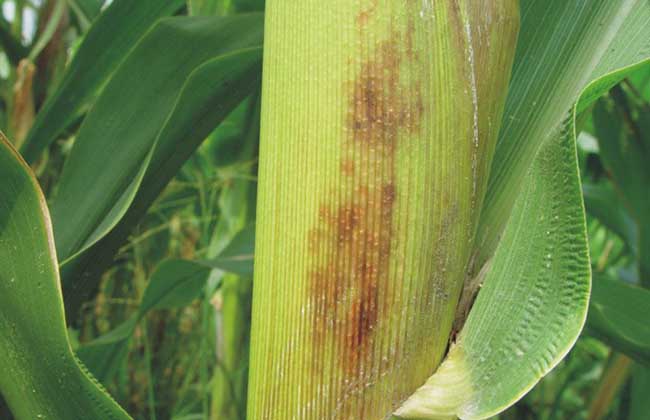
Maize rough dwarf disease is a viral disease of maize caused by Maize rough dwarf virus, commonly known as "dwarf maize" or "stunted maize," and also called "maize cancer." It is mainly transmitted in a persistent manner by viruliferous small brown planthoppers. So what are the symptoms of maize rough dwarf disease? How to prevent and control it?
-
Symptoms and Control Methods of Maize Rough Dwarf Disease
Maize rough dwarf disease is a viral disease of maize caused by Maize rough dwarf virus. Maize rough dwarf virus belongs to the plant reovirus group and is a spherical virus with double-stranded RNA and a double-layered capsid. It is transmitted by the small brown planthopper (Laodelphax striatellus) in a persistent manner. Maize rough dwarf disease is an important disease prevalent in the maize production areas of northern China.
-
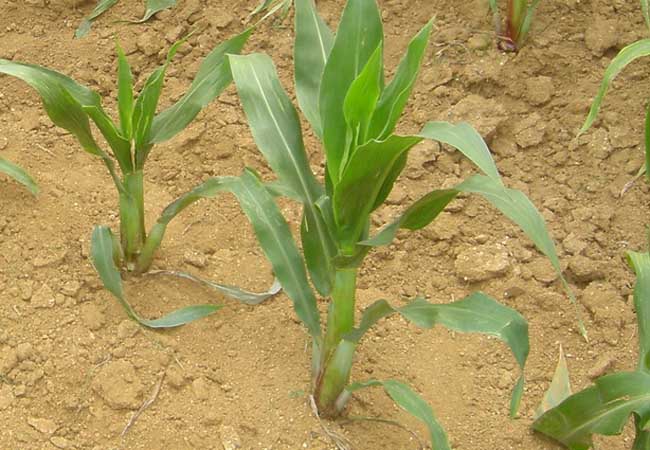
Symptom Identification and Control Methods of Maize Rough Dwarf Disease
Symptoms and Control Methods of Maize Rough Dwarf Disease
-
-
How to correctly apply herbicides during the maize seedling stage
How should herbicides be applied to maize seedlings? Please give guidance. For post-emergence chemical weed control in maize, herbicides must be strictly selected and mixed and applied according to the instructions. In plots with severe weeds, the dosage may be increased by 15-20% above the rate stated in the instructions. Method: for foliage treatment, it must be done before maize reaches the 6-leaf stage and before weeds reach the 2...
-
How to prevent and control maize rough dwarf disease? These methods you need to know
How to prevent and control maize rough dwarf disease? We also ask netizens to help introduce methods. Maize rough dwarf disease is a viral disease transmitted by the small brown planthopper (Laodelphax striatellus). Zhongdiwang has compiled prevention and control methods for maize rough dwarf disease, listed below for netizens' reference. Prevention and control methods for maize rough dwarf disease: Method one, select disease-resistant and disease-tolerant maize...
-
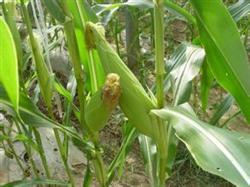
Detailed Explanation of Key Cultivation Techniques for Spring Maize and Late Rice
1. Deep planting of milk-stage seedlings, dry management to promote root growth and preserve seedlings. The techniques of raising seedlings in fertilizer balls and soft trays must be implemented, and the technique of deep planting of milk-stage seedlings must be carried out well. According to research, transplanting milk-stage seedlings has the advantages of early vigor and strong seedlings, strong dry matter accumulation capacity, sturdy plants, well-developed root systems, large and numerous ears with heavy grains, and low empty-stalk rate; its early-maturing and high-yielding growth advantage is 6 days earlier than production cultivation, and the seedling recovery period...
-
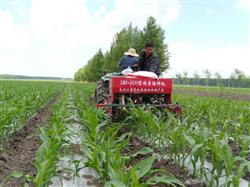
Key Technical Points and Operation Methods for Conservation Tillage of Spring Maize
Maize is a high-yield crop with a relatively large fertilizer requirement and is also very sensitive to medium and trace element fertilizers. Rational fertilization is essential to meet the nutrient needs of maize throughout its entire growth period. According to experiments, producing 100 kg of maize grain requires 2.5 kg of nitrogen, 1 kg of phosphorus, and 2.1 kg of potassium. If the yield is 500 kg of maize per mu, then 3... kg of urea is needed per mu.
-
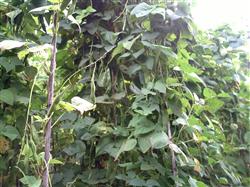
Three-dimensional cultivation techniques for summer maize, autumn kidney beans and over-summer garlic sprouts
Autumn kidney beans are a warm-loving vegetable that is not tolerant of high temperatures or frost; they are generally sown in early autumn and finish growing before frost. Their main supply season is in August and September, and the returns are quite considerable. The key points of the cultivation technique are as follows: 1. Variety selection. For autumn kidney beans, choose varieties that are heat-tolerant, disease-resistant, highly adaptable and have a high pod-setting rate, such as Lulong...
-
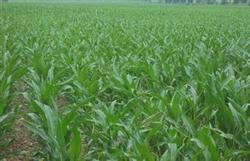
Key technical points for ensuring full seedling emergence in a single sowing of summer maize
To achieve "full seedling emergence in a single sowing" of summer maize, in addition to selecting good-quality seeds, attention should also be paid to the following aspects: Do not sow too deep: the most suitable sowing depth for summer maize is 3-5 cm. If sown too deep, the lower temperature makes the seeds prone to rotting; even if they manage to emerge, because the seeds are buried too deep, the seeds...
条件筛选