How to prevent and control maize rough dwarf disease? These methods you need to know
How to prevent and control maize rough dwarf disease? We also ask netizens to help introduce methods. Maize rough dwarf disease is a viral disease transmitted by the small brown planthopper (Laodelphax striatellus). Zhongdiwang has compiled prevention and control methods for maize rough dwarf disease, listed below for netizens' reference. Prevention and control methods for maize rough dwarf disease: Method one, select disease-resistant and disease-tolerant maize...
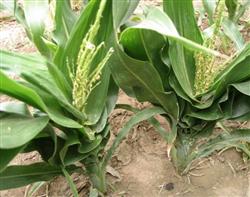 How to prevent and control maize rough dwarf disease? We also ask netizens to help introduce methods
Maize rough dwarf disease is a viral disease transmitted by the small brown planthopper (Laodelphax striatellus). Zhongdiwang has compiled prevention and control methods for maize rough dwarf disease, listed below for netizens' reference.
Prevention and control methods for maize rough dwarf disease:
Method one, select disease-resistant and disease-tolerant maize varieties:
According to surveys in recent years, there are certain differences in disease occurrence among varieties. Varieties such as Nongda 108, Zhengdan 958, Ludan 50, Ludan 981 and Ludan 984 show relatively mild incidence, with the rate of diseased plants below 5%.
Method two, adopt agricultural control:
Before sowing and before harvest of crops such as wheat and maize, remove weeds along field edges and ditch edges, carry out intensive cultivation and careful tillage, and weed promptly to reduce insect sources. Spray maize fields and surrounding weeds with 40% omethoate emulsifiable concentrate at 1500 times dilution plus 50% methamidophos emulsifiable concentrate at 1500 times dilution.
Appropriately adjust the maize sowing date so that the maize seedling stage avoids the peak occurrence period of the small brown planthopper. Arrange planting methods reasonably. Strengthen field management, topdress fertilizer and irrigate promptly, and improve plant disease resistance. Combined with thinning and final singling of seedlings, promptly pull out diseased plants to reduce diseased plants and virus sources. For severely affected plots, switch early to legume crops or sweet maize, waxy maize, etc., to increase economic income.
Method three, adopt chemical control:
First, use systemic insecticides for seed dressing or seed coating. 60% Gaqiao or 40% isofenphos-methyl can be used for seed dressing or coating at 0.2% of the seed amount;
Second, carry out chemical control before emergence. 10 grams of 10% imidacloprid per mu can be sprayed for control;
Third, after maize emergence, at the three- to four-leaf stage of maize, spray chemicals on the field and around the plot to control the small brown planthopper.
The chemicals can be 40% monocrotophos emulsifiable concentrate at 1500-2000 times dilution, or 40% omethoate emulsifiable concentrate, 50% parathion emulsifiable concentrate at 1000 times dilution, or 30 milliliters of 5% fipronil suspension concentrate or 15 g of 10% imidacloprid, mixed with 30-40 kg of water for spraying; 30 milliliters of 4.5% beta-cypermethrin or 60-80 milliliters of 48% chlorpyrifos can also be mixed with 30-40 kg of water for spraying.
Spraying should be as uniform and thorough as possible, and control should be repeated once after 7 days to ensure the control effect. Also achieve unified timing, unified chemicals, unified methods and unified application to improve the control effect. Alternatively, during the period when the small brown planthopper transmits the virus and causes damage, especially before the 7-leaf stage of maize, spray 2.5% pifubing emulsifiable concentrate at 1000 times dilution, once every 6-7 days, for 2-3 consecutive sprays, which can achieve twice the result with half the effort.
Method four, strengthen field management and improve plant disease resistance:
Fertilize and irrigate reasonably, strengthen field management, shorten the maize seedling stage, reduce opportunities for virus transmission, and improve maize disease resistance. Practice has proved that increasing the application of organic fertilizer, adjusting the proportion, amount and application of N, P and K fertilizers, doing a good job in formula fertilization, and increasing the application of microfertilizers such as zinc and iron can improve plant disease resistance and effectively reduce the occurrence of this disease.
Click to get more maize planting techniques
Click to get more food crop planting techniques