Key Technical Points and Operation Methods for Conservation Tillage of Spring Maize
Maize is a high-yield crop with a relatively large fertilizer requirement and is also very sensitive to medium and trace element fertilizers. Rational fertilization is essential to meet the nutrient needs of maize throughout its entire growth period. According to experiments, producing 100 kg of maize grain requires 2.5 kg of nitrogen, 1 kg of phosphorus, and 2.1 kg of potassium. If the yield is 500 kg of maize per mu, then 3... kg of urea is needed per mu.
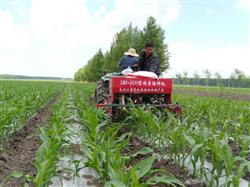 Technical introduction: This technology is an advanced agricultural tillage technique. By implementing no-till farming on farmland and applying straw mulch over the soil surface, it reduces soil wind erosion and water erosion and improves soil fertility and drought resistance.
Core technologies: ① Straw mulching technology: after maize harvest, the straw and stubble are left on the soil surface as mulch to reduce soil and water loss and suppress blowing sand; ② No-till fertilization and sowing technology: using a no-till seeder to directly apply fertilizer and sow on farmland that has not been tilled; ③ Chemical weed control technology: applying post-sowing soil sealing and targeted control of emerged weeds; ④ Subsoiling technology: conservation tillage mainly relies on crop roots and organisms such as earthworms to loosen the soil, but because mechanical operations compact the ground, soil loosening is needed, generally using special machinery for subsoiling once every 3-4 years.
Ecological benefits: reduce surface runoff by 60% and soil water erosion by 80%; reduce wind erosion by 60%; do not burn straw, reducing air pollution; increase soil water storage during the fallow period by 14-15% and improve water use efficiency by 15-17%; increase soil fertility, with soil organic matter increasing by 0.03%; effectively suppress sandstorms.
Economic benefits: lower production costs; increase maize yield by 5-13%; increase income by 8-15%.
Social benefits: reduce the number of agricultural machinery operation steps, lower labor intensity, and improve farmers' quality of life.