Symptom Identification and Control Methods of Maize Rough Dwarf Disease
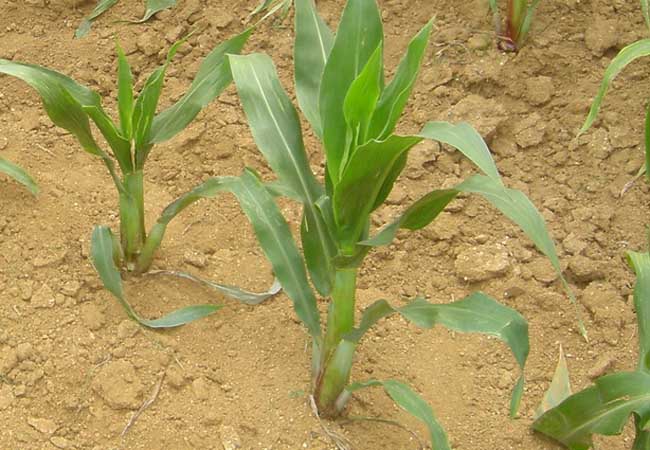
Maize rough dwarf disease is a viral disease of maize caused by Maize rough dwarf virus. Maize rough dwarf virus belongs to the plant reovirus group and is a spherical virus with double-stranded RNA and a double-layered capsid. It is transmitted by the small brown planthopper (Laodelphax striatellus) in a persistent manner. Maize rough dwarf disease is an important disease prevalent in the maize-producing areas of northern China. Below, let us take a look at the symptoms and control methods of maize rough dwarf disease!
Damage Symptoms of Maize Rough Dwarf Disease
The Maize rough dwarf virus particles are spherical, with an inactivation temperature of 800C, and can survive for 37 days at 20°C. The virus is transmitted by insects, and the main virus-transmitting insect is the small brown planthopper, which transmits the virus persistently. The incubation period is 15—20 days. It can also infect wheat (causing blue dwarf disease), oats, foxtail millet, sorghum, barnyardgrass, etc.
1. Symptoms: Maize can be infected throughout the entire growth period, with the most severe damage occurring at the seedling stage. Symptoms can appear as early as the 5 to 6 leaf stage, beginning with transparent, oil-soaked, chlorotic, faint linear dots on the base of the heart leaf and along both sides of the midrib, gradually spreading to the entire leaf. Diseased seedlings are dark green, with stiff, broad, short and thick leaves; the heart leaf cannot unfold normally; diseased plants grow slowly and are dwarfed. On the veins on the back of the leaves of diseased plants, waxy white raised stripes appear, with a distinctly rough feel when touched by hand. The plant leaves are broad, short and stiff, the leaf color is dark green, the internodes are thick and short, and the top leaves cluster like a clivia. On the veins of the leaf back, leaf sheath and bracts, there are waxy white strip-like protrusions of varying thickness, with a distinctly rough feel. By the 9 to 10 leaf stage, the dwarfing of diseased plants becomes more obvious, the upper internodes are shortened and swollen, and the top leaves cluster. The height of diseased plants is less than half that of healthy plants, and most cannot ear and set seed. Although a few tassels can emerge, they have very few branches and no pollen. The ears are deformed, with very few silks; the plants are severely dwarfed, the tassels are degenerated, and the female ears are deformed. In severe cases, no seed can be set.
2. Damage: Since 1993, the occurrence of maize rough dwarf disease has shown an obvious upward trend, causing enormous losses to maize production in our city. When it occurred heavily in 1996, the diseased plant rate in ordinary diseased fields reached 40%, with an average yield reduction of 10%-30%. It occurred heavily in the Huang-Huai region for three consecutive years from 2007 to 2009. How to control maize viral diseases, especially the damage of maize rough dwarf disease (MRDV), has become a highly practical issue. Therefore, in recent years we have conducted systematic investigation and research on maize rough dwarf disease. The research found that 85.16% of maize plants in the diseased plant samples had basically no yield or no yield at all, with plant height only 1/2 that of healthy plants, and no female ears or female ears with no grains; 98.44% of plants had a grain weight loss rate of more than 50%.
3. Characteristics: In northern China, the rough dwarf virus overwinters in winter wheat and other weed hosts. It can also overwinter in the body of the virus-transmitting insect. After maize emerges the following year, the virus is transmitted to maize seedlings or sorghum, foxtail millet and weeds by the virus-transmitting insect, spreading and causing damage from one place to another. Maize is susceptible to the disease before the 5-leaf stage, and resistance increases after the 10-leaf stage; even if infected, the disease is mild. If the period from maize emergence to the 5-leaf stage coincides with the peak migration of the virus-transmitting insect, the disease is severe, so the maize sowing date is closely related to the severity of the disease. For example, maize sown in mid-May in Hebei Province meets the peak period of first-generation small brown planthopper adults during the seedling stage, and the disease is severe. With extensive field management and many weeds, there are many small brown planthoppers, and the disease is severe.
Control Methods of Maize Rough Dwarf Disease
1. Agricultural Control Methods
In the control of maize rough dwarf disease, we must adhere to the comprehensive control policy of giving priority to agricultural control and supplementing it with chemical control. Its core is to control the virus source, reduce the insect source, and avoid damage:
① Strengthen monitoring and forecasting: In areas where the disease frequently occurs, carry out targeted fixed-point and regular surveys of the diseased plant rate and severity of rough dwarf disease in wheat, field weeds and maize, and at the same time investigate the occurrence density and virus-carrying rate of the small brown planthopper. In late autumn and late spring and before maize sowing, based on the overwintering base number and virus-carrying rate of the small brown planthopper and the diseased plant rate of wheat and weeds, combined with the maize planting pattern, make timely and accurate forecasts of the occurrence trend of maize rough dwarf disease to guide control.
② Choose suitable varieties: According to local conditions, select varieties with relatively good resistance, and at the same time pay attention to rational layout, avoiding large-scale planting of varieties with a single resistance source. In the 1970s, Yunong 704 had a certain resistance to the disease. 50, Ludan 053, Nongda 108, etc., can replace susceptible varieties such as Shendan 7, Yedan 53, Yedan 22 in production. In areas where susceptible varieties have been planted for many years and the damage is severe, planting these resistant (tolerant) varieties is particularly important. In Qufu City, maize hybrids Ludan 50, Luyuandan 14, etc. have good resistance to rough dwarf disease.
③ Adjust the maize sowing date: According to the occurrence pattern of maize rough dwarf disease, in areas with severe disease, the sowing date should be adjusted so that the growth period in which maize is most sensitive to the disease avoids the peak occurrence period of small brown planthopper adults, reducing the disease incidence. Spring-sown maize should be sown appropriately earlier, generally in late April to early May. Maize interplanted in wheat fields should be appropriately delayed, generally 5 days before wheat harvest, trying to shorten the symbiotic period of wheat and maize, and achieving appropriate late sowing. The main maize planting patterns in Qufu City are wheat-interplanted maize, stubble-grabbing maize and late-sown maize, among which wheat-interplanted maize has the most severe disease, followed by stubble-grabbing maize, and then late-sown maize. Spring-sown maize should be advanced to before mid-April; summer-sown maize should be sown in early June.
④ Remove weeds in time: Weeds along roadsides and in fields are not only the seed source base for farmland weeds the following year, but also the overwintering and oversummering host of the small brown planthopper, the virus-transmitting vector of maize rough dwarf disease. For residual weeds in wheat fields, manual hoeing can be carried out first, followed by spraying, and the weed control effect can reach about 95%. The advantage of choosing soil treatment is that maize seedlings do not coexist with weeds, reducing the activity space of the small brown planthopper, which is unfavorable for the planthopper's virus transmission.
⑤ Strengthen field management: Combined with thinning, pull out diseased plants in the field and bury them deep or burn them in a centralized manner to reduce the infection source of rough dwarf disease. Apply fertilizer and water reasonably, strengthen field management, promote maize growth, shorten the susceptible period, reduce opportunities for virus transmission, and enhance the disease resistance and tolerance of maize.