What are the control methods for maize brown spot?
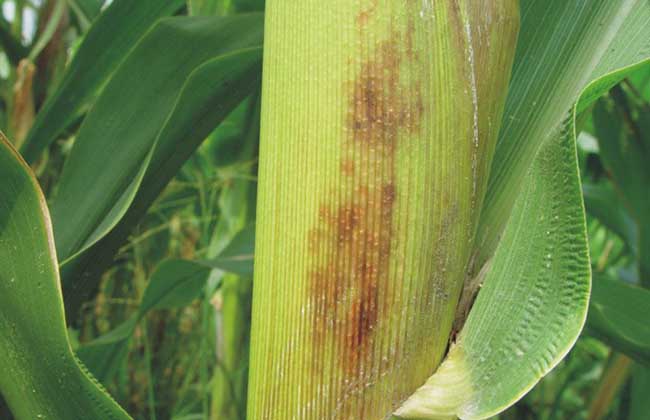
Maize brown spot is a maize disease that has occurred severely and spread rapidly in China in recent years, and in serious cases it can cause total crop loss. It occurs in all maize-producing regions across the country, with heavier damage in provinces such as Hebei, Shandong, Henan, Anhui and Jiangsu. It mainly occurs on maize leaves, leaf sheaths and stems. Let's take a look at the control methods for maize brown spot below!
Damage symptoms
Maize brown spot occurs on maize leaves, leaf sheaths and stems. It first appears at the tips of the top leaves, with the most lesions at the junction of the leaf blade and leaf sheath, often densely arranged in rows. Initially they are yellow-brown or reddish-brown small spots. The lesions are round or oval to linear, and the leaf tissue near the raised areas often turns red. Small lesions often merge together, and in severe cases several sections or even the entire leaf is covered with lesions. Larger brown spots appear on the leaf sheaths and veins. In the late stage of the disease, the epidermis of the lesions ruptures, the leaf cell tissue becomes necrotic, and brown powder is released. The diseased leaf splits locally, with the veins and vascular bundles remaining like threads. Lesions on the stem mostly occur near the nodes.
Disease occurrence pattern
If temperatures are high, humidity is high and there are many rainy days in July and August, maize brown spot is more likely to occur. On plots with poor soil, leaves turn yellow and the disease is severe; on plots with higher soil fertility, maize is robust with dark green leaves, and the disease is mild or does not occur at all. The disease generally occurs easily when maize has 8 to 10 leaves, and after maize has 12 leaves it generally no longer occurs. In addition, according to surveys, maize varieties with Tangsipingtou parentage are susceptible, such as Shendan 16, Shandan 911, Yuyu 26 and others.
Agricultural control
1. After maize harvest, thoroughly remove diseased residue tissue and deep plow the soil. Select disease-resistant varieties and implement crop rotation of more than 3 years. Plant at a suitably sparse density (3500 plants per mu for large-ear varieties, and no more than 5000 plants per mu even for density-tolerant varieties) to improve field ventilation and light penetration.
2. Apply sufficient base fertilizer and topdress in a timely manner. Generally, seedling fertilizer should be applied at the 4 to 5 leaf stage of maize, with 10 to 15 kg per mu of urea (or nitrogen, phosphorus and potassium compound fertilizer). If disease is found, topdressing should be carried out immediately, paying attention to the balance of nitrogen, phosphorus and potassium fertilizers. Apply compost fermented with Japanese enzyme bacteria or fully decomposed organic fertilizer, topdress and hoe weeds in a timely manner, promote robust plant growth and improve disease resistance.
Chemical control
1. Early prevention: at the 4 to 5 leaf stage of maize, spray the leaves with 1000 times dilution of 25% triadimefon or 1500 times dilution of 25% tebuconazole per 667 sq m, which can prevent the occurrence of maize brown spot.
2. Timely control: at the initial onset of maize disease, immediately spray the stems and leaves with 1500 times dilution of 25% triadimefon wettable powder or spray with fungicidal agents. To improve the control effect, an appropriate amount of foliar fertilizer can be added to the spray solution, such as potassium dihydrogen phosphate, diammonium phosphate aqueous solution (the urea in the original text contradicts the rapid-acting nitrogen fertilizer applied later), Blue Jingdian multi-element micro-fertilizer, Zhuanghan liquid fertilizer, etc. Combined with topdressing of quick-acting fertilizer, this can control the spread of the disease, promote robust maize growth and improve maize disease resistance. According to the rainy climate characteristics, fungicidal sprays should be applied 2 to 3 times, at intervals of about 7 days, and if it rains within 6 hours after spraying, it should be re-sprayed after the rain.