Key technical points for ensuring full seedling emergence in a single sowing of summer maize
To achieve "full seedling emergence in a single sowing" of summer maize, in addition to selecting good-quality seeds, attention should also be paid to the following aspects: Do not sow too deep: the most suitable sowing depth for summer maize is 3-5 cm. If sown too deep, the lower temperature makes the seeds prone to rotting; even if they manage to emerge, because the seeds are buried too deep, the seeds...
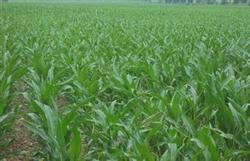
To achieve "full seedling emergence in a single sowing" of summer maize, in addition to selecting good-quality seeds, attention should also be paid to the following aspects:
Do not sow too deep: the most suitable sowing depth for summer maize is 3-5 cm. If sown too deep, the lower temperature makes the seeds prone to rotting; even if they manage to emerge, because the seeds are buried too deep, the seeds consume a large amount of nutrients before emergence, and after emergence the maize seedlings have weak root systems and a poor ability to absorb nutrients, forming weak seedlings. Therefore, when sowing summer maize, under the condition of ensuring adequate soil moisture, the sowing depth should be reduced as much as possible.
Burning straw is strictly prohibited: after wheat harvest, in order to make cultivation easier, some growers leave the wheat straw in the field, spread it out evenly and set it on fire. After burning, due to the effect of high temperature, microorganisms in the soil that are beneficial to crop growth are killed; a large amount of nutrients in the soil are also decomposed, reducing soil fertility and the moisture content in the soil, making it difficult for maize to emerge. Therefore, burning straw is strictly prohibited after wheat harvest.
Do not mix seed and fertilizer: when sowing with manual labor or animal power, fertilizer is applied together with the seeds, which can easily cause fertilizer burn to the seedlings. Seed and fertilizer should be kept about 10 cm apart. Most maize sown by machine at present can achieve separation of seed and fertilizer.
Control wheat armyworms: armyworms are the main pests during the wheat maturity period. Some farmers only focus on wheat harvest and maize sowing, and often neglect the control of armyworms after sowing. The mature larvae remaining in the field and the newly hatched larvae begin to bite the newly emerged maize seedlings after the maize emerges. When armyworms occur severely, the maize seedlings in an entire field can be eaten bare, making replanting the only option. Therefore, after the maize emerges, if armyworm damage is found, pesticide should be sprayed promptly for control.