Detailed Explanation of the Causes of Lotus Root Leaf Blight and Control Measures
Lotus root is a vegetable that many people love, and it is grown in quite a few regions, but growing lotus root is not a simple task. If the lotus seed sets are not chosen well, if the water depth in the lotus field is not managed properly, or if the temperature is too high when topdressing, any of these problems can lead to planting failure. Many farmers also encounter the phenomenon of lotus root leaf blight during cultivation. What causes this, and how should it be prevented and controlled? Let's take a look together.
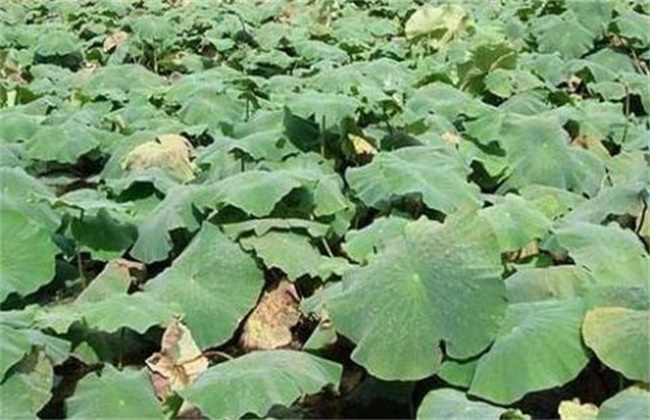
I. Causes of Lotus Root Leaf Blight
The cause of early withering of lotus leaves is lotus leaf blight, a fungal disease that is easily overlooked. When the disease is mild, it weakens the growth vigor of the lotus root; in severe cases, it causes the entire leaf to wither and die. Moreover, because the leaves are damaged, the photosynthesis of the lotus root is thrown off balance, so the lotus root and lotus seeds cannot obtain nutrients, which seriously affects both yield and quality. The main reasons for the occurrence of leaf blight are the lack of scientific management methods during lotus root cultivation, or inadequate cultivation techniques, lotus seed sets not being sterilized and disinfected, and insufficient topdressing amounts, all of which can lead to leaf blight in lotus root.
II. Symptoms of Leaf Blight
Lotus root leaf blight mainly occurs on the leaves. In the early stage of the disease, light yellow lesions appear on the leaf margins of the lotus leaf surface and gradually spread toward the center of the leaf, causing the lesions to gradually change from light yellow to yellowish brown, with scorched and withered margins. As the disease progresses, the damage also spreads from the mesophyll to the leaf veins, the lesion color changes to dark brown, and the entire leaf dries up and dies, looking like it has been burned from a distance. The pathogen of leaf blight overwinters on diseased plant residues and becomes the initial infection source for the following year; it generally begins to occur in late May to early June, is most severe in mid-to-late June, peaks from July to August, and declines after September.
III. Control Measures
1. Reasonable crop rotation
When lotus root is grown for too many years, pathogens accumulate excessively in the soil, so reasonable rotation is needed to control the occurrence of the disease. Generally, rotation should be carried out after 3 consecutive years of lotus root cultivation or in fields with severe disease incidence. If rotation is not carried out, it is recommended to apply quicklime for sterilization.
2. Field cleaning in winter
In winter, the lotus field should be cleaned up to thoroughly eliminate diseased plant residues, which should be taken out of the field for centralized disposal. Diseased leaves should be removed promptly and taken out of the field for deep burial or burning.
3. Reasonable fertilization
Farmyard manure applied must be fully decomposed, and quick-acting potassium fertilizer should be applied in greater amounts to improve disease resistance.
4. Chemical propagation
In the early stage of the disease, spray 50% carbendazim or 50% thiophanate-methyl wettable powder at 800 times dilution, or 70% mancozeb wettable powder at 500-600 times dilution, spraying once about every week for 2-3 consecutive sprays, which gives a relatively good control effect.
The above is an introduction to the causes of lotus root leaf blight and control measures. We hope it can help you. To learn more related knowledge, please stay tuned to us.