-
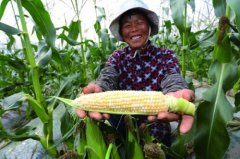
What Kind of Corn Is Fruit Corn? Differences from Other Corn and How to Eat It
What is fruit corn? Is fruit corn easy to grow? Fruit corn is a type of sweet corn suitable for eating raw. Compared with ordinary sweet corn, its main characteristics are thin skin with no residue, a delicate texture, lots of juice, and a crisp, sweet taste; it can also be eaten after cooking. Fruit
-
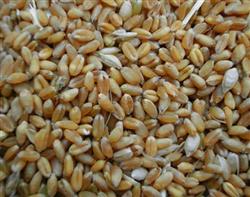
What kind of wheat seed is good? Master these selection criteria
What kind of wheat seed is good? Are there any methods to tell them apart? I hope some readers can help explain. For high wheat yields, good seed is key, and before sowing, choosing a suitable wheat seed is the most important thing. What kind of wheat seed is good? Zhongdiwang has compiled methods for selecting and buying wheat seed, listed below for...
-

What kind of insect is the wheat blossom midge? Get to know this wheat field pest
What is the wheat blossom midge? What harm does the wheat blossom midge cause? What methods can be used for control? We also ask netizens to help introduce. Zhongdiwang has compiled the harm and control methods of the wheat blossom midge, listed below for netizens' reference. Harm of the wheat blossom midge: The wheat blossom midge is a worldwide pest...
-
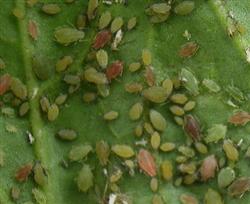
What kind of cotton pest is the cotton aphid?
What is the cotton aphid? What methods can be used to control the cotton aphid? Please help introduce it. The cotton aphid mainly sucks plant sap. It causes leaves to curl, the undersides of leaves to become glossy, and in severe cases the leaves turn yellow and drop, while buds and bolls are damaged, making bud drop likely and affecting cotton plant development. The cotton aphid generally occurs from emergence until the end of June, and from mid-May to mid-to-late June before squaring, when it enters the peak damage period.
-
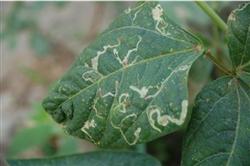
What kind of pest is the bean leafminer? A detailed guide
What is the bean leafminer? What damage does the leafminer do to beans? What are some good control methods? We asked fellow gardeners for help. Zhongdiwang has compiled the damage caused by the bean leafminer and its control methods, listed below for fellow gardeners' reference. Damage caused by the leafminer to beans: The leafminer mainly bores...
-
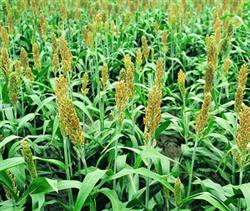
What kind of moisture conditions does sorghum need for its growth and development?
What are the moisture conditions suitable for sorghum growth and development? Here is an introduction. Sowing can be done when the soil moisture content is 15%-20%. The water requirement at the seedling stage accounts for 8%-15% of the total water requirement throughout the entire growth period. The most suitable soil moisture content is 50%-65% of the field maximum water-holding capacity. During the seedling stage, properly controlling soil moisture...
-
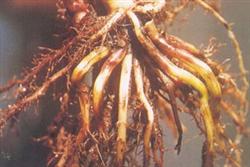
What kind of disease is sorghum black head mold root rot
Symptoms The disease can occur at the seedling stage and the adult plant stage. Infected seedlings show wilting that resembles water deficiency; the cortex and vascular bundles of diseased seedlings are brown and water-soaked, and the fine roots soften and rot. Infected adult plants have drooping and slightly curled leaves, older leaves turn yellow, and drying begins from the leaf tips and leaf margins. When the roots are infected, the roots and root crown turn brown and rot. Pathogen...
-
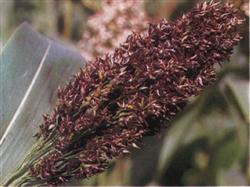
What kind of disease is sorghum covered smut?
What is sorghum covered smut? Please provide an introduction and control methods. Sorghum covered smut occurs occasionally in localized areas of Northeast China, Shandong, Inner Mongolia, Henan, Hebei and other places. It is caused by Sphacelotheca sorghi. Symptoms: symptoms appear at the heading stage; diseased plants are not stunted; usually all grains in the panicle become egg-shaped gray galls, with a hard outer membrane...
-
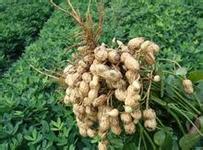
What kind of soil conditions do peanuts need for high yields?
(1) Deep full soil layer. For a high-yield field, the full soil layer should be more than 50 cm deep. 99% of the peanut root system is distributed within 50 cm, while the main root reaches deep, more than 1 m down, so a deep soil is very important for the growth and development of the peanut root system. (2) Loose and active cultivated layer. A thickness of 30 cm is the loose, active and fertile cultivated layer, and...
-
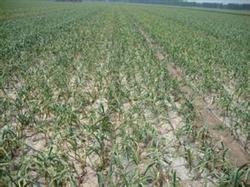
Good garlic growth depends on the skillful application of four kinds of fertilizer
Year-after-year garlic cultivation creates a series of problems that give farmers a headache. Because land resources are limited, continuous cropping of garlic is very common in Feng County, Jiangsu, and this has also led to the buildup of various pathogens in the soil, causing the trace elements that garlic can easily absorb to gradually decline, resulting in deficiency symptoms. In addition, garlic...
条件筛选