-

What kind of fertilizer is eucalyptus-specific fertilizer? Explained clearly in one article
What is eucalyptus-specific fertilizer? An introduction to the differences. Eucalyptus-specific fertilizer, or eucalyptus fertilizer for short, is mainly designed for the rapid growth of eucalyptus, the fast nutrient cycling within the stand, and the high demand for soil nutrients, and is further formulated based on the fact that soils in southern China commonly lack trace elements such as boron and zinc. The difference between eucalyptus fertilizer and ordinary compound fertilizer lies in...
-
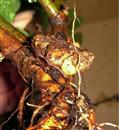
What kind of disease is root knot disease in roses?
What does root knot disease in roses look like? How to prevent and control it? Need guidance. Rose root knot disease: Symptoms: white tumor-like growths seen on the roots. Young tumors are white and elastic, later becoming hard. The tumor surface is rough. Brown or dark brown, and in severe cases the root knots can grow above the ground. Roses with root knots grow poorly, leaves turn yellow,...
-

What kind of flower pot is best for orchids? Flower pot prices and how to choose
Orchid flower pot prices and how to choose
-

What kind of rice is Donglan black rice? Introduction to its origin and characteristics
Basic information: Black rice is called "Hou Mo" in the Zhuang language. It gets its name because the husk and the grains are purple-black both inside and out. This rice is produced in Donglan County, Guangxi, so it is also called "Donglan black rice". Donglan black rice is a rare rice variety developed through long-term selection by farming families from wild black rice in the high-cold mountainous areas of Donglan County. It has a cultivation history of more than 400 years and is a treasure among grains. It contains as many as 18 amino acids, 8 of which are essential to the human body, with the highest levels of threonine and lysine. Its crude protein, crude fat, sulfur
-
Spider Plant, also known as Ribbon Plant: What Kind of Plant Is the Spider Plant
Scientific name: Chlorophytum comosum. Aliases: Ribbon Plant. Family and genus: Liliaceae, Chlorophytum. Category: Herbaceous flowering plant. Morphological features: A herbaceous flowering plant with basal, linear leaves. From the leaf cluster, slender flower scapes emerge, bearing small white flowers clustered at the tips of the pedicels in a raceme. Sometimes the flower scapes become stolons, and small plantlets grow at the tips of the stolons. Spider plant (C. comosum) has basal, slender leaves, about 3
-
What kind of plant is the evergreen shrub of the Agavaceae family?
The spotted dracaena grows 1-2 m tall, with slender stems that droop after extending. Leaves are opposite or whorled, sessile, oblong-elliptic or lanceolate, characterized by oil-stain-like markings on the leaf surface. It tolerates shade, drought and moisture, and is suitable for garden accents or potted cultivation. The branches and leaves are also beautiful material for flower arranging. The ribbon dracaena grows 1-2 m tall, with cylindrical stems and distinct nodes, whorled sessile leaves that are ovate or elliptic; it tolerates shade and drought, and is suitable for group planting in gardens or for pots, and its branches and leaves are premium flower-arranging material. Propagation: cuttings or division can be used, with spring to autumn being the suitable period.
-
What kind of flower is the Crown Azalea?
Its main characteristics are a short, sturdy form and a compact crown, with a delicate nature that fears both strong sun and freezing. The leaves are thick, dark green, and sparsely hairy, and the leaf shapes include glossy-leaf, pointed-leaf, twisted-leaf, long-leaf, and broad-leaf types. The flowering period is April-May, and the flower colors are diverse, including solid colors, fly-white, edged, red-dotted, bright-spotted, sand-sprayed, and brocade-splashed patterns; most are double or semi-double, with few single. The petals are narrow and long, round and broad, flat and straight, recurved, wavy, flying, crinkled-edged, and rolled-edged, with a diameter of 6-8 cm, and the largest can exceed 10 cm. In recent years, a large number of new hybrid varieties have appeared.
-
Rhododendron species introduction: What kind of plant is the Chinese azalea (Rhododendron molle)
It belongs to the subgenus Rhododendron subg. Pentanthera. Deciduous shrub, 0.5-2 m tall. Branchlets slender and sparse. Covered with soft hairs and bristles. Leaves papery, tender green, long elliptic-lanceolate, 5-12 cm long, 2-4.5 cm wide, apex obtuse, with a protruding tip, base cuneate, margins ciliate, petiole, leaf surface and leaf underside all covered with soft hairs. Terminal racemose umbel, with 5-9 flowers, blooming in early May, about 10 days later than the red azalea (Rhododendron simsii), flowering before leaves or flowers and leaves appearing together, corolla broadly campanulate, 5-6 cm in diameter, golden yellow to orange-yellow
-
What kind of tree is the golden-leaf dawn redwood?
The golden-leaf dawn redwood (M. glyptostroboides 'GoldRush') is a cultivar of the dawn redwood developed in recent years. It is a fast-growing, vigorous deciduous tree with reddish-brown bark; its leaves are flat and linear, arranged in 2 opposite rows on short shoots; the new leaves remain golden yellow through all three seasons of spring, summer and autumn. The golden-leaf dawn redwood is mostly introduced from Japan, has relatively strict requirements for microclimate, demands fairly high air humidity, and prefers a humid climate. At present, in Beijing, Jiangsu, Shanghai, Zhe
-
What kind of plant is the yellow oleander?
Name: Yellow oleander | Aliases: Cup of gold flower | Gout plant | Latin name: Thevetia peruviana Schum | Family: Apocynaceae | Genus: Thevetia | Origin and distribution: Tropical America | Morphological characteristics: Evergreen small tree, 2-5 m tall, with milky sap in the plant body. Flowering period from summer to winter. | Growth habits: Sun-loving, prefers high-temperature and humid climates, strong vitality, moisture-tolerant, shade-tolerant, wind-resistant, resistant to air pollution. | Propagation and cultivation: Propagated by sowing or cuttings; seeds must be sown immediately after collection. When seedlings are 1
条件筛选