-
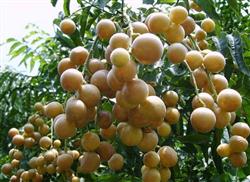
How to fertilize heart-shaped wampee? Detailed scientific fertilization methods
How to fertilize heart-shaped wampee properly? We ask netizens with wampee growing experience to help introduce it. Heart-shaped wampee is waxy yellow or brownish yellow, glossy, with large fruit; a single fruit weighs 9-14 grams; the flesh is yellow-white, sweet with a honey aroma or sweet with slight sourness, crisp and juicy; the edible rate is 47%-62%, and the soluble solids content is 14.5%, thereby... ⟧3⟧How to fertilize heart-shaped wampee properly? We ask netizens with wampee growing experience to help introduce it
-
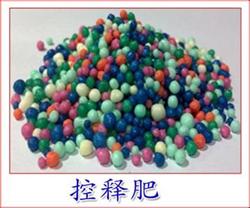
Fertilizer is not a case of the more the better; rational fertilization is more important
In a broad sense, China has a history of more than 10 years of slow and controlled release fertilizer production. However, among those currently promoted and applied with relative success are only the urease inhibitor stabilized nitrogen fertilizer from the Shenyang Institute of Applied Ecology, Chinese Academy of Sciences, the fertilizer-coated fertilizer type slow release fertilizer using a patent from the School of Engineering of Zhengzhou University, the slow release rice fertilizer from the Soil and Fertilizer Institute of the Guangdong Academy of Agricultural Sciences, and Shanghai Han...
-
How to use fruit tree fertilizer correctly? A detailed explanation of fertilization methods
Fellow farmers must be cautious when buying fertilizer. Since some farmers do not understand fertilizer production, they must pay attention to the following issues when purchasing, which will bring you absolute benefits: the "four don'ts." First, don't covet small bargains and ignore quality by buying fake or inferior fertilizer, so as to avoid causing...
-
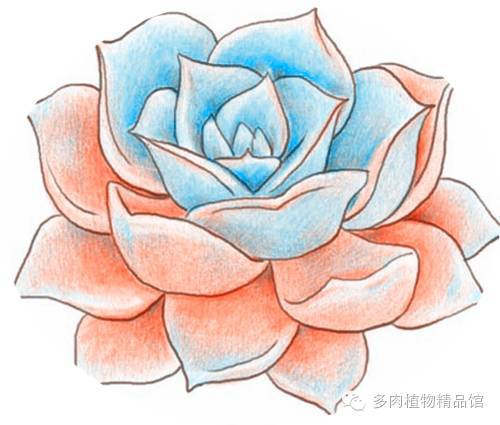
Succulent Pollination and Hybridization Tips: Learn How to Grow Hybrid Succulents
Text and images by: This Girl Is a Bit Sweet. The mating scene in the succulent world is quite messy, but no matter what, as long as we can hybridize beautiful succulents, our love for them only grows! TIPS: In Crassulaceae, the same plant generally cannot self-pollinate; for example, parents that are related by blood also cannot be crossed. They need two succulents of the same species that are not related by blood, and when they bloom at the same time, they can be pollinated and crossed to produce seeds!
-
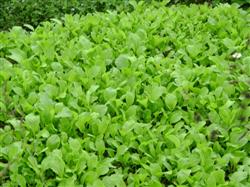
What is the principle of foliar fertilization? Explained clearly in one article
First look at the vegetable type: different vegetable types have different fertilizer requirements. For example, leafy vegetables prefer nitrogen, legumes prefer phosphorus and potassium, Chinese cabbage, cauliflower, radish and others are more sensitive to boron fertilizer, legumes and cruciferous plants are more sensitive to molybdenum fertilizer, short-term vegetables require less fertilizer, vegetables that continuously flower and fruit require more fertilizer, and root and tuber vegetables are sensitive to chloride, ...
-
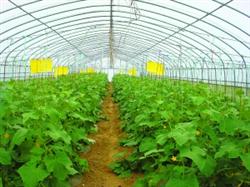
Correct Methods and Technical Key Points for Foliar Fertilization of Vegetables
Spraying an aqueous solution of the nutrients plants need onto the leaves, so that plants directly absorb effective nutrients through their leaves, is a technique called foliar fertilization of vegetables. Compared with soil fertilization, this technique has the advantages of rapid conversion, high fertilizer use efficiency, and promotion of nutrient uptake by the root system. Foliar fertilizers can be broadly divided into macro...
-
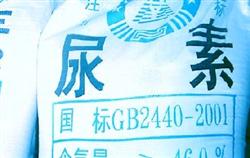
Key Technical Points and Detailed Methods of Foliar Fertilization
Do not spray in extremely hot weather or before rain, so as to avoid burning the seedlings or losing fertilizer nutrients. The best time to spray is in the early morning or afternoon each day, and after spraying, wait 7-10 days before spraying again. When spraying on cereal crops or crops with smooth leaves, add 0.1% adhesive (such as laundry detergent or dish soap), etc. Otherwise, the effect...
-
Rational fertilization is the key to improving the efficiency of fertilizer savings and use
During the growth of crops, one of the most commonly used measures by farmers to increase yields is to apply more fertilizer. As the farming proverb says: "A crop is like a flower; it all depends on fertilizer to thrive," and another saying goes: "Clever planting is not as good as effective fertilization." Both show that farmers attach great importance to applying fertilizer when growing crops. When choosing fertilizers, some...
-
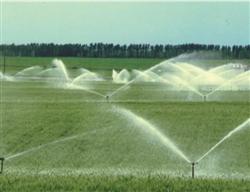
Which fertilizers cannot be applied by flushing? Fertilization taboos every grower must know
Flush fertilization is widely used on greenhouse and open-field vegetables, mainly for topdressing during the vigorous growth period of vegetables. But not all fertilizers can be applied by flushing; only water-soluble fertilizers can be applied by flushing with water. For nitrogen fertilizers, urea, ammonia water, ammonium sulfate and ammonium nitrate are commonly used; for potassium fertilizers, potassium chloride and potassium sulfate are commonly used, and potassium nitrate can also be used for flush...
-
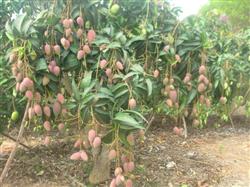
How to Use Fruit Tree Fertilizer? A Detailed Guide to Fruit Tree Fertilization Methods
The correct use of fruit tree fertilizer is one of the key steps in producing pollution-free fruit. The correct use of fruit tree fertilizer is one of the key steps in producing pollution-free fruit. The national agricultural industry standard issued and implemented by the Ministry of Agriculture last year also set out clear rules for fertilizer use in the production of green food (fruit)...
条件筛选