How to Use Fruit Tree Fertilizer? A Detailed Guide to Fruit Tree Fertilization Methods
The correct use of fruit tree fertilizer is one of the key steps in producing pollution-free fruit. The correct use of fruit tree fertilizer is one of the key steps in producing pollution-free fruit. The national agricultural industry standard issued and implemented by the Ministry of Agriculture last year also set out clear rules for fertilizer use in the production of green food (fruit)...
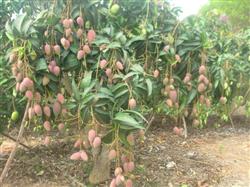
The correct use of fruit tree fertilizer is one of the key steps in producing pollution-free fruit.
The correct use of fruit tree fertilizer is one of the key steps in producing pollution-free fruit. The national agricultural industry standard issued and implemented by the Ministry of Agriculture last year also set out clear rules for fertilizer use in the production of green food (fruit), requiring that the fertilization principle be based mainly on organic fertilizer, supplemented by chemical fertilizer, to maintain or increase soil fertility and soil microbial activity, while the fertilizers used should not have adverse effects on the orchard environment or fruit quality.
Now, in light of the implementation of the standard and the fertilizer needs of fruit production, let us explain fruit tree fertilizers and their use.
I. Types of Fertilizer
(I) Permitted types of fertilizer 1. Farmyard manure: Farmyard manure refers to various organic fertilizers obtained and used locally from local materials. It is made by composting large amounts of biological matter, animal and plant residues, excreta and biological waste, and is rich in organic matter and humus as well as the various macroelements and microelements needed by fruit trees, and also contains hormones, vitamins and antibiotics. It mainly includes compost, waterlogged compost, barnyard manure, biogas fertilizer, green manure, crop straw fertilizer, mud fertilizer and cake fertilizer. 2. Commercial fertilizer: Commercial fertilizer refers to fertilizer that, under national laws and regulations, is managed by the national fertilizer authorities and sold in commercial form. It includes commercial organic fertilizer, humic acid fertilizer, microbial fertilizer, organic compound fertilizer, inorganic (mineral) fertilizer and foliar fertilizer. It is mainly made by processing animal and plant residues, excreta, other biological waste and diseased plant materials into organic fertilizer, or is made into fertilizer in the form of inorganic salts from minerals by physical or chemical industrial methods. 3. Other fertilizers: Refers to fertilizers made from non-toxic food and textile industry organic by-products, as well as organic materials such as bone meal, bone glue residue, amino acid residue, poultry and livestock processing waste and sugar factory waste, which are registered and permitted for use by the agricultural authorities.
(II) Prohibited fertilizers 1. Untreated urban ** or ** containing metals, rubber and harmful substances; 2. Nitrate nitrogen fertilizer and uncured human feces and urine; 3. Fertilizer products that have not been approved for registration.
II. Fertilization Methods
(I) Apply base fertilizer early and in large amounts At present, organic matter in most orchards is less than 1%, and in some orchards even below 0.5%, far below the requirement for a high-quality, high-yield orchard, so the amount of base fertilizer must be increased. If the dual needs of tree growth and soil improvement are taken into account at the same time, the application rate of organic fertilizer should follow the standard of 2-3 jin of fertilizer per jin of fruit. Therefore, for a medium-yield orchard with a yield of about 1500 kg per mu, the amount of organic fertilizer should not be less than 3000 kg. The most suitable time to apply base fertilizer is before and after fruit harvest: apply before harvest for weak trees, and after harvest for strong trees. The next best time is in spring when the flower clusters have just begun to emerge. In dry mountainous orchards with no irrigation, because the base fertilizer cannot be watered in immediately after application, the base fertilizer can also be applied during the rainy season by taking advantage of the rain. However, the organic fertilizer must be fully decomposed, application must be done quickly, and care must be taken not to injure the coarse roots. When the source of organic fertilizer is insufficient, on the one hand straw and weeds can be used as a supplement mixed with organic fertilizer; on the other hand, the limited organic fertilizer should still follow the principle of ensuring a local area and ensuring the concentrated distribution layer of the root system, using concentrated hole application to give full play to the fertilizer effect of the organic fertilizer. Concentrated hole application means digging holes from the edge of the tree canopy inward to a depth of 50 cm and a diameter of about 30-40 cm, with the number of holes determined by the amount of fertilizer, then mixing the organic fertilizer with soil at 1:3 or with some straw added, filling the holes and then watering. In addition, phosphorus and potassium fertilizer and even zinc fertilizer and iron fertilizer can be mixed with organic fertilizer to improve their utilization rate.
(II) Rational topdressing 1. Appropriate topdressing of nitrogen fertilizer: Nitrogen is the basis of fruit tree growth and fruiting. Within a certain limit, increasing nitrogen fertilizer can clearly improve the photosynthetic performance of leaves and enhance tree vigor and yield. But exceeding the limit easily causes excessive growth of branches and leaves, making it difficult to form flowers and lowering fruit quality. Moreover, after applying a large amount of nitrogen (often followed by heavy watering after fertilization), because the absorption capacity of the root system is limited, the excess nutrients will be lost through leaching, causing a great waste of fertilizer, and even fertilizer burn when a single application is too large. Therefore, while emphasizing increased investment in the orchard, the needs of the tree and the efficiency of fertilization must also be considered, and large amounts must not be applied blindly. The appropriate amount of nitrogen fertilizer should be determined by comprehensively considering the fertility level of the soil, its fertilizer retention capacity and the type of tree. Generally, for 1-2 year old trees, 50-100 g of urea can be topdressed per tree each time, for 3-4 year old trees 150-200 g, and for trees 5-6 years and older, generally no more than 15 kg of urea per mu per topdressing, with an annual urea dosage of about 30-45 kg per mu. 2. Nitrogen topdressing according to the site: Under conditions of insufficient organic matter, appropriately topdressing quick-acting nitrogen fertilizer on poor thin soil can clearly improve the photosynthetic performance of leaves, thereby raising the level of photosynthetic product accumulation in the tree, playing the role of "increasing carbon with nitrogen." The accumulation of photosynthetic products in turn promotes root growth and improves the absorption capacity of the root system. The thin and weak trees on poor thin soil and their difficulty in forming flower buds are all related to the plant's carbon and nitrogen metabolism level. Therefore, appropriately increasing the amount of nitrogen fertilizer, increasing carbon with nitrogen, and using nitrogen fertilizer as the pioneer is an effective measure for strengthening trees and forming flowers and yield in orchards on poor thin soil. The method of nitrogen topdressing also differs with different soils. After spring nitrogen topdressing, the fertilizer generally begins to take effect in 10-15 days, in summer generally 5-7 days, and in autumn somewhere in between, mainly depending on the soil organic matter level and adsorption capacity. Generally, after 20 days of topdressing (in high-temperature seasons) the fertilizer effect is no longer very noticeable. On mountain sandy poor thin soil with low organic matter content and poor fertilizer retention, nutrients are severely lost through leaching with water, the effective period of the fertilizer is even shorter, and in the rainy season of July-August soil nitrogen depletion often occurs. Therefore, topdressing on mountain sandy soil should be applied frequently and in small amounts, so that the nutrients in the water can seep to the concentrated distribution layer of the root system. After the rainy season, a small amount of nitrogen fertilizer can be topdressed to make up for leaching losses. On soil with relatively high salinity and alkalinity, when the pH value reaches above 7.5, the available phosphorus content in the soil is generally low, and fruit trees often show the phenomenon that fine branches do not easily form flowers due to phosphorus deficiency. On such soil, topdressing phosphate fertilizer (soil application or foliar topdressing) is indispensable for early fruiting and high yield. Phosphate fertilizer topdressed into the soil is easily fixed, so it is best applied mixed with high-quality organic fertilizer rich in nutrients. 3. Topdressing according to the tree: After the fruit tree root system absorbs nutrients, nutrient distribution is limited by the nutrient center, that is, nutrients are preferentially transported to the most metabolically active part, and further promote the growth and development of this part. For example, when topdressing during vigorous new shoot growth, the fertilizer mostly enters the vigorously growing part of the new shoots and further promotes vigorous growth; but after the shoot leaves stop growing, the central advantage of the vigorously growing part weakens or disappears, the difference in nutrients entering various organs after topdressing decreases, distribution is more balanced, and the supporting effect on the weak parts of the canopy (such as short branches) is relatively greater, which is beneficial to bud differentiation. Therefore, when tree vigor differs and the amount of flowers and fruit differs, the purpose of fertilization also differs, and thus the timing of fertilization should also differ; fertilization must be combined with the type of plant. For weaker-growing trees, including "small old trees," in order to strengthen branch and leaf growth, nutrients should be supplied mainly when new shoots are growing, preferably applying topdressing in split applications before bud break and in the early growth stage of new shoots, with topdressing combined with irrigation, to promote new shoot growth and turn weak branches strong. For trees that grow vigorously but have few flowers or grow excessively without fruiting, in order to ease excessive branch and leaf growth and promote bud differentiation on short branches, the vigorous growth period should be avoided, and topdressing should be done after new shoots stop growing. The type of fertilizer should also be adjusted according to the tree. Practice has shown that nitrogen fertilizer has an obvious effect in promoting branch and leaf growth, and more nitrogen fertilizer is used to rejuvenate weak branches. Phosphorus and potassium fertilizer have the effect of easing excessive growth, so for excessively growing non-fruiting trees, the amount of phosphorus and potassium fertilizer should be increased and the amount of nitrogen fertilizer appropriately reduced. Topdressing is best broadcast on the tree dish, then lightly hoed immediately to mix the fertilizer evenly, and then watered. When the tree dish is covered with grass, it can be broadcast directly on the grass and then washed down with water; or a corner of the grass cover can be pulled open, broadcast on the soil surface, then washed down with water, and the grass covered back over it.
(III) Foliar fertilization Fruit tree foliar topdressing is the direct spraying of fertilizer onto the aboveground branches and leaves of the tree, which can make up for insufficient root absorption or serve as an emergency measure. Foliar spraying is not disturbed by factors such as the number of new roots and the physical and chemical properties of the soil, and enters the branches and leaves directly, helping to change the nutritional status of the tree more quickly. Moreover, after foliar topdressing, nutrient distribution is not limited by the growth center, distribution is balanced, and it is beneficial to easing tree vigor and strengthening weak parts. In addition, foliar topdressing is also often used to correct deficiency symptoms of elements such as zinc, iron and boron and to apply compound fertilizers. But foliar spraying cannot replace rhizosphere topdressing; the two have their own characteristics and should complement each other. After foliar spraying, the leaf response to fertilizer elements is most obvious in 10-15 days, then gradually decreases, and disappears by the 25th-30th day, so if you want it to play a role in a certain key period, spray continuously once every 15 days within this period. After autumn harvest and during the spring and summer flower and fruit development periods are the two important periods for foliar topdressing. It will promote good flower organ development, a high fruit-setting rate and thick strong short branches. In addition, correction of deficiency symptoms of elements such as zinc and boron should also pay attention to the two key periods of autumn and early spring; the correction effect of spraying fertilizer in these two periods is generally better than in the growing season.