-
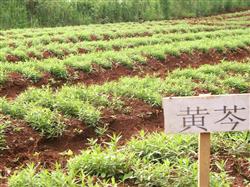
How to fertilize Scutellaria baicalensis (Baikal skullcap) when growing it? Introduction to scientific fertilization methods
How to fertilize when growing Scutellaria baicalensis? Please introduce the fertilization methods. When growing Scutellaria baicalensis, you can fertilize as follows. In the first year, after the seedlings are thinned to a stand, carry out the first fertilization, applying 500 kg of diluted human urine and manure per mu or 3-5 kg of urea, and in June-July topdress with 30 kg of ammonium phosphate. In the 2nd and 3rd years, after green-up, apply 40-50 kg of decomposed cake fertilizer, and in June...
-
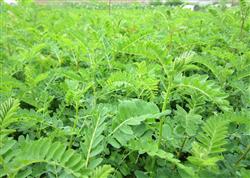
Astragalus Planting: Fertilization and Pest Control Methods
How do you fertilize and control pests when planting astragalus? Please help explain the methods. For astragalus fertilization and pest control, you can refer to the following methods: 1. Fertilization management. Astragalus prefers fertile soil, so in addition to applying sufficient base fertilizer, it also needs topdressing 2-3 times each year. The first time, after the seedlings are complete or after greening resumes, apply farmyard manure as topdressing; the second time, after intertillage and weeding, apply pen...
-
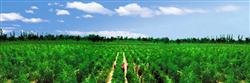
Key points of land preparation and fertilization techniques for goji berry cultivation
Goji berry (Lycium barbarum) is a deciduous small shrub in the Solanaceae family, also known as goji fruit, gounaizi root, and others, and is a well-known ornamental fruit plant. Its flowering period is from June to September, and its fruiting period is from September to October. Its leaves, roots, and fruits can all be used as medicine, and when grown in pots, the old roots can also be made into exposed-root bonsai. Goji berry has a wide range of adaptability and is not strict about soil requirements, tolerating drought, poor soil, ...
-

Detailed Explanation of Key Fertilization Techniques for High-Yield Chinese Yam
High-Yield Fertilization Techniques for Chinese Yam
-

-

Detailed Explanation of Key Points of High-Yield Fertilization Techniques for Isatis indigotica
High-Yield Fertilization Techniques for Isatis indigotica
-

How to Fertilize Amomum villosum? Detailed Fertilization Methods and Key Technical Points
How to Fertilize Amomum villosum
-

How to fertilize Schisandra chinensis? Master the key points of scientific fertilization techniques
Fertilization techniques for Schisandra chinensis
-

Discovery of a Wild Self-Seeding Fertile Pinellia Plant and Analysis of Its Utilization Prospects
Since 1988, we have conducted surveys of wild Pinellia ternata variety resources in the Yimeng Mountain area and research on artificial cultivation techniques. During many years of investigation and study, we discovered a single Pinellia ternata plant that can self-pollinate and set seed under wild conditions. After artificial domestication and cultivation, one 1.5 g Pinellia tuber can produce 40 to 50 seeds in one year, thereby solving the problems of low natural seed-setting rate and the lack of five usable [varieties] in production, and opening a path for improving the propagation rate of Pinellia ternata. 1 Botanical characteristics: the plant is 10 cm tall
-
A Brief Introduction to the Key Points of Fertilization Techniques for Pinellia ternata
A perennial herb of the Araceae family. Mainly produced in Henan, Sichuan, Guizhou, Jiangsu, Hubei, Anhui, Zhejiang and other provinces. The medicinal part is the rhizome. Pinellia ternata has a shallow root system. It prefers a mild, humid climate and a shaded environment, and is afraid of high temperatures, drought and strong light. It is suitable for loose-textured, well-drained sandy loam soil. Key points of fertilization techniques: Base fertilizer, apply 3000-4000 kg of barnyard manure per 667 sq m. Topdressing, from late May to early June, when bulbils grow out from the lower part of the petiole, apply a mixed fertilizer of 500-1000 kg of barnyard manure and
条件筛选