-
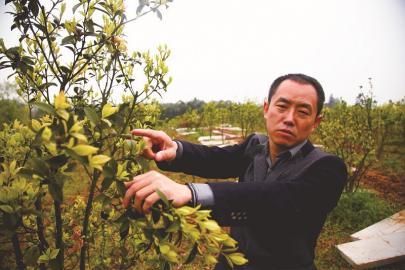
Innovative intercropping model achieves a win-win for the owner and farmers
Innovative intercropping: a win-win for the owner and farmers
-

Family farmer Su Xiaowei: Intercropping melons and fruits for complementary advantages
Family farmer Su Xiaowei: Intercropping melons and fruits for complementary advantages
-
Intercropping nursery stock with medicinal herbs helps villagers increase income and get rich
Intercropping nursery stock with medicinal herbs drives villagers to prosperity
-
Shandong pilots corn-peanut intercropping: no reduction in corn, an extra 300 jin of peanuts
Shandong pilots intercropping technology: no reduction in corn, an extra 300 jin of peanuts
-
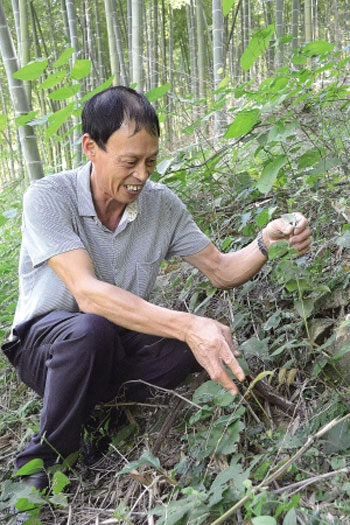
Growing Polygonatum under Chinese torreya forests; intercropping in bamboo forests works just as well
Growing Polygonatum under Chinese torreya forests; intercropping in bamboo forests works just as well
-
Detailed Explanation of the Cotton and Potato Intercropping Cultivation Model
The cotton and potato intercropping model is applied on a relatively large area in the northern Jiangsu region. The symbiotic period of the two crops is not long, the mutual influence during the symbiotic period is small, and there is a complementary effect in fertilizer utilization. In the late growth stage of potatoes, the field has sufficient fertilizer and water, which is conducive to the seedling development of cotton, and can achieve high yields of both cotton and potatoes. Generally, the potato yield is 2000-2500 kg per mu, the cotton yield is 80-100 kg per mu, the output value per mu is 2500-3000 yuan, and the net income is 1500-2000 yuan. Generally, the bed width is about 3 m, and cotton is planted in wide and narrow rows
-
Key Technical Points for High-Yield Cultivation of Intercropped Indica and Glutinous Rice
Rice "indica-glutinous intercropping" refers to a configuration method for cultivating hybrid indica rice and glutinous rice, that is, selecting medium-stem hybrid indica rice and tall-stem glutinous rice varieties, and using the wide rows within the wide-narrow row arrangement of hybrid indica rice to plant additional single rows of glutinous rice at a certain band width, row ratio and width, forming a composite of hybrid indica rice and glutinous rice within the same field. Based on the principles of three-dimensional agriculture, it uses the characteristics of different rice varieties, different maturity periods and different plant heights for intercropping cultivation, so that temperature and light resources are utilized at multiple levels,
-
Key points of high-yield cultivation techniques for rice intercropping of hybrid rice and glutinous rice
Rice "hybrid-glutinous intercropping" refers to the intercropping cultivation of hybrid rice and glutinous rice. That is, medium-stalk hybrid rice and tall-stalk glutinous rice, using the advantage of the wide rows in the wide-narrow row strip planting of hybrid rice, and adding a single row of glutinous rice according to a certain belt width, row ratio and width. 1. Main advantages of hybrid-glutinous intercropping technology. 1. Increasing rice yield: Test results show that the combined total of the two crops under hybrid-glutinous intercropping increases yield by 28 kg per 667 sq m compared with ordinary hybrid rice, and by 110 kg compared with conventionally pure-planted glutinous rice. 2. Increasing income: Glutinous rice is
-
Key Techniques for Intercropping Sweet Potato with Sesame
Sweet potato is a vining crop with a low light-receiving position. When intercropped with sesame, which has a high light-receiving position, it forms a well-layered crop community, thereby improving light energy utilization. Generally, without reducing sweet potato yield, it increases sesame seed income by 30-40 kg per mu. This planting method is suitable for all sesame-producing regions. 1. Planting methods (1) Sweet potato is cultivated with plastic film mulching. When preparing the land, form ridges with a height of 10-12 cm, a top width of 60 cm, a bottom width of 80 cm, and a ridge spacing of 40 cm. Sweet potato seedlings are raised 7-10 days earlier than usual according to conventional practice.
-
Key Technical Points for Intercropping Pinellia ternata in Woodland
Pinellia ternata, also known as three-leaf pinellia or ground-plant pinellia, is a perennial herbaceous plant with persistent roots in the Araceae family. Its tubers are used as medicine and have the functions of drying dampness and resolving phlegm, and descending adverse qi to stop vomiting. It is shade-tolerant, cold-tolerant, and afraid of sunlight; the seedlings fear heat, so it is suitable for intercropping with trees. 1 Propagation techniques Pinellia ternata is generally propagated by underground corms and bulbils, and can also be propagated by seeds. 1.1 Corm propagation When harvesting corms around Cold Dew, select the smaller ones for seed, bury them in moist soil in a cool, ventilated place, and around Qingming of the second year, transplant them into the field at a row spacing of 10 cm x 6 cm. Transplanting depth
条件筛选