-
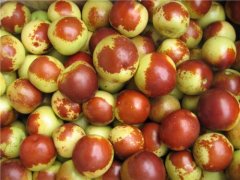
Will winter jujubes turn fully red as their color develops? Selection methods and the use of rapid-reddening agents
Winter jujubes generally have a color that is a mix of green and red, but some winter jujubes are purple-red. Why is that? Why are winter jujubes so sweet? Many people think that only red jujubes count as ripe. Some vendors, in order to attract consumers, treat green jujubes to make them red.
-

Seaside Surfing Lesson 03: International Volunteers Help Teach: Fear and Tension Toward the Sea Can Easily Lead to Danger
Seaside Surfing Lesson 03"International Volunteers Help Teach: Fear and Tension Toward the Sea Make It Easier to Get Into Deeper Danger
-
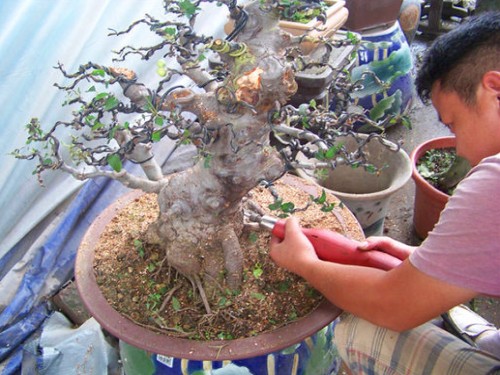
Detailed Guide to Styling and Designing Winter Red Fruit Bonsai
Winter red fruit is generally styled in the formal upright natural form, with the trunk straight and upright or slightly curved, branching at a certain height; it suits varieties with an upright tree habit and small, fine leaves, such as winter red fruit and Rose Autumn. An informal upright (slanting trunk) style is also used, planting the tree at one end of the pot with the trunk leaning toward the other end, the leaning trunk accounting for no less than half of the total trunk length
-
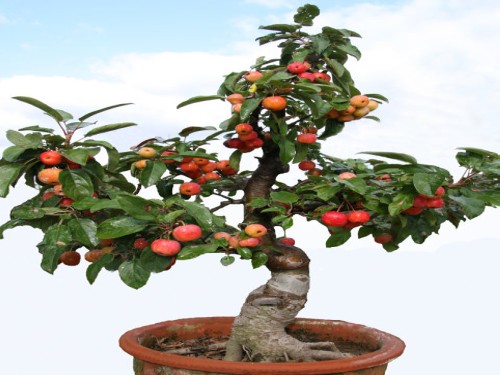
How to prune a winter red fruit bonsai? Detailed pruning methods and techniques
Winter red fruit is a variety of apple. Its tree form is compact, its branches are covered with light pink flowers in spring, and in autumn and winter the tree is covered with exquisite, lovely fruits whose shape closely resembles apples. It is suitable for garden planting or potted ornamental display and for making bonsai. Sometimes, for ornamental purposes, part of the winter red fruit is left unpruned
-

How to care for potted flowers in early winter? Master the relationship between flower planting and weather conditions
How to care for potted flowers in early winter
-
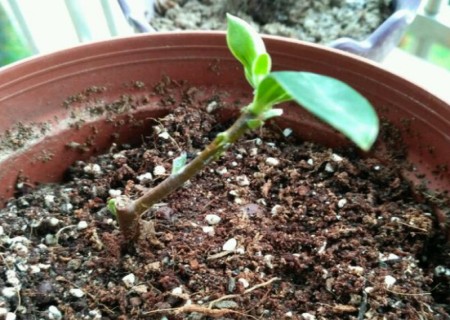
What are the methods for a high survival rate when propagating winter daphne (Daphne odora) from cuttings?
Winter daphne, especially the variegated winter daphne (Daphne odora 'Aureomarginata'), has delicate, beautiful flowers and a captivating fragrance, and many plant enthusiasts make it their first choice among flowering houseplants. Variegated winter daphne is mostly propagated by cuttings, and cuttings can be divided into hardwood cuttings and softwood cuttings. So how do you achieve a high survival rate when rooting winter daphne cuttings? On this point
-
Detailed Explanation of High-Yield Cultivation Techniques for Greenhouse Broccoli in Autumn and Winter
Autumn and Winter Cultivation Techniques for Greenhouse Broccoli
-
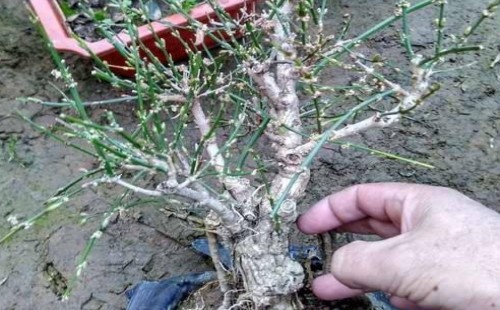
How do you prune a winter jasmine bonsai? Mastering the correct method is important
Winter jasmine (Jasminum nudiflorum) usually begins to bloom in early spring. Although the flowers are not large, they bloom gloriously, and the branches are graceful and full of artistic charm. Making winter jasmine into a bonsai and placing it indoors not only provides ornamental value but also has a good decorative effect, making people feel especially warm. However, the branches of winter jasmine often grow relatively slowly
-
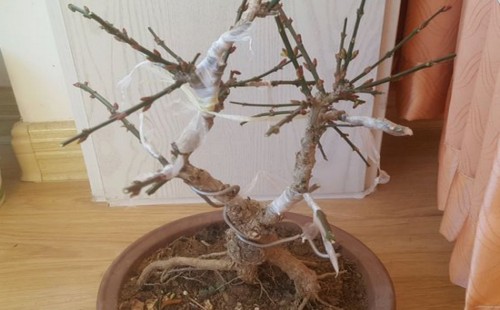
How to graft a winter jasmine bonsai? Detailed methods and steps
Winter jasmine (Jasminum nudiflorum) can be improved by grafting, making it easier to shape into an excellent bonsai. For grafting winter jasmine, species such as wild winter jasmine and Jasminum floridum can be used as rootstock, and the grafting results are very good. Of course, water privet (Ligustrum) seedlings can also be used for grafting, usually in early spring when growth begins to stir
-
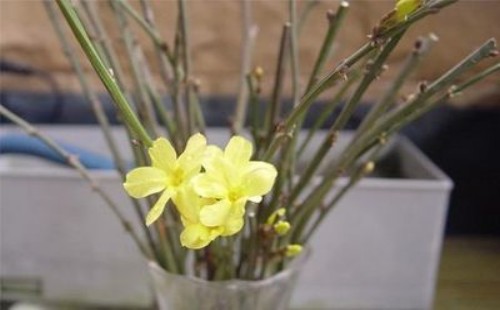
Detailed Guide to the Water Propagation Method for Winter Jasmine Cuttings
In the previous article published by the editor, I introduced the timing and methods for taking winter jasmine cuttings, though that was a soil propagation method for growing young plants. Today, the editor will introduce another propagation method - the water propagation method. So, how do you water-propagate winter jasmine? Below
条件筛选