What are the methods for a high survival rate when propagating winter daphne (Daphne odora) from cuttings?
Winter daphne, especially the variegated winter daphne (Daphne odora 'Aureomarginata'), has delicate, beautiful flowers and a captivating fragrance, and many plant enthusiasts make it their first choice among flowering houseplants. Variegated winter daphne is mostly propagated by cuttings, and cuttings can be divided into hardwood cuttings and softwood cuttings. So how do you achieve a high survival rate when rooting winter daphne cuttings? In this respect, softwood cuttings have a clear advantage. Hardwood cuttings are not easy to root, so their natural survival rate is lower than that of softwood cuttings.
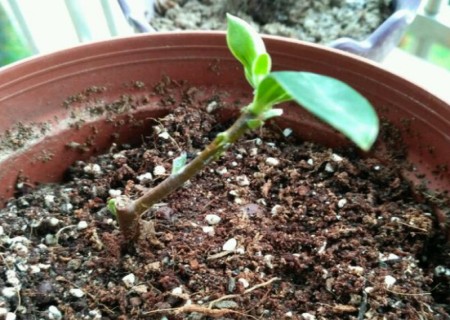
To improve the survival rate of winter daphne cuttings from the very start, today we will explain the softwood cutting technique for winter daphne, hoping it will help you improve your success rate. But if you have a different view, please leave a comment below and share your thoughts.
1. Cutting selection
Softwood cuttings of winter daphne should be taken in summer, between June and July. Choose well-developed, robust, pest- and disease-free current-year shoots with plump buds to serve as cuttings.
2. Cutting preparation
For the preparation of winter daphne cuttings, the shoot is usually divided into 3 sections from top to bottom. The middle and upper sections make the best cuttings, while the top tip gives the poorest results. For softwood cuttings, the cutting is generally best taken at 10-12 cm, keeping only the upper 2-3 leaves; the lower leaves should all be removed, and each of the 2-3 leaves kept should also be cut in half, which reduces water evaporation from the leaves. After preparing the cutting, soak the shoot in a sugar solution for about 10 days, then take it out and insert it.
3. The cutting process
The rooting medium should be fine sandy soil or vermiculite with good aeration and water-holding capacity. Before inserting, split the base of the cutting in half to a depth of about 1.5-2 cm, and wedge a small stone inside to keep the two halves from closing together; this allows the base of the cutting to make full contact with the medium and helps it sprout roots. When inserting, push one third of the cutting, starting from the base, into the medium, then firm the soil around the cutting to keep it steady.
4. Cutting care
Once the shoot is inserted, what remains is care and management. As long as the care is done properly, roots will generally form after 1 month. The most important thing is keeping the soil moist, so water promptly to give the cutting the moisture it needs to root and sprout. Keep the temperature at 20-25°C.
During the seedling stage, it is advisable to spray with clean water so that the moisture gradually seeps into the medium. Never use unclean water for heavy watering, and avoid strong direct sunlight; in summer in particular, take shade measures. Because the fleshy roots of winter daphne have a certain fragrance, keep earthworms and ants from gnawing on them, otherwise the plant may easily die.