How do you prune a winter jasmine bonsai? Mastering the correct method is important
Winter jasmine (Jasminum nudiflorum) usually begins to bloom in early spring. Although the flowers are not large, they bloom gloriously, and the branches are graceful and full of artistic charm. Making winter jasmine into a bonsai and placing it indoors not only provides ornamental value but also has a good decorative effect, making people feel especially warm. However, the branches of winter jasmine often grow relatively slowly, so it needs to be pruned in time to stimulate sprouting and shape a beautiful form. So, how do you prune a winter jasmine bonsai?
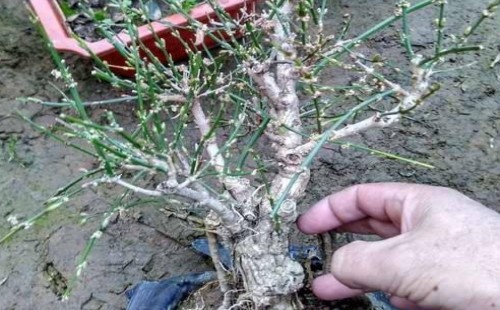
Pruning a winter jasmine bonsai is not only a chore that is time-consuming and labor-intensive, but it also requires mastering certain pruning skills. If you prune recklessly, it may not only affect the beauty of the shape, but more importantly, it may also affect the quality of flowering, and may even cause the plant not to bloom. The following are the key technical points for pruning a winter jasmine bonsai, now shared with everyone.
When potting and transplanting winter jasmine, proper pruning is needed, mainly cutting off some redundant and overlong branches. A large number of roots also need to be cut off at the same time, which can promote the plant to quickly sprout new roots and send out new shoots. Of course, the robust branches that are cut off can also be used for cuttings to cultivate young plants, and if conditions are suitable, the cuttings are also very easy to root.
During its growth period, winter jasmine is relatively tolerant of pruning and is also easy to shape, because at this stage its branches are relatively flexible and can be tied into various shapes, though the pruning method is relatively simple. Usually, after flowering, the branches from the previous year are thinned to maintain the shape. At the same time, pinching is also needed to control excessive branch growth and encourage more side branches to make the plant fuller.
In mid-May, pruning is often mainly to remove overly vigorous branches, messy and redundant branches, and diseased, pest-infested, old, and weak branches; in June, pruning usually involves cutting back the newly grown branches after retaining 2-3 nodes, which can save nutrients and direct them to the flowering branches, thereby better promoting flower bud differentiation. However, sometimes for the sake of a beautiful shape, some long branches can also be appropriately retained.
When midsummer arrives, the growth of winter jasmine becomes slow due to the climate and environment, so at this time it does not need extensive pruning. Usually, it is only necessary to promptly cut off thin and weak old branches and dried-up branches. At this time, the focus is on promptly adding some nutrients to ensure the plant can maintain a good plant shape. Moreover, reasonable fertilization at this time can also store sufficient nutrients for the formation of flower buds the following year.
After the winter jasmine bonsai finishes flowering, we also need to prune it, mainly cutting off some soft branches and flowering branches, and removing spent flowers at the same time, which can save a lot of nutrients. Usually, only 3-4 buds need to be retained on each branch, which can ensure more high-quality flowers the following year.
When the new shoots that have grown out reach a certain length, we also need to pinch or cut them back in time, mainly to encourage the plant to sprout more branches, especially flowering branches. By then, not only will the number of flowers be abundant and the quality high, but the plant shape of the winter jasmine will also be fuller and rounder, with higher ornamental value.