-
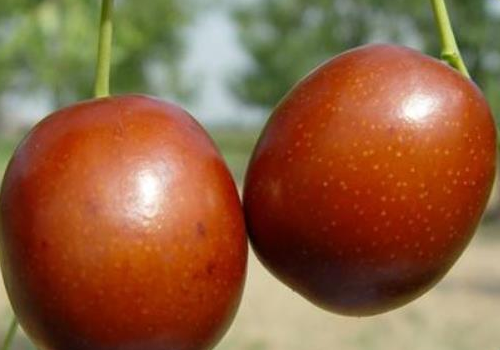
What kind of insect lives on jujube trees, and can they still be grafted?
The jujube tree, many people know about it, a great many people know about it, so what is the insect on the jujube tree called? Can it be grafted? What is the insect on the jujube tree called? The insect on the jujube tree is the slug moth larva. Slug moths are the general name for insects of the family Limacodidae in the order Lepidoptera, with about 500 species. They are distributed worldwide, mostly in the tropics.
-
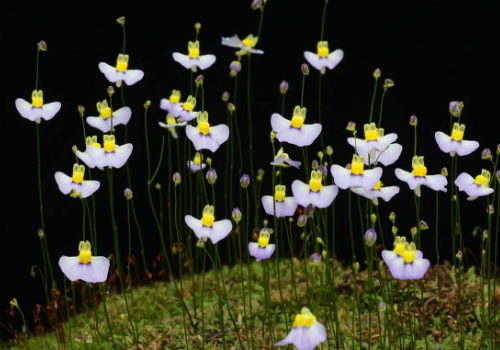
How does bladderwort eat insects in water and how can it be made to bloom
Bladderwort, like pitcher plants, needs to prey on insects, so how does bladderwort eat insects in water? How can it be made to bloom: How bladderwort eats insects in water: Bladderwort is a plant that lives in water, and when it comes to eating insects in the water, it is in no way inferior to pitcher plants. Bladderwort does not live long; it is an annual aquatic plant
-
Symptoms, Damage and Control Methods of Coconut Scale Insects
What is the damage caused by the coconut pest Pseudaulacaspis? How should it be controlled? Ecological habits: there may be 10 generations per year, and 1 generation lasts about 33 days. It usually reproduces by parthenogenesis; the mother insect lays eggs under the scale around her body, the egg-laying period is 8 to 10 days, and each female can
-

What insecticide works well to control cutworms?
Cutworms, also known as greasy cutworms, belong to the order Lepidoptera, family Noctuidae. They have extremely varied feeding habits and mainly damage spring-sown (transplanted) vegetable seedlings, causing serious damage to solanaceous fruits, cucurbits, legumes and cruciferous vegetables after planting out. Control methods 1. Agricultural control: In early spring, clear weeds from the vegetable plot and its surroundings; spring plowing and harrowing, autumn plowing to sun the soil and winter irrigation can all kill eggs, larvae and some overwintering pupae. 2. Trapping and luring to kill (1) In spring, use a sugar-vinegar liquid to lure and kill overwintering-generation adults; the ratio of sugar, vinegar, wine and water is 3:4:
-
Key Technical Points for Integrated Control of Rice Diseases, Insect Pests, Weeds and Rodents
1. Suitable areas: all rice-growing areas in Guangdong Province. The rodent control technology is suitable for controlling house mice in agriculture, forestry, livestock and poultry farming, and urban areas of Guangdong Province. 2. Key technical points for rice disease and insect pest control: (1) Agricultural control: A. Select disease- and insect-resistant, high-yielding, high-quality varieties. B. Sow and transplant at the appropriate time. C. Rational close planting and fertilization. For seedling throwing, 40 trays per mu (560 holes) is appropriate; for transplanted fields, about 20,000 hills per mu (6X5 cun), that is, about 80,000-100,000 seedlings, is appropriate. For basal fertilizer, it is recommended to apply more organic fertilizer; according to soil fertility and yield, apply an appropriate amount of nitrogen fertilizer in the early and middle stages (about 10 kg of pure nitrogen per mu), and increase the application of phosphorus and potassium fertilizers.
-
How to control insect and mite pests in citrus orchards? Rotenone-cypermethrin EC is the first choice
Spring returns to the earth, and the citrus orchard has also put out tender green spring shoots, full of vitality. However, as long as you observe carefully, after the long winter rest, insect, mite and disease damage in the citrus orchard is also quite serious. According to our field observations, the pests currently occurring in citrus orchards include scale insects, aphids and various whiteflies, and the harmful mites include red spiders and rust mites, etc.; in addition, sooty mold disease in ordinary citrus orchards is also quite serious. Control should be carried out early, so as to treat it early, treat it when there is little, and treat it until it is gone. Red spiders, rust mites, scale insects and various whiteflies are all tiny pests with strong resistance that have given people headaches in recent years.
-
Intercropping insect-resistant cotton with potatoes: both crops can achieve high yields
In recent years, the model of intercropping potatoes with insect-resistant cotton has been welcomed by the people. According to surveys, this model not only enables cotton to achieve high yields (lint yield of 90-100 kg per mu), but also "freely" yields an extra 1500-2000 kg of potatoes per mu. The key cultivation techniques are as follows. I. Potatoes ① Seed selection and sprouting. It is advisable to choose early-maturing, short-stalked, high-yielding virus-free varieties, such as Holland No. 7, Jinyin No. 8, etc., using 80-90 kg of seed potatoes per mu. In mid-February, cut the seed potatoes into pieces (each kg cut into 40-50 pieces) and use a sunny cold frame or greenhouse
-
How effective is the Jiaduo frequency-vibration insect-killing lamp at trapping and killing the rice stem borer?
The rice stem borer is one of the important pests in rice production in Wuchang City. In recent years, with changes in rice varieties and warming climate conditions in our city, the occurrence and damage of the rice stem borer have become increasingly serious. According to this autumn's survey, for certain varieties in Wuchang, the average number of insects per 100 steps per mu reached more than 20,000, with the highest in key outbreak areas reaching 60,000, and in some cases more than 100,000. Such insect numbers are rare in history, whether domestically or abroad. In order to further control the damage of the rice stem borer, explore new approaches to its control, and reduce pesticide pollution of rice. This year our city set up at Sun Guanghao's field in Lianhua Village, Wuchang Town
-
Product Features and Uses of Yubao Insecticide
This product is a new generation of green aquatic insecticide, with advantages such as high efficiency, safety, no pollution, no damage to water quality, and no effect on fish appetite. It is quite safe for eels, mandarin fish, white pomfret, California bass, etc., and can be used to kill aquatic pests such as anchor worms (needle worms), Sinergasilus (gill worms), fish lice, and water fleas (mites) in eel ponds. Dosage: 50 ml (one liang) per mu (water depth 1 m). Directions: first dilute the medicine with a small amount of water, then splash it evenly over the whole pond. Note: this product is best applied in the evening
-
Insect-resistant potato bred first by Belarusian scientists
Scientists from the National Academy of Sciences of Belarus have announced a new research achievement: they have bred the world's first potato that can automatically kill pests. According to a report by Russia's Interfax news agency on August 7, to date, a pest known by the scientific name Colorado potato beetle has been the biggest headache for farmers, because it destroys large areas of potato fields every year and causes huge economic losses to agriculture. A new type of genetically modified potato recently bred by Belarusian scientists can specifically poison this beetle to death. A
条件筛选