What kind of insect lives on jujube trees, and can they still be grafted?
The jujube tree, many people know about it, a great many people know about it, so what is the insect on the jujube tree called? Can it be grafted?
What is the insect on the jujube tree called
The insect on the jujube tree is the slug moth larva. Slug moths are the general name for insects of the family Limacodidae in the order Lepidoptera, with about 500 species. They are distributed worldwide, mostly in the tropics. The larvae are plump and short, slug-like. They have no abdominal prolegs, replaced by suckers. When moving they do not crawl but glide. Some larvae have bright body colors, with brown stinging hairs densely covering the appendages, like tangled hair; when spinning the cocoon the appendages protrude outside the cocoon for protection and camouflage. When disturbed they sting people with poisonous hairs and cause skin rashes. They feed on plants. They pupate in oval cocoons, and the cocoons attach among the leaves. Slug moth larvae are mostly called jingtiao hu, in the Northeast called bosimao, and the cocoon is called yaliaoguan. In the eastern Shandong dialect they are called cuzimao, bajiezimao. If stung, do not scratch with your hands; immediately use wide tape to repeatedly press and peel on the injured area, which can quickly remove most of the poisonous hairs.
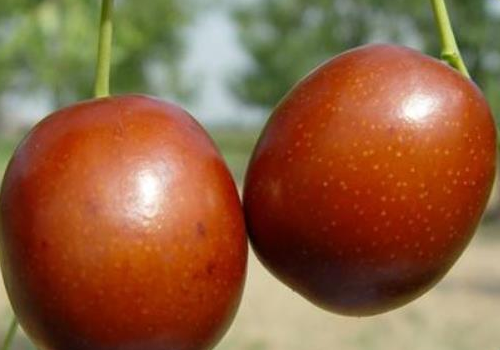
Can jujube trees be grafted:
Jujube trees can be grafted. There are mainly the following three grafting methods for jujube trees:
1. Side grafting: Take a scion that has already been sealed with wax, and cut the scion into two opposite cut faces, a long face of about 3 cm and a short face of about 2 cm. At the grafting site on the rootstock, choose a smooth side and use pruning shears to make a downward slanted cut; the angle of the cut to the vertical axis of the rootstock is about 15 degrees, and the length of the cut is equivalent to the long face of the scion. Insert the scion into the rootstock cut with the long cut face facing inward and the short cut face facing outward, so that the cambium of the scion and the rootstock align. Then cut the rootstock about 0.8 cm above the joint, and bind the joint and the cut surface at the top of the rootstock tightly and securely with plastic strips to prevent the scion from loosening and losing water. This method is simple to operate and has a high grafting survival rate. The suitable rootstock thickness is 0.7-2 cm.
2. Cleft grafting: Take a scion that has already been sealed with wax, and cut the scion into two slanted faces of equal length, with the slanted faces 3-5 cm long. First cut off the upper part of the rootstock, and trim the cut smooth; use a splitting knife or scissors to split open from the center of the rootstock to a depth of 5-7 cm, insert the prepared scion, align the cambium of the scion and the rootstock, and bind the joint tightly and wrap it securely with plastic strips. This method is suitable for thicker rootstocks.
3. Bark grafting: Also called under-bark grafting. Take a scion that has already been sealed with wax, cut the lower end into a smooth cut face 3-5 cm long, lightly cut once on the back side of both sides of the cut face to expose the cambium, then cut a short slanted face 0.5 cm long on the back side of the lower end of the long cut face to make insertion easier. Choose a smooth place to cut the rootstock and trim the cross section flat. Make a vertical cut on one side of the rootstock with a small knife, reaching the xylem, and use the knife to separate the upper bark from the xylem. When inserting the scion, face the long cut face inward and the small cut face outward, and slowly insert downward along the slit. Bind tightly and wrap securely with plastic strips. This method is suitable for thicker rootstocks, that is, rootstocks with a diameter of 2 cm or more.
The name of the insect on the jujube tree has been introduced here, and jujube trees can be grafted.
What is the insect on the jujube tree called
The jujube tree is a fruit tree with strong adaptability, and because of its drought-tolerant and dry-tolerant characteristics, it is very easy to grow. However, jujube trees can also have their yield affected by inadequate later management work, and insect pests are one aspect. Because of the characteristics of the fruit tree, jujube trees tend to attract some special insects that wantonly damage them.
What is the insect on the jujube tree called
The insect on the jujube tree is the slug moth larva. Slug moths are the general name for insects of the family Limacodidae in the order Lepidoptera, with about 500 species. They are distributed worldwide, mostly in the tropics. The larvae are plump and short, slug-like. They have no abdominal prolegs, replaced by suckers. When moving they do not crawl but glide. Some larvae have bright body colors, with brown stinging hairs densely covering the appendages, like tangled hair; when spinning the cocoon the appendages protrude outside the cocoon for protection and camouflage. When disturbed they sting people with poisonous hairs and cause skin rashes. They feed on plants. They pupate in oval cocoons, and the cocoons attach among the leaves. Slug moth larvae are mostly called jingtiao hu, in the Northeast called bosimao, and the cocoon is called yaliaoguan. In the eastern Shandong dialect they are called cuzimao, bajiezimao. If stung, do not scratch with your hands; immediately use wide tape to repeatedly press and peel on the injured area, which can quickly remove most of the poisonous hairs.
Damage characteristics of jujube tree insect pests
1. Green plant bug. Damage and symptoms: Adults and nymphs pierce and suck the host's young buds, tender leaves and flower buds. The damaged leaves and buds first show chlorotic spots, and as the leaves extend, the small spots gradually become irregular small holes. After flower buds are damaged, development stops, they wither and fall off; on severely damaged jujube trees, almost all flowers fall off, seriously affecting fruiting.
2. Jujube flying weevil. Adults eat buds and leaves, often eating all the young buds of jujube trees, so that only the 2nd-3rd batch of buds can grow branches and leaves, weakening tree vigor, delaying growth, and reducing yield and quality. The larvae live in the soil and damage the underground tissues of plants.
3. Jujube witches' broom. Also called witches' broom disease; the pathogen is a mycoplasma-like organism. Both aboveground and underground parts can be infected, and the disease is mainly spread through grafting and leafhoppers. Soil drought, poor and thin soil, poor fertilizer and water conditions, extensive management, severe pests and diseases, and weak tree vigor lead to severe disease; saline-alkali land rarely develops the disease. After onset, the normal physiology of the jujube tree is disturbed, the balance of endogenous hormones is disrupted, leaves yellow, small branches cluster, and in winter they do not wither or fall; stamens and pistils sometimes become small branches or small leaves, and the fruit is deformed. When the roots are affected, root suckers also appear clustered.
Methods for removing insect pests from jujube trees
1. Peach fruit borer. Commonly known as jujube maggot. Control methods: First, dig out cocoons; after the soil thaws, turn over the surface soil around the trunk so that the cocoons are exposed on the surface and die through wind and freezing. Second, in spring cover the ground around the trunk with plastic film to inhibit the larvae from emerging, pupating and eclosing. Third, chemical control: spray decis in late July to early August for control.
2. Jujube leaf roller. Commonly known as leaf roller. It mainly damages the buds, leaves, buds, flowers and fruits of jujube trees.
Control methods: First, scrape tree bark in early spring and burn it. Second, in early September, tie rice straw below the trunk fork to trap and kill the third-generation mature larvae; after leaf fall, remove the straw bundles, scrape off the cocoons attached to the bark, and burn them in a centralized way. Third, when jujube buds are 3 cm long and larvae are at the peak hatching stage, spray pesticides such as dichlorvos and deltamethrin for control.
3. Jujube weevil. Also named jujube flying weevil. It specializes in eating the young buds of jujube trees, causing reduced yield. The control measure is to spray jujube insect net during the peak feeding period of the jujube weevil in late April to eliminate it.
Basic points for preventing insect pests on jujube trees
1. First, use the right pesticide for the problem. Accurately select the pesticide: choose which pesticides to use according to the type of pests and diseases occurring in the crop, select pesticide varieties with excellent control effects against them, and also note that the selected pesticide is safe or basically harmless to the crop, has low or basically no toxicity to humans, livestock and poultry, and is a highly efficient, low-toxicity, low-residue pesticide variety with no or basically no pollution to the ecological environment.
2. Apply the pesticide at the right time and promptly. Use it during the prevention period of pests and diseases and the early occurrence threshold period, truly achieving the idea that prevention is more important than treatment, so as not to give pests and diseases an opportunity to cause damage.
3. The concentration used must be reasonable. It must both ensure crop safety without pesticide damage and effectively eliminate pests, diseases and weeds. It is strictly forbidden to arbitrarily increase the concentration without testing, which both increases control costs and causes pesticide damage, resulting in major economic losses.
4. Spray carefully and thoroughly, without missing spots or repeated spraying. This avoids incomplete control, which can cause pests and diseases to develop again or cause pesticide damage.
Although jujube trees have a very high fruiting rate, they can also suffer some pest and disease disasters due to other factors. A very common one is what we here call caterpillars, which damage the leaves of jujube trees. Therefore, we usually need to strengthen the prevention and control of jujube tree pests and diseases, so that jujube trees can grow more healthily.